How To Use WHC Web Hosting Canada: 12 Easy Steps
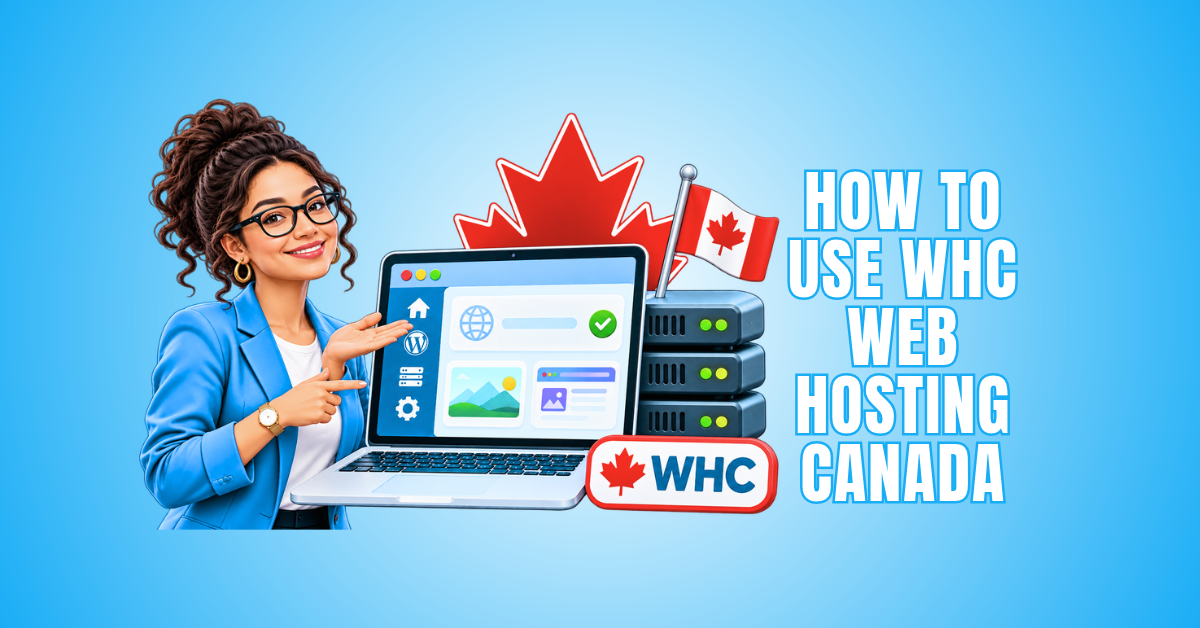
Learning how to use WHC Web Hosting Canada can make launching and managing a website much easier, even if you have limited technical experience. With the right guidance, beginners can handle essential hosting tasks with greater confidence.
WHC offers website management tools, cPanel access, WordPress installation options, and other features designed to simplify everyday administration. These resources can help bloggers and entrepreneurs establish their online presence.
From connecting your domain to installing WordPress and publishing your first blog post, understanding the setup process can save time and prevent common mistakes. You can also explore our WHC Web Hosting Canada Review for a closer look at the provider’s features, advantages, and limitations.
This step-by-step guide explains how to use WHC Web Hosting Canada, from accessing your hosting account to managing security, backups, and website performance. Let’s get started!
Key Features Of WHC Web Hosting Canada
Understanding the key features of WHC Web Hosting Canada can help you make better decisions about website performance, security, and everyday management. Each feature supports a different aspect of running a website.
Whether you’re starting a personal blog, developing an online store, or managing a business website, reliable hosting infrastructure plays an important role. Storage technology, server performance, and security tools all contribute to the visitor experience.
For beginners, these technical features may seem complicated at first. However, understanding their practical benefits makes it easier to choose hosting services that match your website’s requirements.
Let’s explore the main features WHC offers and how they can support different types of online projects.
1. Full SSD Storage With RAID-10 Technology
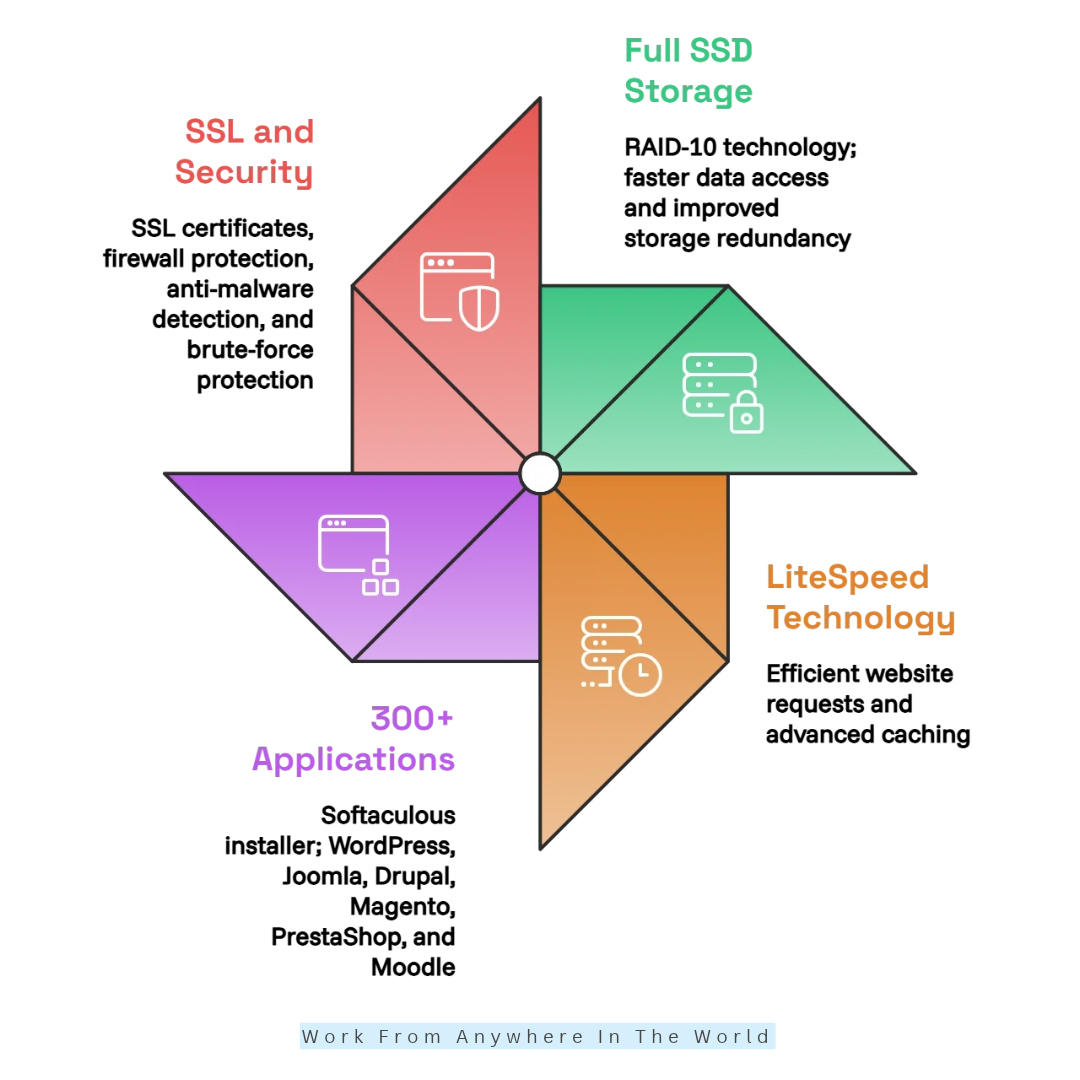
WHC uses solid-state drive (SSD) storage infrastructure with RAID-10 technology to support efficient data access and storage redundancy. SSDs retrieve information electronically rather than relying on the moving components found in traditional hard drives.
This technology can help websites access files and databases more efficiently. RAID-10 combines data mirroring and striping, providing redundancy while supporting storage performance.
For example, a gardening website such as Close To Nature may contain hundreds of articles, photographs, and informational resources. Efficient storage helps the server retrieve the content visitors request.
Similarly, recipe websites with extensive image libraries and database-driven content can benefit from responsive hosting infrastructure. However, actual loading performance also depends on website optimization and available server resources.
Our guide to the best WordPress image optimizer plugins explores tools that can reduce image file sizes and improve loading efficiency. Combining optimized images with efficient SSD storage can help create a smoother browsing experience.
This is particularly useful for blogs and online stores that regularly publish photographs, product images, and other visual content. As your website grows, maintaining an efficient media library becomes increasingly important.
Combining efficient hosting infrastructure with regular website optimization can help support consistent performance as your content library grows. This is particularly useful for blogs and online stores that regularly add new pages, photographs, and other resources.
Remember that RAID redundancy is not a replacement for regular backups. Storage capacity, resource allocations, and backup arrangements should always be reviewed before choosing a hosting package.
2. LiteSpeed Web Server Technology
WHC advertises LiteSpeed web server acceleration as part of its hosting infrastructure. This technology is designed to process website requests efficiently and deliver content faster.
LiteSpeed also works with the LiteSpeed Cache plugin, which provides caching and optimization features for WordPress websites. Available functions depend on the hosting environment and plugin configuration.
For example, a recipe website such as Living The Vegan Lifestyle may contain detailed instructions, photographs, and numerous blog posts. Effective caching can help reduce repeated server processing when visitors access popular pages.
WordPress users can also explore image optimization, page caching, and other performance settings. These features may improve loading efficiency when configured appropriately.
Our guide on how to make your WordPress site faster explains additional ways to optimize website performance and create a smoother browsing experience.
However, server acceleration alone cannot guarantee fast loading times. Themes, plugins, image sizes, and website configuration also influence performance.
Before choosing WHC, confirm which LiteSpeed features are included in your hosting plan and whether additional configuration is required.
3. One-Click Installation Of 300+ Applications
WHC provides access to hundreds of applications through the Softaculous application installer on supported hosting plans. Its advertised selection includes WordPress, Joomla, Drupal, Magento, PrestaShop, and Moodle.
Instead of manually uploading installation files and configuring databases, users can install supported applications through a simplified interface. This makes launching different types of websites more accessible to beginners.
For example, an entrepreneur starting a blog can install WordPress and begin customizing the website with suitable themes and plugins. This reduces the technical work required during the initial setup.
Someone planning an online store may prefer an eCommerce application with product management and shopping cart features. Our guide to eCommerce website best practices explores important considerations for building a successful online shopping experience.
Educational websites can also benefit from application installers. Platforms such as Moodle allow educators and organizations to develop online learning environments.
However, one-click installation does not eliminate ongoing maintenance responsibilities. Website owners should regularly update their applications, review installed extensions, and maintain reliable backups.
4. Free SSL Certificates And Website Security
WHC includes SSL certificate options with eligible hosting packages, helping website owners establish secure connections through HTTPS. These certificates support encrypted communication between visitors and the website.
Its advertised security features also include firewall protection, malware detection, and safeguards against brute-force attacks. These tools address different threats that can affect website availability and account security.
For example, a pet wellness website such as PawReiki may receive inquiries through contact forms. HTTPS helps protect information while it travels between visitors’ browsers and the website.
The same protection is important for online stores, membership websites, and blogs that collect subscriber information. Secure connections help establish a safer environment for everyday website interactions.
However, an SSL certificate does not provide complete website protection. Strong passwords, updated software, security monitoring, and dependable backups remain essential.
Website owners should also review user permissions and remove unnecessary plugins or applications. Combining these practices with WHC’s hosting security features can help reduce avoidable risks.
For additional guidance, the WordPress security documentation explains important practices for maintaining a more secure website.
5. Canadian Data Centres On Both Coasts
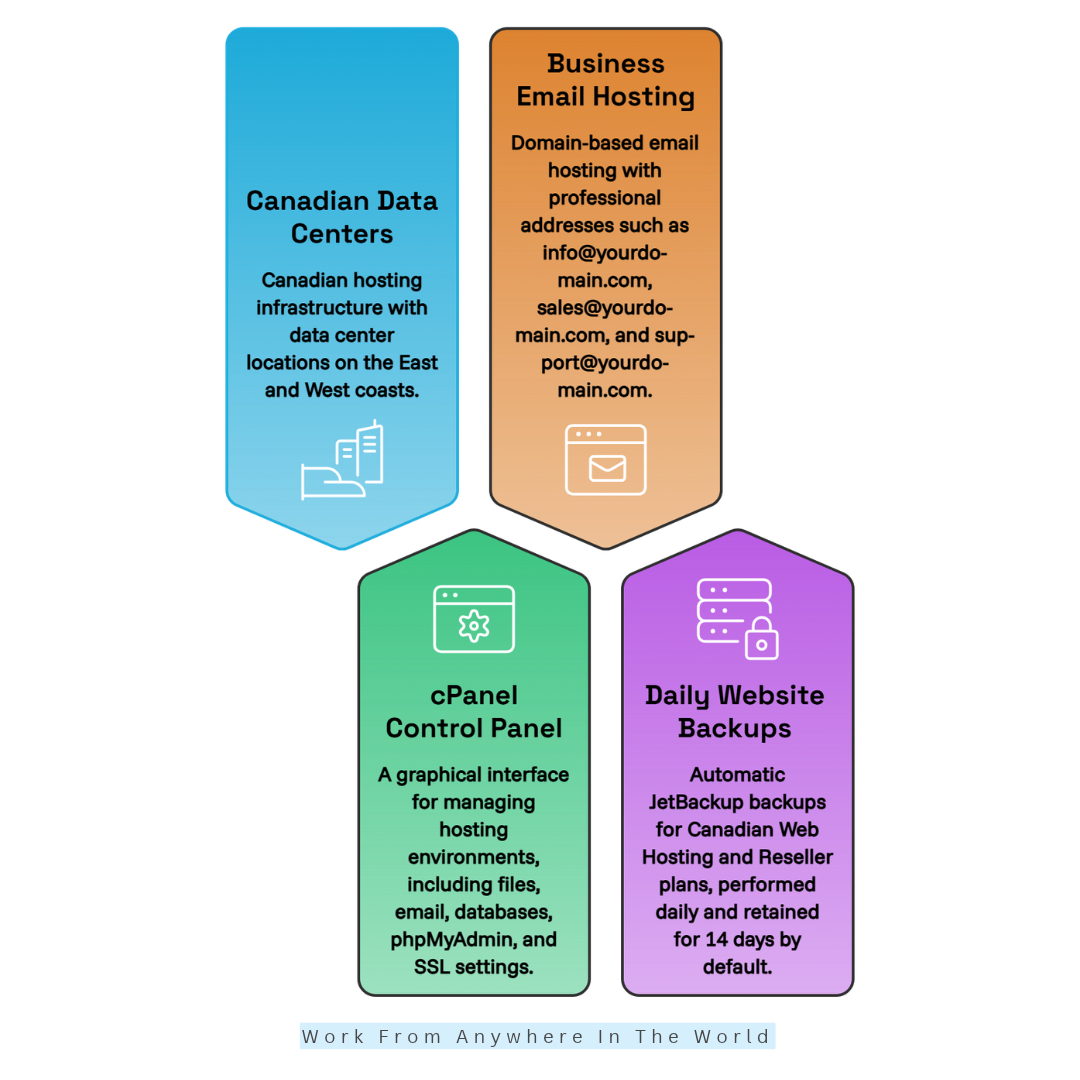
WHC operates Canadian hosting infrastructure with data centre locations on the East and West Coasts. This geographical distribution can help businesses select hosting infrastructure closer to their primary Canadian audiences.
Shorter network distances may reduce latency and improve website responsiveness. However, actual loading speeds also depend on server configuration, internet routing, caching, and website optimization.
For example, a Canadian gardening blog serving readers across the country may benefit from locally hosted infrastructure. Visitors can access articles, photographs, and gardening resources without relying entirely on servers located overseas.
WHC also provides Canadian IP addresses, which may appeal to organizations with specific data-location preferences. However, hosting within Canada does not automatically guarantee compliance with every Canadian privacy requirement.
Businesses should review their data storage arrangements, privacy obligations, and hosting agreements before making a decision. This is particularly important when collecting personal information through website forms or customer accounts.
6. cPanel Hosting Control Panel
WHC provides cPanel with applicable hosting services, offering customers a graphical interface for managing their websites and hosting environments.
Through cPanel, users can access File Manager, email accounts, databases, phpMyAdmin, SSL settings, and other administrative tools. This reduces the need to perform routine tasks through complicated command-line instructions.
For example, a beginner following our guide on how to host a website can use cPanel to manage website files, configure email accounts, and access essential hosting settings.
WordPress users can also manage databases, review file directories, and perform certain maintenance tasks through the dashboard. Having these tools in one location makes everyday website administration more convenient.
However, control panel availability depends on the selected hosting product. WHC also describes CyberPanel management for certain VPS configurations, so customers should confirm which interface their package includes.
7. Professional Business Email Hosting
WHC offers domain-based email hosting through eligible hosting packages. This allows businesses to create professional email addresses associated with their own websites.
For example, info@pawreiki.com demonstrates how a branded email address can reinforce a website’s identity. Customers can recognize the business name immediately rather than receiving messages from an unrelated personal email account.
Depending on the selected package, WHC customers can manage mailboxes, access webmail, and configure compatible email applications. Check account limits, storage allowances, and sending restrictions before subscribing.
Professional email addresses are useful for responding to enquiries, communicating with partners, and managing everyday business correspondence. They can also support consistent communication with existing customers.
Our guide to B2B customer retention strategies explores ways businesses can strengthen professional relationships through effective communication and dependable service.
However, standard hosting email should not be confused with dedicated email marketing software. Businesses planning newsletters or automated campaigns may need additional tools for subscriber management and reporting.
Our article on email marketing automation explains how specialized platforms can help businesses organize campaigns and communicate with subscribers more efficiently.
8. Automatic Daily Website Backups
WHC provides automatic backups powered by JetBackup for its Canadian Web Hosting and Reseller plans. Its documentation describes daily backups with a default retention period of 14 days.
Customers can access available backup copies through their hosting control panel. These can help restore website files or recover content after accidental changes, failed updates, or technical problems.
For example, a blogger who accidentally deletes an important page may be able to recover an earlier version from an available backup. This can save time and reduce the need to recreate valuable content.
However, backup availability and restoration options depend on the hosting service. Cloud and Dedicated Server customers may need to purchase backup services separately.
Website owners should confirm the backup frequency, retention period, storage limits, and restoration procedures for their hosting package.
Maintaining independent backups is equally important because relying on a single recovery system creates unnecessary risks. Copies stored outside the hosting account provide another option if the primary service becomes inaccessible.
For additional guidance, the official WordPress backup documentation explains how website files and databases can be protected and restored.
9. Advanced DNS Management With Anycast Technology
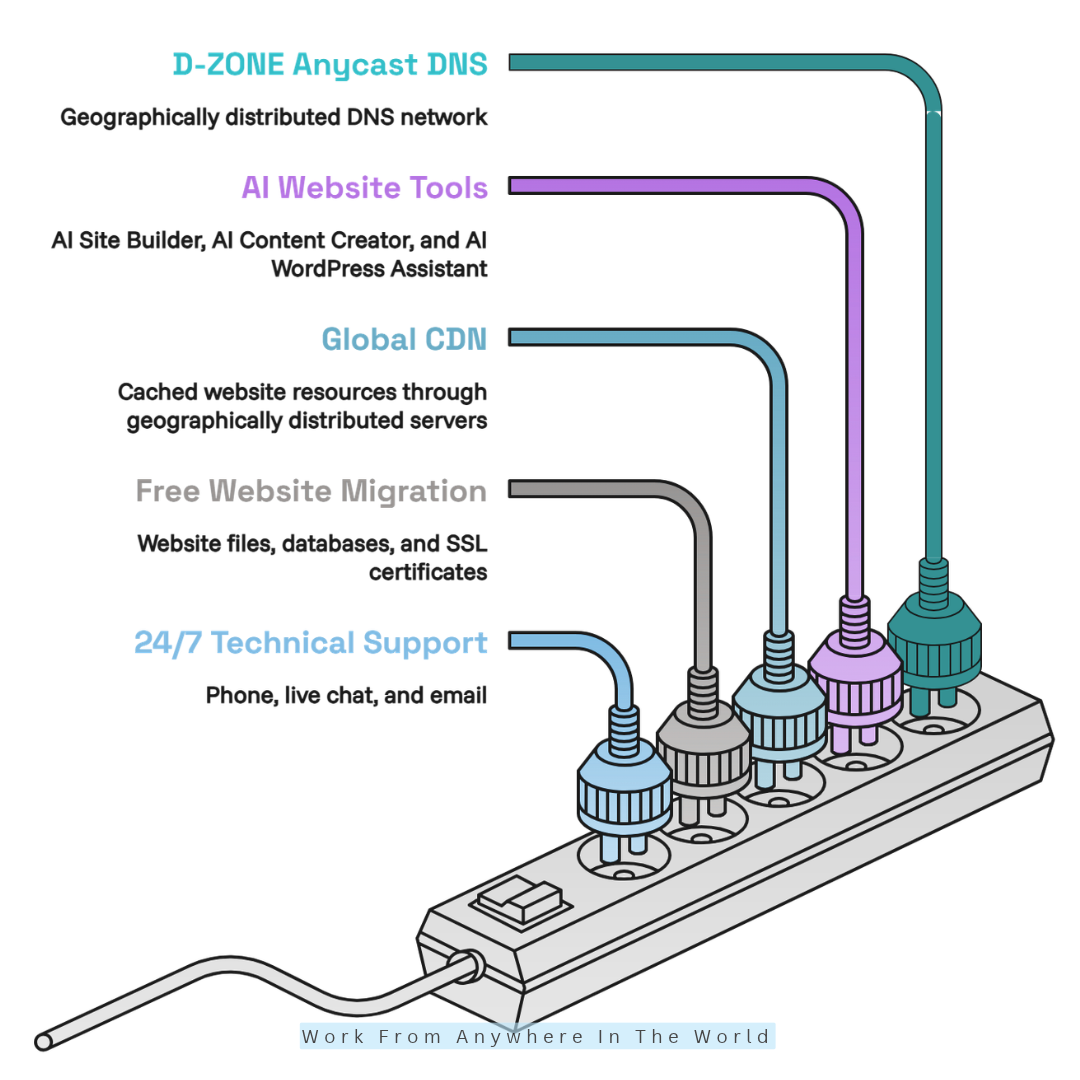
WHC offers D-ZONE Anycast DNS to support faster and more resilient domain name resolution. The Domain Name System (DNS) translates website addresses into the information browsers need to locate the correct servers.
Instead of relying on a single DNS location, Anycast technology routes requests through a geographically distributed network. This can help reduce DNS response times and improve reliability when individual network locations experience problems.
WHC includes D-ZONE Anycast DNS with its Pro and Enterprise shared hosting plans. This feature may be particularly useful for businesses attracting visitors from different countries.
For example, a digital entrepreneur operating an international blog may benefit from dependable domain resolution. Visitors need to reach the correct website, regardless of where they connect from.
Before launching a new website, choosing a memorable domain is equally important. Our guide to the best domain name generators explores tools that can help entrepreneurs find suitable website names.
However, faster DNS resolution does not automatically mean faster page loading. Website optimization, server performance, and caching also influence the overall browsing experience.
10. AI-Powered Website Building Tools
WHC offers AI-powered website creation tools designed to simplify website development. Its advertised features include an AI Site Builder, AI Content Creator, and AI WordPress Assistant on eligible hosting plans.
These tools can help beginners generate initial website layouts, develop content drafts, and complete certain WordPress-related tasks. This may reduce the time required to create a basic website structure.
For example, someone starting a pet wellness blog could use an AI website builder to develop an initial layout. They could then customize the design, photographs, and written content to reflect their own expertise and personality.
AI tools can also support content planning and brainstorming. Our guide to the best free keyword research tools explores resources for identifying search terms before creating new articles.
Once content is published, entrepreneurs can explore content repurposing strategies to adapt existing articles into newsletters, social media posts, and other useful formats.
However, AI-generated material should always be reviewed before publication. Fact-checking, original insights, clear writing, and thoughtful customization remain important for producing trustworthy website content.
Before choosing WHC, confirm which AI features are included in your hosting package and whether any usage restrictions apply.
11. Global CDN For Faster Content Delivery
WHC offers a global Content Delivery Network (CDN) on eligible hosting plans. This technology distributes supported website resources through geographically dispersed servers.
When visitors request cached content, a CDN can deliver eligible files from a location closer to them. This reduces reliance on the original hosting server for every request.
For example, a vegan recipe website with readers across North America, Europe, and Asia may benefit from faster delivery of photographs and other static resources.
Image-heavy websites can also improve performance by optimizing their media files. Our guide to the best WordPress image optimizer plugins explores tools that help reduce image sizes and improve loading efficiency.
A CDN can be particularly useful for blogs, online stores, and educational websites attracting international audiences. However, the results depend on website configuration, visitor location, and the types of content being delivered.
Before selecting a hosting plan, confirm whether CDN access is included and whether additional setup is necessary. WHC’s entry-level Go plan does not include the same CDN offering as its higher-tier shared hosting plans.
12. Free Professional Website Migration
WHC offers free website migration with eligible hosting packages, helping customers transfer existing websites from another provider. This can simplify moving an established online business without rebuilding everything from scratch.
Depending on the migration arrangement, the service may include website files, databases, and SSL certificates. Email and domain transfers may also be available when requested and supported.
For example, a blogger moving an established WordPress website may need to transfer hundreds of articles, photographs, plugins, and database records. Professional migration assistance can reduce the manual work involved.
Our ultimate website migration checklist explains the essential preparations and checks involved in transferring a website to a new hosting environment.
Before requesting migration, confirm which services are included and whether your existing hosting configuration is compatible. More complicated websites may require additional arrangements or technical assistance.
Always create an independent backup before beginning the transfer. This provides another recovery option if unexpected problems occur during migration.
Afterward, review your website’s pages, images, internal links, email accounts, and DNS settings. Testing these elements before completing the switch can help minimize disruptions for visitors.
13. 24/7 Technical Support And Assistance
WHC advertises 24/7 technical support through phone, live chat, and email. Its assistance services are available in English and French, making them accessible to customers who prefer either language.
Technical support can be particularly valuable for beginners who are unfamiliar with hosting settings, WordPress configurations, or website troubleshooting.
For example, a new blogger experiencing difficulties connecting a domain or installing WordPress may benefit from guidance rather than attempting complicated technical changes independently.
WHC also provides a searchable knowledge base covering cPanel, domain management, website migration, SSL certificates, and backups. These resources allow customers to explore common solutions at their own pace.
Website owners can use the WHC Client Area to manage their accounts and access available support resources. Providing detailed explanations and relevant error messages can help technicians investigate problems more efficiently.
Reliable technical assistance can also support business continuity when unexpected website issues arise. However, response times and resolution outcomes may vary depending on the problem’s complexity.
For bloggers and entrepreneurs, combining dependable hosting support with basic website management knowledge can make everyday administration less stressful and more manageable.
How To Use WHC Web Hosting Canada: A Step-By-Step Guide
Learning how to use WHC Web Hosting Canada becomes much easier when you follow the setup process one step at a time. You don’t need advanced technical knowledge to complete most of these tasks.
The following instructions cover accessing your hosting account, connecting your domain, installing WordPress, and preparing your website for publication. Each step builds on the previous one.
Some menu options may differ depending on your hosting package and WHC’s current interface. If you cannot find a particular setting, consult WHC’s documentation or contact its support team.
1. Access Your WHC Hosting Account
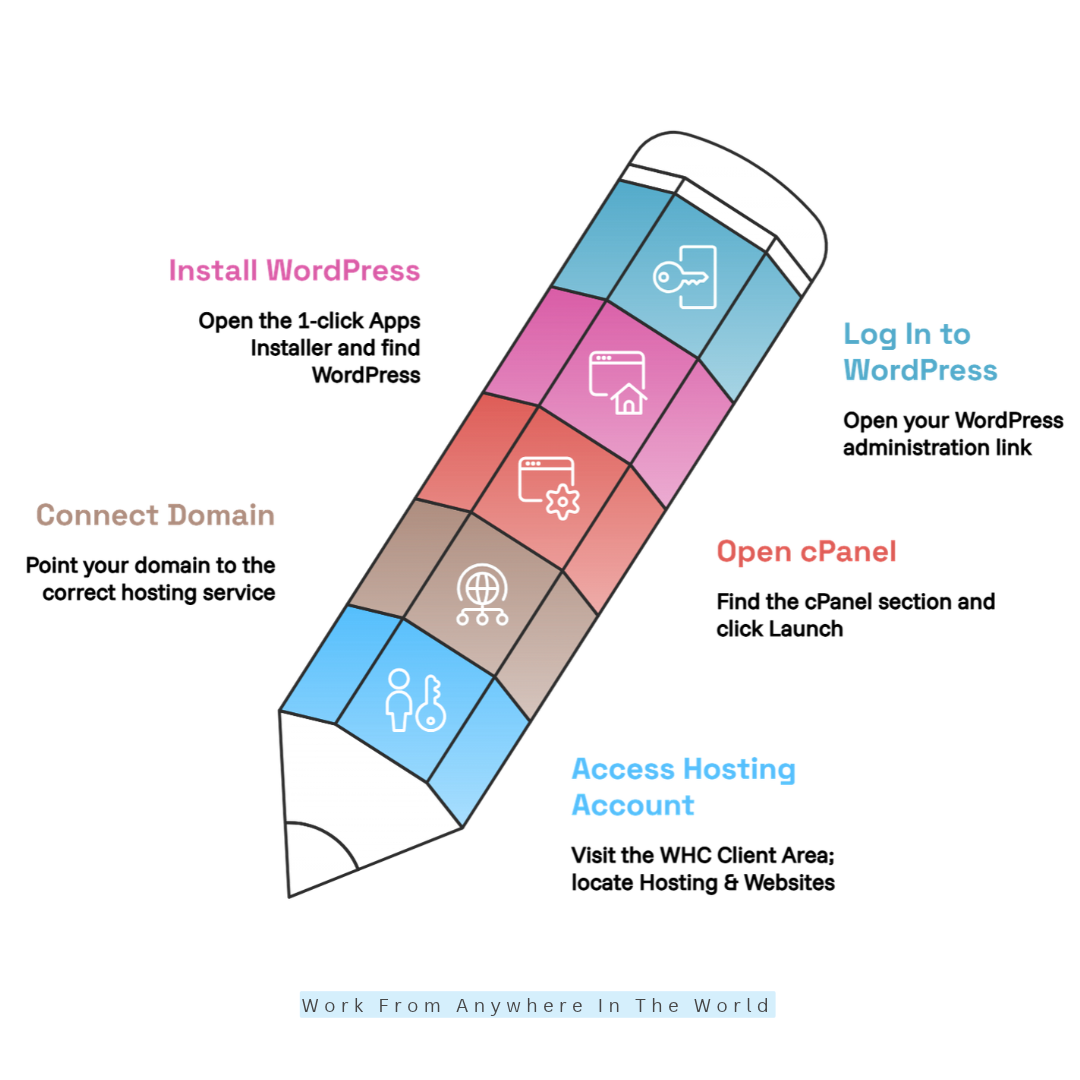
Begin by visiting the WHC Client Area and signing in with your registered email address and password. This is the account you created when purchasing your hosting package.
After logging in, locate Hosting & Websites in the left navigation panel. Select your purchased hosting package to view its service details and available management options.
Keep your WHC welcome email nearby because it contains important account information. You may need these details when connecting your domain, accessing your hosting tools, or configuring additional services.
Remember that the Client Area and cPanel serve different purposes. The Client Area manages your hosting subscription, while cPanel provides tools for managing website files, databases, and email accounts.
If you’re new to hosting, our guide on WordPress vs Managed WordPress explains the differences between these approaches and their management requirements.
2. Connect Your Domain Name To WHC
Your domain name must point to the correct hosting service before visitors can access your website. This connection allows browsers to locate the server hosting your website files.
If you purchased your domain and hosting together through WHC, the connection is generally configured automatically. However, it’s worth checking that everything is working correctly.
For domains registered with another provider, sign in to your domain registrar’s dashboard. Locate the nameserver or DNS management settings associated with your domain.
Find the correct WHC nameservers in your welcome email or the provider’s official documentation. Replace the existing nameservers only after confirming the values required for your particular hosting package.
Different WHC services may use different nameserver configurations. Entering incorrect values can prevent visitors from reaching your website or disrupt other domain-related services.
DNS changes may take up to 48 hours to propagate fully, although they often become effective sooner. During this period, visitors in different locations may temporarily see different results.
If you’re still choosing a domain, our guide on how to buy a domain forever explains domain registration, renewals, and the importance of maintaining ownership.
3. Open Your cPanel Dashboard
Once your domain is connected, return to the WHC Client Area and select your Web Hosting package. Locate the cPanel section and click Launch to open the hosting control panel.
The cPanel dashboard provides access to essential website administration tools. These include File Manager, Email Accounts, Databases, SSL/TLS, and JetBackup, where available.
Each tool serves a different purpose. File Manager handles website files, while database tools help manage the information used by applications such as WordPress.
Email Accounts allows you to create domain-based mailboxes. SSL/TLS settings help manage security certificates, while JetBackup provides access to available website backups.
Take a few minutes to explore the dashboard before making changes. Becoming familiar with the different sections can make future website maintenance much easier.
If you’re using WHC Managed WordPress, the access process differs. Open the settings gear beside Live Env. and select Log in to cPanel, where this option is available.
Avoid changing unfamiliar settings without understanding their purpose. Incorrect database, DNS, or file modifications can affect your website’s functionality.
4. Install WordPress Through The Application Installer
In cPanel, locate the 1-Click Apps Installer under Popular Tools. Open the installer, find WordPress under Top Scripts, and select Install.
WordPress is a popular content management system that allows users to create websites without developing every page from scratch. It’s particularly suitable for blogs, business websites, and content-focused projects.
Select the domain where you want to install WordPress. Choose HTTPS if your SSL certificate is already configured and functioning correctly.
Leave the Directory field empty if you want WordPress installed directly on your main domain. Entering a directory name creates an installation within that specific folder instead.
Next, provide your website title, administrator username, secure password, email address, and preferred language. Use a unique administrator username rather than an easily guessed default.
Review the available update settings before proceeding. Keeping WordPress and its components updated is an important part of maintaining website security.
Click Install and wait for the confirmation message. Save your administration URL and login details somewhere secure so you can access your website later.
These installation steps apply to WHC Web Hosting and Reseller Hosting. WHC Managed WordPress packages generally come with WordPress pre-installed.
For additional guidance, our WordPress tutorial for beginners explains how to become familiar with the platform after installation. It covers essential features that can help you build confidence as you prepare your first website.
5. Log In To Your WordPress Dashboard
After installation, open your WordPress administration page. You can usually access it by adding /wp-admin to your website address.
Enter the administrator username and password you created during installation. Once authenticated, you’ll reach the WordPress dashboard.
The left navigation menu contains important sections, including Posts, Pages, Appearance, Plugins, and Settings. These tools allow you to manage your website’s content, design, and functionality.
Start by reviewing your general website settings. Check the site title, tagline, language, time zone, and permalink structure before publishing substantial content.
Next, choose a theme that suits your website’s purpose. Our guide on how to choose a WordPress theme explains important considerations such as design, responsiveness, and functionality.
You can then create essential pages, including your homepage, About Us page, and Contact page. These help visitors understand your website and find important information.
For example, someone launching a nature photography blog could organize their content around wildlife, gardening, and outdoor photography. Clear navigation makes it easier for visitors to explore these topics.
As you become more comfortable with WordPress, you can begin publishing articles, adding photographs, and installing carefully selected plugins.
Our guide to the best blogging tools explores additional resources for content creation, website management, and productivity. Choosing tools that suit your needs can make running your WordPress website easier as your blog grows.
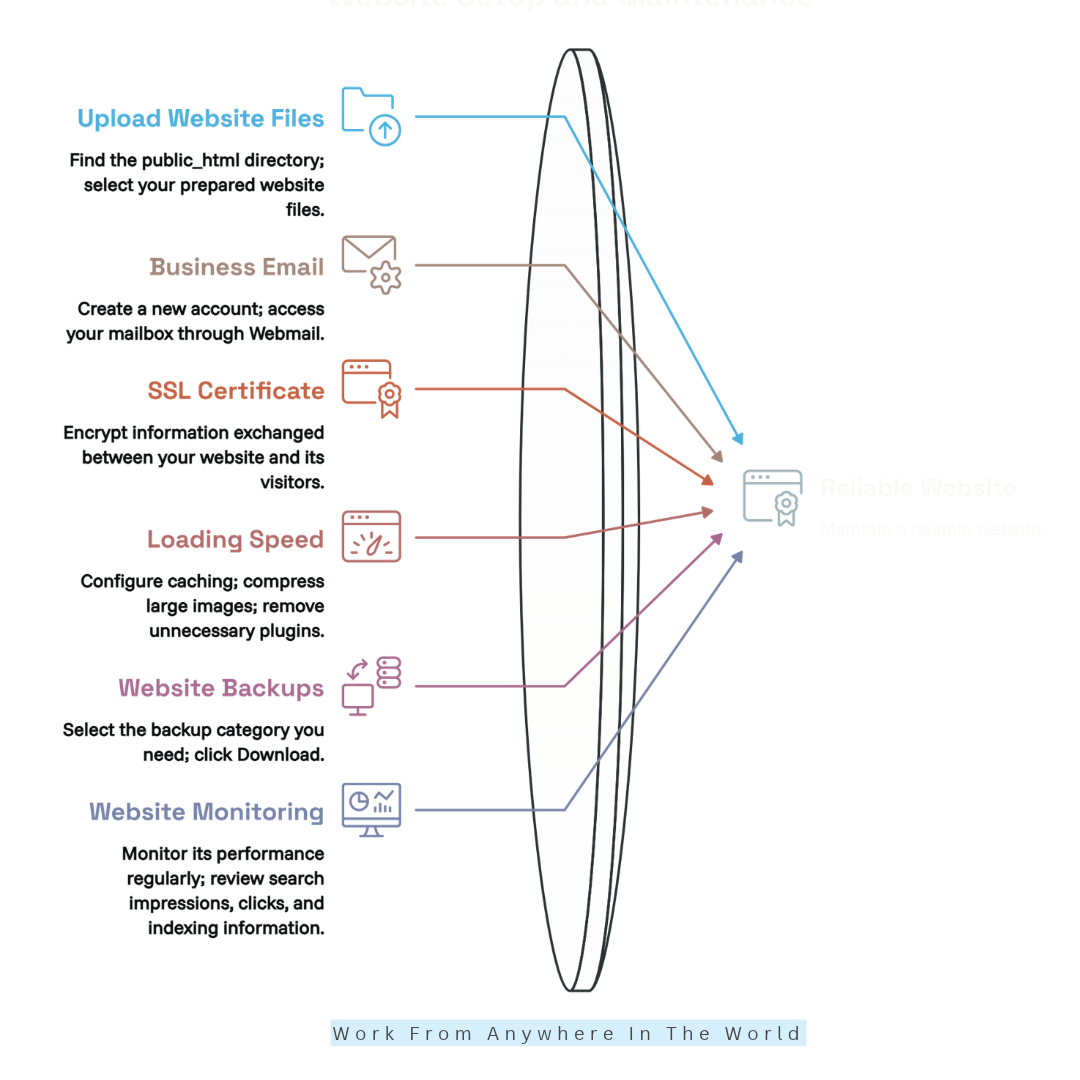
6. Upload Website Files Through File Manager
If you’re building a custom HTML or PHP website instead of using WordPress, cPanel’s File Manager allows you to upload and organize your website files directly.
Open File Manager in cPanel and locate the public_html directory. This is commonly the main document root for your primary website, although additional domains may use different directories.
Click Upload and select the prepared files from your computer. Make sure your homepage file, usually named index.html or index.php, is placed in the correct directory.
Organize images, CSS stylesheets, JavaScript files, and other resources into clearly labelled folders. Keeping everything organized makes future updates and troubleshooting much easier.
For example, a photographer creating a portfolio website might use separate folders for wildlife photographs, landscape images, and design resources. This helps maintain a manageable file structure as the collection grows.
Our guide to the best image editing tools explores resources for preparing and improving website photographs before uploading them.
After uploading your files, open your domain in a browser to check whether the website displays correctly. Test the navigation, images, and important pages to identify missing files or broken links.
If something doesn’t display properly, check the file names, directory locations, and references within your HTML or PHP files. Small mistakes in file paths can prevent website resources from loading.
7. Create A Professional Business Email
A professional email address helps establish a consistent business identity and gives customers a recognizable way to contact you. WHC allows eligible hosting customers to create email accounts using their own domains.
Open cPanel and select Email Accounts under Popular Tools or Mail. Choose the option to create a new email account and select the domain you want to use.
Enter your preferred username and create a strong, unique password. For example, you could use info@yourdomain.com for general enquiries or support@yourdomain.com for customer assistance.
Review the available mailbox storage quota before completing the setup. The number of accounts and available storage resources depends on your selected hosting package.
Once the account is created, access your messages through Webmail or configure the mailbox in a compatible email application. WHC’s email configuration instructions can help you identify the required server settings.
For example, an online store might use separate addresses for customer enquiries, order assistance, and business partnerships. This makes it easier to organize correspondence and direct messages to the appropriate person.
Our guide to email marketing content strategies explores ways to create useful messages that support customer relationships and encourage ongoing engagement.
Remember that a standard business mailbox is different from a dedicated email marketing platform. For larger newsletters or automated campaigns, specialized software may offer more suitable subscriber management features.
8. Configure Your Website’s SSL Certificate
An SSL certificate helps protect information exchanged between your website and its visitors by enabling an encrypted HTTPS connection. This is particularly important for websites that collect personal information.
First, check whether your WHC hosting package already includes an SSL certificate. Many hosting packages provide SSL automatically, although availability and installation methods can vary.
Open the SSL/TLS management section in cPanel or review your hosting service information. Look for an active certificate associated with your domain.
If a certificate hasn’t been installed, follow WHC’s instructions for enabling the available SSL service. Avoid making unnecessary changes if your hosting package already manages certificates automatically.
Once the certificate is active, visit your website using https:// at the beginning of its address. Check whether your browser recognizes the connection as secure.
If you’re using WordPress, review the website addresses under Settings → General. Update them to HTTPS when appropriate, ensuring that your certificate and website configuration are ready.
You should also check for mixed-content warnings. These can occur when an HTTPS page attempts to load images, scripts, or other resources through unsecured HTTP connections.
For example, an online store collecting customer details needs an encrypted connection to help protect information transmitted through its website. However, SSL alone doesn’t replace secure payment processing or other security measures.
The official WordPress HTTPS documentation explains why encrypted connections matter and how they support website security.
After enabling HTTPS, test your homepage, contact forms, images, and important internal pages. Regular security updates and careful website maintenance provide additional protection beyond the SSL certificate.
Wealthy Affiliate – Mini Review
If you’ve ever thought about turning your blog, passion, or niche into an online business,
Wealthy Affiliate (WA) is one of the most beginner-friendly platforms I’ve used.
It combines step-by-step training, website hosting, AI-powered tools,
keyword research, and an active community all in one place.
What I like most is that you can start for free (no credit card needed), explore the platform,
test the tools, and connect with other entrepreneurs before upgrading.
WA isn’t a “get rich quick” scheme — success comes from consistent effort
and applying what you learn over time.
9. Improve Website Loading Speed
Website loading speed plays an important role in visitor experience and search visibility. A slow website can frustrate readers and make it harder for them to navigate your content.
If your WHC hosting environment supports LiteSpeed Cache, you can use the LiteSpeed Cache WordPress plugin to configure caching and selected performance optimizations.
Open your WordPress dashboard and locate the LiteSpeed Cache settings after installing and activating the plugin. Begin with basic caching options before exploring more advanced features.
Caching helps reduce repeated processing by storing reusable website content. However, some server-level features require compatible hosting infrastructure, so confirm what your WHC package supports.
Large photographs can also slow down a website, particularly when several high-resolution images appear on the same page. Compressing images and choosing suitable file formats can improve loading efficiency.
For example, a wildlife photography blog may contain hundreds of detailed animal and bird photographs. Optimizing these files helps preserve visual quality while reducing unnecessary loading delays.
Choosing a lightweight WordPress theme and removing unused plugins can further improve performance. Avoid installing additional tools unless they provide a clear benefit to your website.
After making changes, test your pages using Google PageSpeed Insights. This free tool evaluates performance and highlights potential improvements for mobile and desktop visitors.
Make one significant change at a time and test the results before proceeding. This makes it easier to identify which adjustments genuinely improve your website’s performance.
10. Create And Download Website Backups
Regular website backups help protect your content, settings, and important business information. They provide a recovery option if files become damaged, deleted, or affected by technical problems.
Open cPanel and locate JetBackup under the Files section, where available. This tool allows eligible WHC customers to access stored backup copies.
Select the backup category you need, such as Home Directory, Databases, or Email Accounts. Different categories contain different types of information, so choose the option that matches your requirements.
Next, select an available backup date and click Download. Follow the download queue and retrieve the backup file when it becomes available.
For example, a blogger who accidentally deletes important website files may be able to restore them from an earlier backup. Having a recent copy can reduce the amount of content that needs to be recreated.
WHC recommends downloading independent local backups approximately once a month. Websites that change frequently may benefit from more frequent copies, depending on their publishing activity.
Store your downloaded backups somewhere secure, preferably outside your hosting account. An external drive or reputable cloud storage service can provide an additional layer of protection.
JetBackup restoration is available by default with WHC Web Hosting and Reseller Hosting plans. Other hosting services may have different backup arrangements or require additional options.
Remember that a backup is only useful if it can be restored successfully. Periodically checking your backup files and understanding the restoration process can help you prepare for unexpected problems.
11. Monitor Your Website And Hosting Resources
Once your website is published, regular monitoring helps you understand its performance and identify potential problems. This includes reviewing visitor activity, search visibility, and hosting resource usage.
Start by setting up Google Analytics to explore how visitors interact with your website. Google Analytics 4 provides information about traffic sources, engagement, and user activity.
You can also connect your website to Google Search Console. This free service helps you review search impressions, clicks, indexing information, and certain technical issues.
For example, a gardening blogger might discover that articles about container gardening attract more search visitors than other topics. These insights can help guide future content planning.
Our guide to growing blog traffic using Semrush explores additional ways to research search performance and identify opportunities for improvement.
Alongside these tools, check your hosting resource statistics through cPanel. Review available storage, bandwidth, and other account limits provided by your WHC hosting package.
As your website attracts more visitors and publishes additional content, resource requirements may increase. Monitoring these figures can help you determine whether your current hosting plan remains suitable.
Keep WordPress, themes, and plugins updated after reviewing compatibility and creating appropriate backups. Updates can address security vulnerabilities, resolve technical problems, and introduce useful improvements.
Establishing a simple maintenance routine makes website management more manageable. Regular checks can help you identify problems early and keep your website running reliably.
12. Contact WHC Support When You Need Help
Even with careful preparation, you may occasionally encounter technical problems while managing your website. Installation errors, DNS issues, and email configuration difficulties are common reasons to request assistance.
Start by visiting the WHC Help Center and searching for your specific problem. Its knowledge base contains instructions covering hosting accounts, WordPress, domains, email, and other technical topics.
For example, if your domain isn’t connecting properly, search for information about nameservers or DNS propagation. You may find a solution without contacting the support team directly.
If the documentation doesn’t resolve your issue, sign in to your WHC Client Area and explore the available support options. WHC advertises assistance through live chat, phone, and email.
Before contacting support, prepare your domain name, hosting package details, and a description of the problem. Include a screenshot of any error message when possible.
Explain what you were trying to accomplish, which steps you followed, and when the problem appeared. Clear information can help support staff identify potential causes more efficiently.
For example, instead of saying your website isn’t working, explain whether you’re experiencing a login error, missing images, or an unavailable homepage. Specific details make troubleshooting easier.
Avoid sharing passwords or other sensitive account information in ordinary support messages. Follow WHC’s secure verification procedures if additional account access is required.
Once the issue is resolved, make a brief note of the solution for future reference. Keeping a simple troubleshooting record can save time if you encounter a similar problem again.
Frequently Asked Questions
Q1: Can I Install WordPress On WHC Hosting?
Yes. WHC Web Hosting and Reseller Hosting customers can install WordPress through the cPanel application installer. This lets you create a blog or business website without manually uploading the WordPress software.
WHC Managed WordPress plans generally come with WordPress pre-installed, simplifying the initial setup process. The available management tools and installation procedures depend on your hosting package.
Q2: Does WHC Provide cPanel Access?
Yes. WHC provides cPanel with applicable Web Hosting and Reseller Hosting services. This control panel allows users to manage website files, databases, email accounts, and various hosting settings.
Its graphical interface makes routine administration easier for beginners. However, other WHC hosting products may use different management interfaces, so check your plan specifications.
Q3: Can I Host Multiple Websites With WHC?
Yes, certain WHC hosting packages support multiple websites, although the number of permitted domains depends on your plan. Entry-level packages may have more restrictive allowances than higher-tier options.
Before adding another website, review your hosting package’s domain limits, storage capacity, and available resources. Managing several websites under one account may increase your overall hosting requirements.
Q4: Does WHC Provide Website Backups?
Yes. WHC provides JetBackup with eligible Web Hosting and Reseller Hosting plans, allowing customers to access available backup copies. These can help recover website files, databases, or other supported account information.
Backup availability, retention periods, and restoration options depend on the hosting service. Maintaining independent copies is also recommended to provide additional protection against unexpected problems.
Q5: Can I Transfer An Existing Website To WHC?
Yes. WHC offers website migration assistance with eligible hosting packages. The process may involve transferring website files, databases, and other components from your existing hosting provider.
Migration requirements depend on your website platform, current hosting environment, and domain configuration. Before transferring, create a complete backup and confirm which migration services are included in your plan.
Q6: Can I Create A Business Email With WHC?
Yes. Eligible WHC hosting packages allow customers to create professional email addresses using their own domain names. You can manage these accounts through cPanel and access messages using Webmail or compatible email applications.
For example, you could create info@yourdomain.com or support@yourdomain.com for customer communication. Available mailbox storage and account limits depend on your hosting package.
Conclusion
Learning how to use WHC Web Hosting Canada becomes easier when you understand its essential tools and features. From connecting your domain to installing WordPress, each step helps you build a reliable online presence.
Managing professional email accounts, website backups, security settings, and loading speed is equally important. These everyday tasks help keep your website organized, accessible, and running smoothly.
You don’t need advanced technical skills to get started. With regular maintenance, careful planning, and the right hosting practices, you can confidently manage your website as your online business grows.
Whether you’re launching your first blog or managing an established website, WHC offers tools that can support your hosting needs. Take your time learning the platform and build your website one step at a time.
I trust you enjoyed this guide on How To Use WHC Web Hosting Canada: 12 Easy Steps. Please stay tuned for more helpful articles about affiliate marketing, online business, and working from anywhere in the world.
Take care!
— JeannetteZ 🌍✨
💬 Your Opinion Is Important To Me
Do you have thoughts, ideas, or questions? I’d love to hear from you. Please leave your comments below or email me directly at Jeannette@WorkFromAnywhereInTheWorld.com.
📚 More Work From Anywhere Reads
🚀 Ready to Build a Business You Can Run from Home
Or from Anywhere in the World?
Imagine earning income on your terms — from home, a cozy café, or wherever life takes you.
With the right tools, training, and community support, it’s entirely possible.
Start your own online business for free — no credit card needed.
Disclosure
This post may contain affiliate links. As an Amazon Associate and participant in other affiliate programs, I earn from qualifying purchases at no extra cost to you. Please read my full affiliate disclosure.