How To Use Canva: 15 Easy Steps To Create Stunning Designs
Learning to use Canva makes creating attractive graphics easier, even if you have no design experience. Canva offers tools to design social media graphics, presentations, Pinterest pins, flyers, videos, and business materials.
Its beginner-friendly interface and ready-made templates allow you to create designs without starting from scratch. You can customize colours, fonts, images, and layouts to suit your personal style or brand.
Canva offers useful features for organizing projects, editing images, creating videos, and preparing content for different platforms. These tools make it a practical choice for bloggers, small businesses, and content creators.
This step-by-step guide explains how to use Canva, from creating your first design to exploring more advanced features. You’ll learn practical design tips to create polished, engaging visuals with confidence.
What Is Canva?
Canva is an online visual communication and design platform that helps users create attractive visual content. Its user-friendly editor combines templates, images, fonts, graphics, videos, and other creative tools in one convenient workspace.
The platform supports a wide variety of projects, including social media graphics, Pinterest pins, presentations, posters, flyers, logos, and marketing materials. Users can start with professionally designed templates or create their own designs from scratch.
Canva suits beginners, bloggers, educators, small business owners, and experienced content creators. Its drag-and-drop editor makes it easy to customize layouts, adjust colours, insert images, and add text without extensive graphic design experience.
As a cloud-based platform, Canva allows users to access their projects through a web browser or compatible mobile and desktop apps. It offers free and paid plans, making it accessible to people with different creative needs and budgets.
The Journey Of Canva
Canva’s story began in 2007 when Melanie Perkins and Cliff Obrecht launched Fusion Books, an online platform for designing school yearbooks. Their experience inspired a bigger idea: making graphic design simpler and more accessible to everyone.
Together with Cameron Adams, they developed Canva, which officially launched in 2013. Its drag-and-drop editor offered an approachable alternative to complicated design software, attracting more than 50,000 people to its waiting list before launch.
Canva grew steadily, introducing an iPad app and a marketplace for professional design layouts in 2014. Over the following years, the platform expanded its creative tools to include video editing, presentations, collaboration, and additional design features.
A major milestone came in 2022 with the introduction of Canva’s Visual Suite. This expansion brought documents, websites, whiteboards, and other visual communication tools together, making Canva useful for projects beyond traditional graphic design.
Today, Canva offers a comprehensive creative workspace for individuals, educators, businesses, and content creators. Its continued development reflects the original vision of making visual communication accessible while helping people bring their creative ideas to life.
Wealthy Affiliate – Mini Review
If you’ve ever thought about turning your blog, passion, or niche into an online business,
Wealthy Affiliate (WA) is one of the most beginner-friendly platforms I’ve used.
It combines step-by-step training, website hosting, AI-powered tools,
keyword research, and an active community all in one place.
What I like most is that you can start for free (no credit card needed), explore the platform,
test the tools, and connect with other entrepreneurs before upgrading.
WA isn’t a “get rich quick” scheme — success comes from consistent effort
and applying what you learn over time.
How To Use Canva In 15 Essential Steps
Learning how to use Canva becomes easier when you explore its features one step at a time. The platform provides a straightforward way to create attractive designs, whether you’re working on personal projects, business materials, or online content.
You don’t need advanced graphic design skills to get started. Canva’s drag-and-drop editor, customizable templates, and built-in creative tools allow you to experiment with different layouts, colours, fonts, and images.
The following 15 steps will guide you through the essential features, beginning with creating an account and exploring the dashboard. You’ll gradually learn how to customize templates, work with design elements, and develop your own visual style.
As you get more comfortable with Canva, you’ll discover additional tools to create videos, add animations, organize projects, and maintain consistent branding across your designs.
By following these practical steps, you’ll develop the confidence to create polished graphics for websites, social media, presentations, and other creative projects.
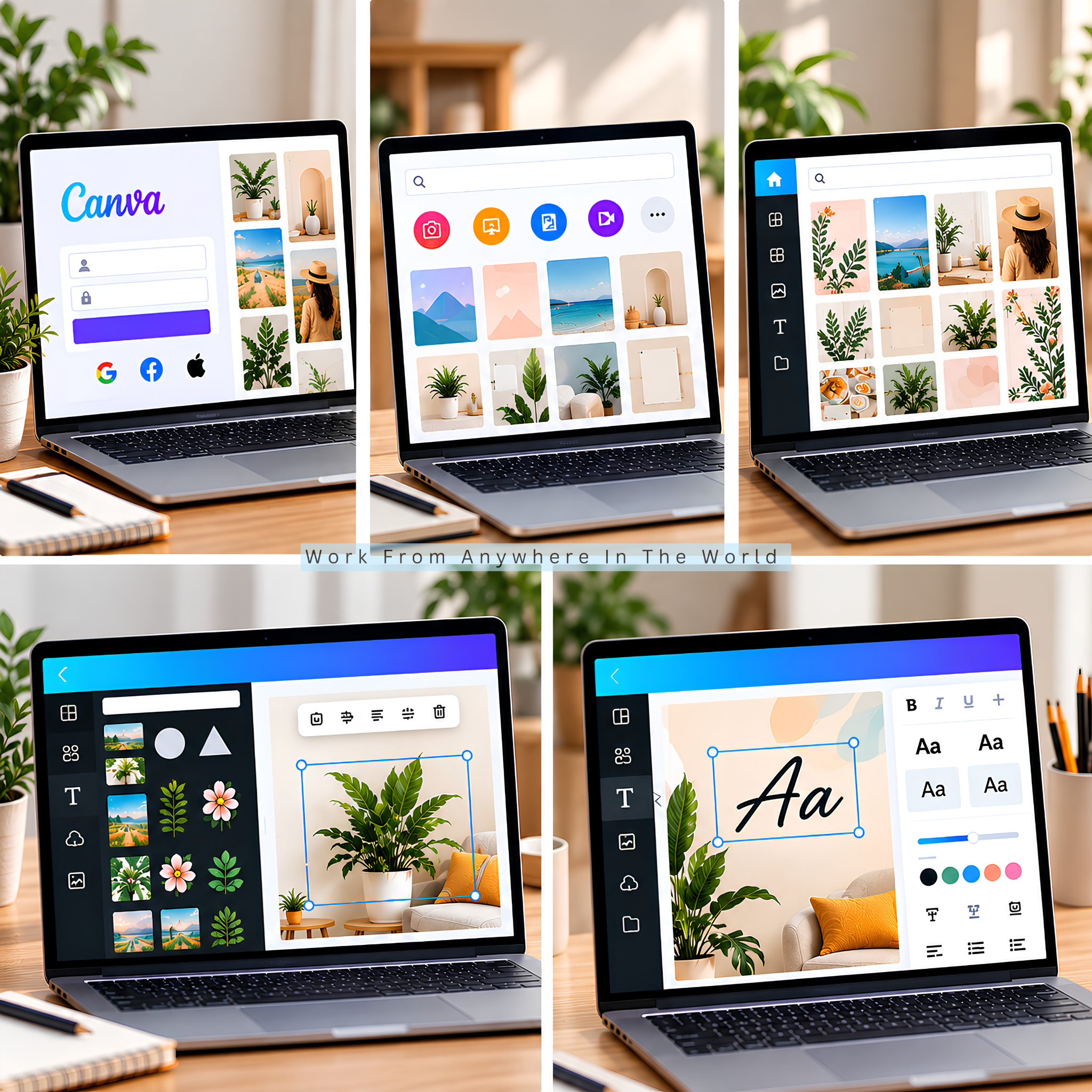
1. Create Your Canva Account
First, visit the official Canva website and create a free account. You can sign up using your email address or one of the available sign-in options.
After you register, Canva will take you to its homepage, where you can explore design categories, browse templates, and access your projects. Take a moment to get familiar with the layout before creating your first design.
Canva offers both free and paid plans, but you don’t need a paid subscription to begin designing. The free version includes templates, fonts, graphics, and editing tools suitable for many everyday creative projects.
Before moving forward, think about what you’d like to create. A Pinterest pin, social media graphic, presentation, or flyer makes an excellent first project because you can begin with a ready-made template.
2. Choose The Right Design Format
Choosing the right design format gives your project a strong foundation. Canva provides ready-made design sizes for social media graphics, presentations, posters, flyers, videos, and many other creative projects.
From the Canva homepage, select Create a design to explore the available formats. You can browse the suggested categories or use the search bar to find a specific design type, such as a Pinterest pin or Instagram post.
Think about where your finished design will appear before selecting a format. A Pinterest pin typically uses a vertical layout, while a presentation requires a wider format. Printed flyers have different size requirements than digital graphics.
For projects requiring specific measurements, select Custom size and enter your preferred width and height. Canva allows you to work with different measurement units, making it useful for website banners, advertisements, and printed materials.
Starting with the correct dimensions helps you arrange text, images, and other design elements appropriately. Once you’ve selected your format, Canva opens the editor, where you can begin creating your design.
3. Start With A Canva Template
Canva templates provide professionally designed layouts that make creating attractive graphics easier. Instead of starting with a blank page, you can choose a template with coordinated colours, fonts, images, and design elements.
Once you open the Canva editor, select Design in the left-hand toolbar to browse available templates. Use the search field to find layouts that match your project, whether you’re creating a Pinterest pin, presentation, flyer, or social media graphic.
Click a template to apply it to your design. You can then replace the sample text, change images, and adjust colours or fonts to match your preferences. Some templates and design elements require a paid Canva plan, so look for free options when needed.
Templates are particularly useful for beginners because they demonstrate how different design elements work together. Pay attention to text placement, spacing, colour combinations, and the balance between images and empty space.
Rather than using a template exactly as it appears, personalize it to reflect your message and visual style. Thoughtful adjustments help create distinctive designs while maintaining the structure of a professionally prepared layout.
4. Understand The Canva Editor
The Canva editor is where your creative ideas take shape. Its workspace brings together the tools you need to add text, images, graphics, videos, backgrounds, and other design elements.
The main canvas sits in the centre of the workspace and displays your design. This is where you can select, move, resize, and arrange individual elements to create your preferred layout.
The left-hand toolbar provides access to templates, design elements, text, uploads, and other creative resources. Select a category to browse the available options, then click or drag an item onto your canvas.
When you select an element, additional editing controls appear. Depending on what you’ve selected, you can change its colour, font, size, position, transparency, or other properties.
Canva provides alignment guides to help you position objects accurately. Experiment with moving images, adjusting headlines, and changing spacing to see how these choices affect the overall design.
Spend a few minutes exploring the editor before moving forward. Canva’s Design School tutorials can help you get familiar with its tools and features, so you feel more confident creating your own designs.
5. Add And Edit Text And Choose Fonts
Text communicates the main message of your Canva design, while thoughtful typography makes that message easier to read. A clear headline, supporting text, and consistent font choices help create an attractive, organized layout.
To add text, select Text from the left-hand toolbar in the Canva editor. Choose a heading, subheading, or body text option, then click the text box on your canvas and replace the placeholder wording with your own.
Select the text box to access the editing toolbar. Here, you can change the font, size, colour, alignment, and spacing. Drag the text box to reposition it, or adjust its dimensions to fit your design.
Give your most important message greater visual emphasis. For example, make “How To Use Canva” a prominent headline, followed by a smaller supporting sentence with additional information.
Canva offers a wide selection of fonts, but using too many can make your design appear cluttered. Its font combinations tool can help you choose fonts that work well together.
Combining one distinctive heading font with a readable supporting font usually creates a more consistent appearance. This helps establish a clear visual hierarchy, making your design easier to follow.
Choose typography that suits your project’s purpose and remains easy to read. Using the same fonts across related designs can strengthen your personal brand and create a recognizable visual style.
6. Upload Your Own Images
Uploading your own images lets you personalize Canva designs with original photos, product images, screenshots, logos, and illustrations. These visuals can make your projects more recognizable and relevant to your audience.
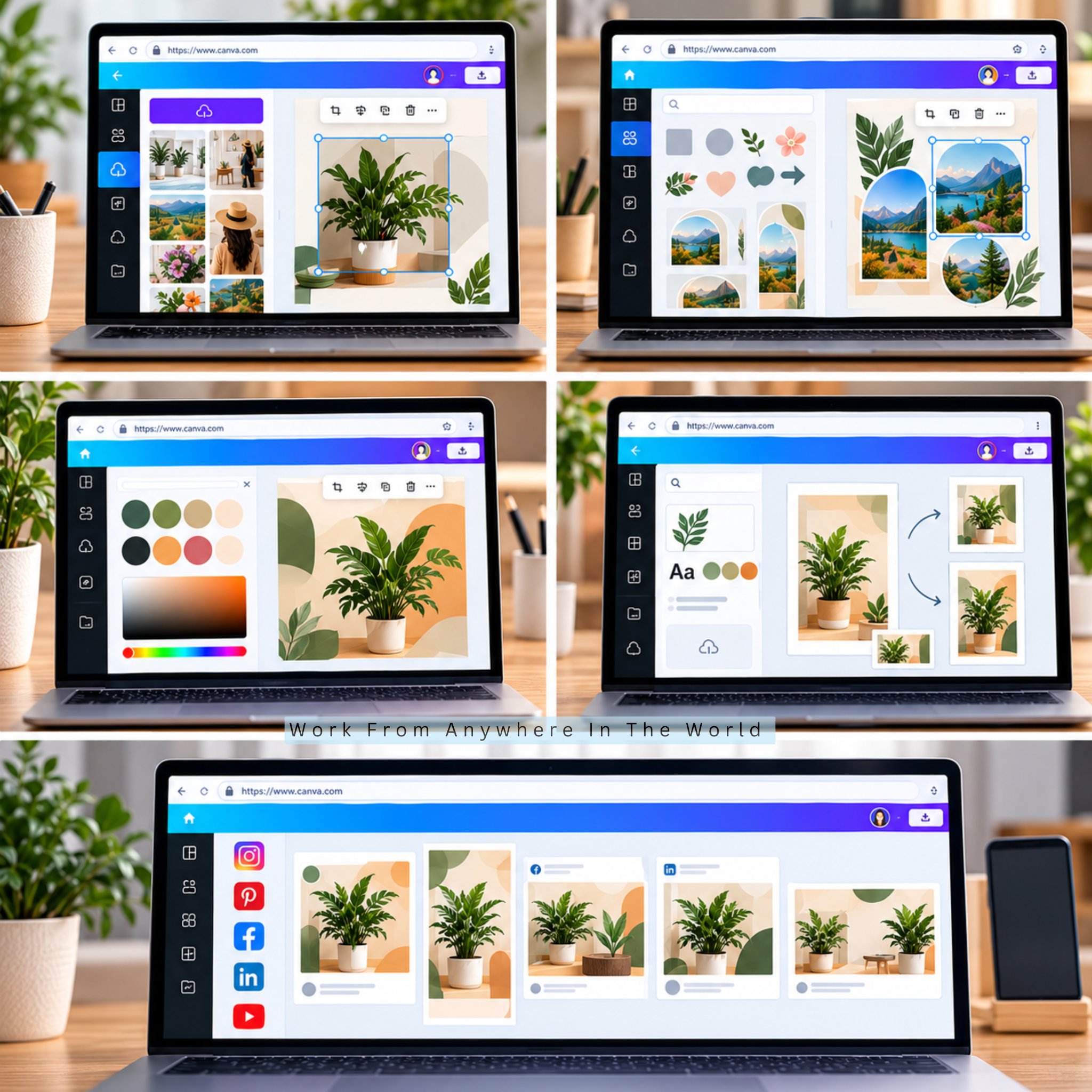
To upload an image, open the Canva editor and select Uploads from the left-hand toolbar. Click Upload files, choose an image from your computer, and wait for it to appear in your uploads library.
Click the uploaded image or drag it onto your canvas. You can then resize it, reposition it, or crop it to fit your layout. Select the image to explore additional options, including Canva’s photo editing tools, filters, and effects.
Original photography is especially useful for businesses because it lets customers see authentic products, workplaces, and experiences. You can upload your own logo to maintain consistent branding across different projects.
Choose clear, well-composed images that suit your design’s dimensions. You can use image editing tools to improve photographs before uploading them to Canva. A sharp photograph can strengthen a simple layout, while a blurry or heavily enlarged image may reduce its professional appearance.
Before adding a visual, consider what it contributes to your message. The most effective images complement the text, attract attention, and help viewers understand your content.
7. Explore Canva Elements And Frames
Canva’s Elements library offers creative resources that add structure, personality, and visual interest to your designs. These include shapes, icons, illustrations, lines, stickers, frames, and charts.
To explore these options, select Elements from the left-hand toolbar in the Canva editor. Browse the available categories or use the search field to find something specific, such as an arrow, decorative border, or illustration.
Click an element or drag it onto your canvas. You can resize, reposition, rotate, and customize many elements to suit your layout. Some graphics even allow you to change their colours to match your design.
Frames let you display photographs inside different shapes, including circles, rectangles, and decorative layouts. Canva’s guide to using frames provides additional instructions. Search for frames in the Elements library, choose a shape, and add it to your canvas.
Next, drag a photograph from your uploads or Canva’s image library into the frame. Double-click the image to adjust its position or crop it to highlight the most important part of the photograph.
Frames work particularly well for collages, presentations, product showcases, and blog graphics. Choose elements that complement your message, and keep colours and styles consistent to create a balanced, cohesive design.
8. Apply Colours Strategically
Colour shapes how people experience your Canva designs, from first impressions to how easily they can read your message. A thoughtfully chosen colour palette helps create attractive, consistent, and recognizable visuals.
To change a colour in Canva, select a text box, shape, or other editable element on your canvas. Click the appropriate colour control in the editing toolbar to explore the available options and choose a new shade.
You can select colours from Canva’s suggested palettes or enter a specific hex colour code to match your brand. For example, using the same colours across blog graphics, Pinterest pins, and social media posts helps establish a consistent visual identity.
Begin with one primary colour and a few complementary shades. Canva’s colour palette generator can help you explore combinations.
Use your strongest colour to highlight key information, while softer tones and neutral backgrounds let headlines, images, and supporting text stand out.
Colour contrast is particularly important for readability. Dark text against a light background, or light text against a sufficiently dark background, is often easier to read than combinations with very little contrast.
Colour can establish a clear visual hierarchy. An accent shade can draw attention to a call to action, while quieter colours keep secondary information from competing with the main message.
Avoid introducing too many unrelated colours into one design. A focused palette generally creates a more cohesive appearance and helps viewers follow your content naturally.
9. Use Brand Features And Resize Designs
Consistent branding helps make your Canva designs recognizable across websites, social media, presentations, and promotional materials. Canva’s brand features let you organize key visual assets and keep a coordinated look.
To explore these features, open Brand from Canva’s main workspace. Depending on your subscription, you can create a Brand Kit containing your logos, brand colours, and preferred fonts. Some brand management features require a paid Canva plan.
Once your brand assets are available, you can apply them to compatible designs instead of searching for the same colours, fonts, and logos every time. This is particularly useful when creating graphics for multiple platforms or managing several projects.
Canva offers resizing tools that help adapt an existing design to different dimensions. Open your project and look for Resize or Resize & Magic Switch, depending on your editor and plan.
Choose a suggested format or enter custom dimensions, then resize the design or, if available, create a separate version. Resizing an existing project generally requires a paid Canva plan, although you can manually recreate a layout in another format using a free account.
After resizing, review how your text, images, and decorative elements are arranged. A design that looks balanced as a Pinterest pin may need different spacing or positioning when adapted for an Instagram post.
Keeping consistent colours, typography, and imagery across versions strengthens your brand identity while letting each design suit its intended platform.
10. Use Canva For Social Media Content
Canva makes it easier to create social media graphics for Instagram, Pinterest, Facebook, LinkedIn, and YouTube. Each platform has different visual requirements, so choosing an appropriate format helps your content display properly.
From Canva’s homepage, select Create a design and search for your preferred social media format. Explore Canva’s social media templates or start with a blank canvas using the suggested dimensions.
Videos are another valuable option for social media content. Canva allows you to create and edit short videos alongside traditional graphics. Understanding video’s role in social media can help you decide when moving visuals suit your message better than static images.
Before designing, decide on the main idea you want your audience to understand. A clear headline generally communicates more effectively than several competing messages crowded into one graphic.
For example, “5 Ways To Improve Your Home Office” immediately establishes the subject. Additional information can appear in the accompanying caption, a series of carousel slides, or a related blog article.
Keep text readable on smaller screens, and use images that support your message. Consistent fonts, colours, and design elements help people recognize your content across different platforms.
Once your design is complete, review it at a smaller size to check readability and visual balance. Your social media graphics should communicate a clear idea and encourage viewers to read, save, share, or explore your content further.
11. Create Presentations In Canva
Canva lets you create attractive, organized presentations without advanced design skills. You can choose a ready-made template or build your slides from scratch using Canva’s design tools.
From Canva’s homepage, select Create a design and search for Presentations. Choose a suitable format, then browse the available templates or open a blank presentation to begin designing.
Once the editor opens, customize your first slide with a title, supporting text, and relevant imagery. Add more slides as needed, using the available page controls to duplicate, rearrange, or remove slides.
Organize your presentation around a clear narrative. The opening introduces your subject, the middle explains the important points, and the conclusion reinforces the main takeaway.
Keep each slide focused on one main idea. Use readable headings, relevant photographs, charts, or short supporting points instead of filling the available space with lengthy paragraphs.
Maintain consistent typography, colours, spacing, and layouts throughout your presentation. This creates a professional appearance and helps your audience concentrate on the information rather than distracting design changes.
When your slides are ready, use Canva’s Present option to display them. You can explore the available sharing and downloading options to distribute your presentation in a suitable format.
12. Create Videos With Canva
Canva lets you create videos by combining clips, photos, text, graphics, animations, transitions, and audio. These tools are useful for social media videos, presentations, promotional materials, and educational content.
From Canva’s homepage, select Create a design and search for a video format. You can explore Canva’s video editor to get started. Choose a suitable template or begin with a blank project, depending on the type of video you want to create.
Once the video editor opens, upload your own clips or explore Canva’s available video library. Add your chosen footage to the project, then arrange the clips in the order you want them to appear.
Use Canva’s video timeline to adjust clip lengths, trim unwanted footage, and control your scene sequence. You can add text, music, transitions, and animations to make your content more engaging.
For more advanced projects, you can explore the best video editing software to compare tools designed for different creative needs and skill levels.
Give your video a clear beginning, middle, and ending. Introduce the topic, develop your main message with supporting visuals, and finish with a useful takeaway or appropriate call to action.
Keep on-screen text up long enough for viewers to read comfortably. Choose transitions that support the story rather than distract from it, and make sure background music doesn’t overpower spoken content.
You can repurpose existing material into videos. A blog article, presentation, or collection of photographs can become the foundation for a new creative project, allowing you to share the same information in a different format.
When your video is complete, preview the entire project and make any necessary adjustments. Then use Canva’s sharing or downloading options to export your finished video in an available format.
13. Add Animations
Animations bring movement to Canva designs and help draw attention to important information. You can animate text, photographs, graphics, and entire pages to create more engaging presentations, social media content, and promotional materials.
To animate an individual element, select it on your canvas and click Animate in the editing toolbar. Explore the available effects, preview how they appear, and choose one that complements your design.
You can apply animations to an entire page. Select the page and open the animation options to explore effects that add movement across the layout instead of focusing on one element.
For designs with multiple pages or scenes, Canva offers transitions. These control how one page changes to the next and can help create a smoother viewing experience in presentations and videos.
Choose animations that support your message. For example, a headline might appear before its supporting information, allowing viewers to focus on one idea at a time.
Consider your audience when selecting an animation style. A business presentation may benefit from subtle movement, while a promotional social media graphic might suit a more energetic effect.
Avoid animating every element simply because the option is available. Thoughtful movement can make your design more engaging without distracting viewers from the information you want to communicate.
14. Organize Your Canva Projects
Keeping your Canva projects organized makes it easier to find, update, and reuse designs. As your collection grows, a clear filing system can save time and prevent important graphics from getting lost among older projects.
From Canva’s homepage, open Projects to view your saved designs, folders, and other available resources. You can use the search function to locate an existing project or browse your collection.
To organize your designs, create folders for different categories, such as Pinterest graphics, Instagram posts, blog images, presentations, and videos. You can group projects by client, campaign, or business.
Give each design a descriptive name that identifies its purpose. For example, Home Office Tips – Pinterest Pin is easier to recognize than a generic title such as Untitled Design.
Move related designs into their appropriate folders and keep frequently used projects easy to access. You can duplicate an existing design to create a similar graphic without changing the original.
Review your collection periodically to identify outdated designs, unnecessary duplicates, and projects that belong in different folders. A simple organizational system makes your Canva workspace easier to navigate as your creative library expands.
15. Download And Share Your Design
Once you’ve finished creating your Canva design, the final step is preparing it for publishing, printing, presenting, or sharing. Canva offers several export formats and sharing options to suit different projects.
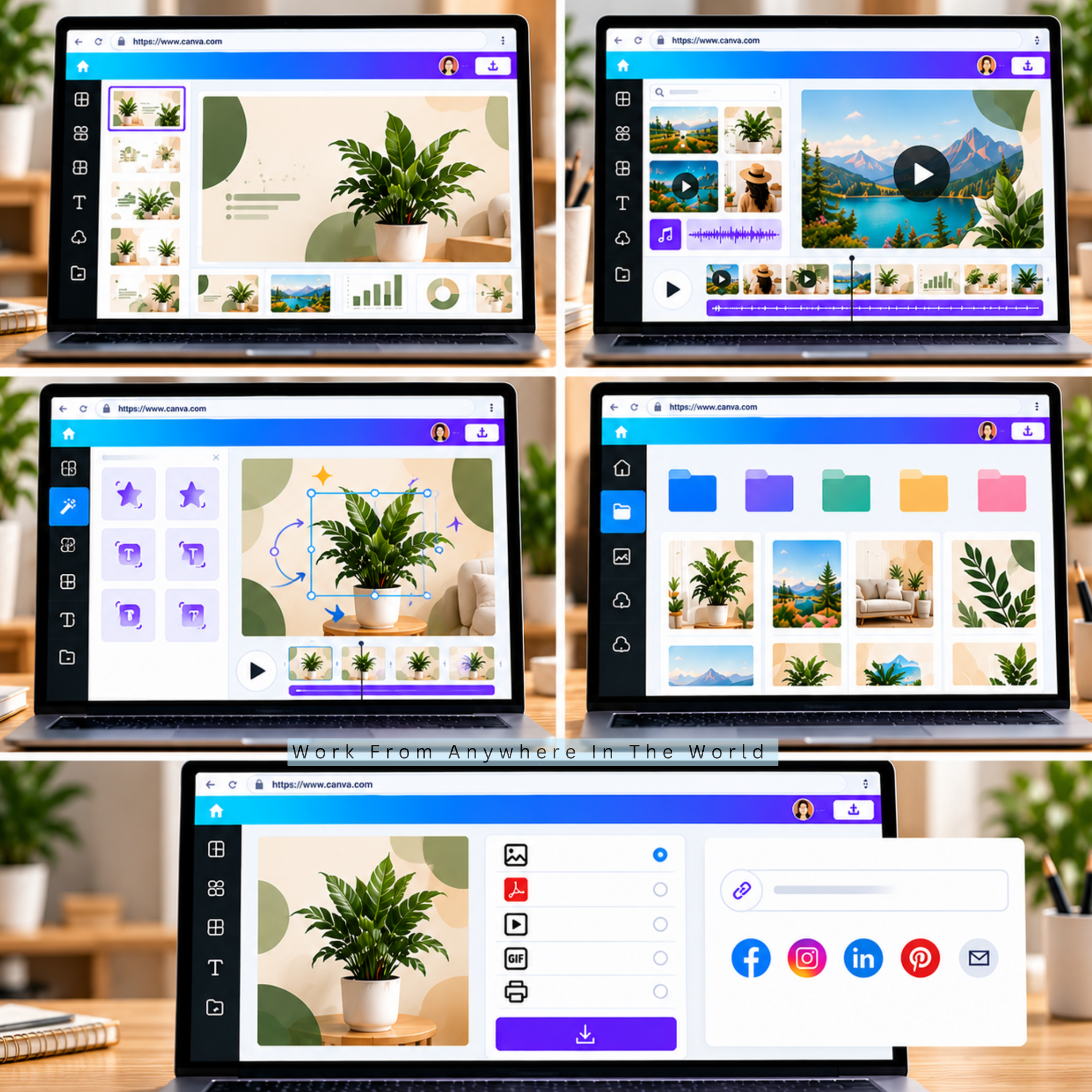
To download your design, click Share in the upper-right corner of the Canva editor and select Download. Choose your preferred file type, review the available settings, and click Download to save the finished project to your device.
Select a format that matches your intended use. PNG works well for graphics that need sharp details or transparency, while JPG suits photographs and many website images. PDF is suitable for documents and printable materials, and MP4 is commonly used for videos.
Some export settings, including certain transparency and advanced download options, require a paid Canva plan. Review the available choices before downloading to ensure your file meets your requirements.
Canva lets you share designs directly with other people. Click Share to invite collaborators, adjust access permissions, or create a shareable link.
Before exporting, carefully review your design for spelling, alignment, spacing, image quality, and readability. Check how the finished graphic appears at its intended size, especially for mobile devices.
A headline that looks prominent on a desktop screen may be difficult to read on a smartphone. Similarly, small decorative details or closely spaced text may become less noticeable at smaller sizes.
Taking a few moments to review your finished project helps ensure your Canva design is ready to publish, present, print, or share with confidence.
Frequently Asked Questions
Q1: Can I Use Canva Without Design Experience?
Yes. Canva is designed for beginners and experienced creators alike. Its templates, drag-and-drop editor, and built-in design tools let you create attractive graphics without formal training.
Learning basic principles such as typography, colour, alignment, and spacing will help you improve your designs. With regular practice, you can develop greater confidence and create more polished visual content.
Q2: What Can I Create With Canva?
Canva supports a wide variety of creative projects, including presentations, posters, flyers, documents, videos, and social media graphics. You can create Pinterest pins, YouTube thumbnails, and marketing materials.
Many designs start with customizable templates, while others you can create from scratch. This flexibility makes Canva useful for personal projects, blogging, education, and business communication.
Q3: Is Canva Free To Use?
Yes. Canva offers a free plan that includes access to its design editor, a selection of templates, and various creative resources. These features are sufficient for many everyday design projects.
Paid plans provide additional tools, premium content, and branding features. You can begin with the free version and explore other options as your creative needs develop.
Q4: Can I Use Canva On A Phone?
Yes. Canva provides mobile applications for supported smartphones and tablets. You can create, edit, and share designs without needing to work exclusively on a desktop computer.
The mobile interface is adapted for smaller screens, making it convenient for simple edits and social media content. More detailed projects may be easier to manage on a larger display.
Q5: Can I Upload My Own Photos And Logos To Canva?
Yes. Canva allows you to upload photographs, logos, illustrations, and other supported image files. You can incorporate these visuals into templates or use them when creating original designs.
Uploading your own content helps maintain consistent branding. Original photographs and recognizable logos can make your designs more personal and relevant to your audience.
Q6: Can I Download And Share My Canva Designs?
Yes. Canva offers download options for different project types, including graphics, documents, presentations, and videos. Available formats depend on the design and the features included in your plan.
You can share designs through links or invite others to collaborate on a project. Before downloading or sharing, review your design for layout, readability, and overall appearance.
Conclusion
Learning how to use Canva opens up creative possibilities for producing attractive visual content without advanced graphic design skills. Its templates and editing tools make designing more accessible for beginners.
Start with simple projects and gradually explore Canva’s features. Focus on readable typography, balanced layouts, thoughtful colour choices, and consistent branding to create clear, effective designs.
With regular practice, Canva can become a valuable part of your blogging, marketing, and business activities. As your confidence grows, you’ll transform creative ideas into polished visuals that connect with your audience.
I trust you enjoyed this article on How To Use Canva. Please stay tuned for more insightful blogs on affiliate marketing, online business, and working from anywhere in the world.
Take care!
— JeannetteZ 🌍✨
💬 Your Opinion Is Important To Me
Do you have thoughts, ideas, or questions? I’d love to hear from you. Please leave your comments below or email me directly at Jeannette@WorkFromAnywhereInTheWorld.com.
📚 More Work From Anywhere Reads
🚀 Ready to Build a Business You Can Run from Home
Or from Anywhere in the World?
Imagine creating income on your terms — from home, a cozy café, or wherever life takes you.
With the right tools, training, and community support, it’s entirely possible.
Start your own online business for free — no credit card needed.
Disclosure
This post may contain affiliate links. As an Amazon Associate and participant in other affiliate programs, I earn from qualifying purchases at no extra cost to you. Please read my full affiliate disclosure.