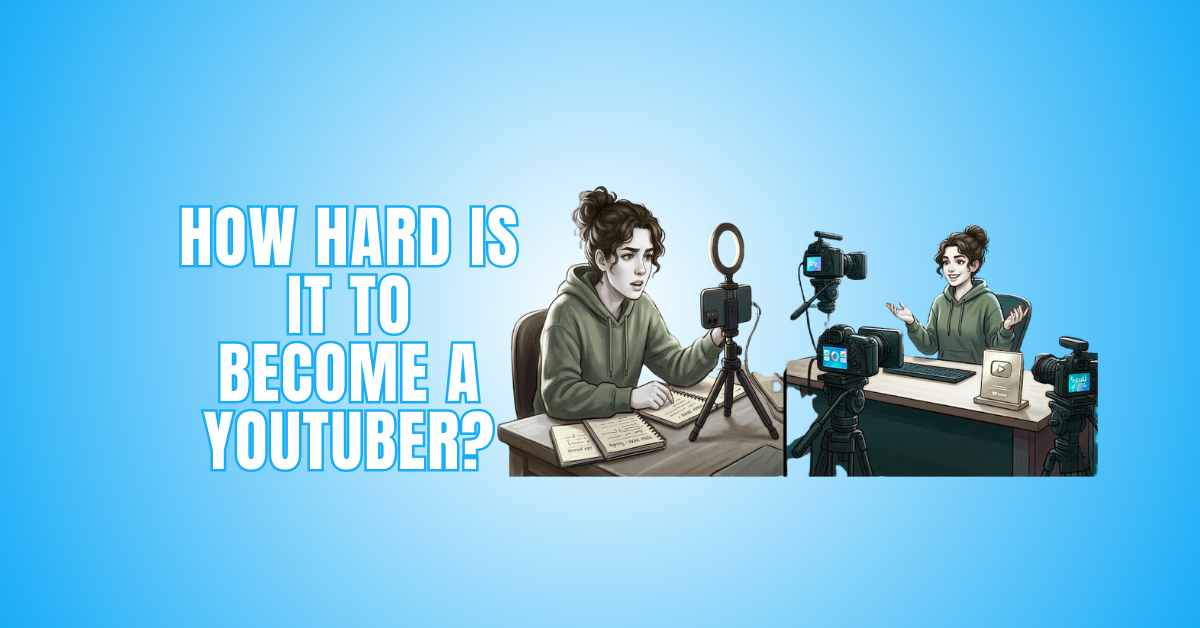
How Hard Is It To Become A YouTuber: The 15 Major Challenges
How hard is it to become a YouTuber? The short answer: it depends on you. The long answer: it's harder than it looks but easier than most people think—if you do it right.
Many people see viral creators on YouTube and assume success happens overnight. It doesn't. Behind every growing channel is strategy, consistency, skill, and patience.
In this blog, we'll break down the real challenges, hidden truths, and practical steps to succeed on YouTube today.'
Is It Hard To Start A YouTube Channel?
No. Creating a YouTube channel takes minutes. You need a Google account, a channel name, and a basic idea. That's it.
You can film with:
- Your phone
- Natural lighting
- Free editing apps
- The barrier to entry is low. Anyone can start.
That's the good news. The challenge begins after you upload your first few videos.
The 15 Hardest Challenges New YouTubers Face
1. No Views In The Beginning
Why It's Difficult
Getting very few views at the start can feel discouraging because humans naturally seek validation. When effort doesn't produce visible results, motivation drops. You may question your ability, doubt your ideas, and feel embarrassed sharing content that barely anyone watches.
How To Overcome It
First, adjust expectations. Your first 30–50 videos are practice, not performance. Instead of measuring success by views, measure it by improvement. Compare your first video to your tenth — that's progress.
Second, focus on skill-building goals:
- Improve thumbnails each week
- Write stronger hooks
- Cut unnecessary pauses in editing
Third, stop checking views daily. Review analytics once a week and look for patterns, not validation. Most channels grow slowly at first. The creators who win are the ones who survive this quiet stage.
2. Slow Subscriber Growth
Why It's Difficult
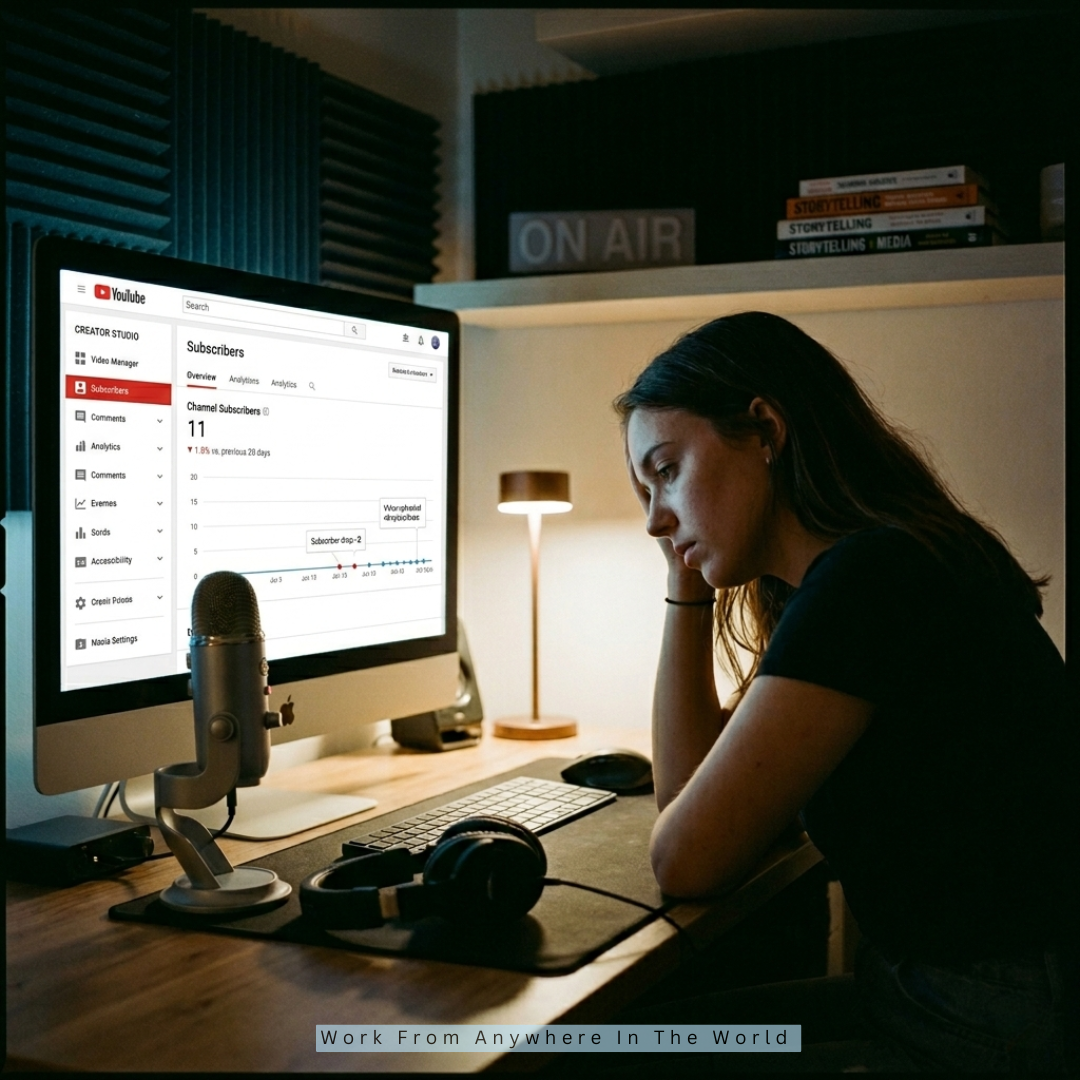
Slow growth creates frustration because progress feels invisible. Watching others gain subscribers quickly can make you feel behind.
When numbers barely move despite consistent effort, it becomes emotionally draining and can make you question whether your niche or strategy is wrong.
How To Overcome It
Understand that growth on YouTube is not linear. It's exponential. Small improvements compound over time. Instead of focusing on subscribers, focus on:
- Click-through rate (CTR)
- Average view duration
- Audience retention graphs
If people click and stay, growth follows naturally.
Study 5 successful channels in your niche. Don't copy them — analyze:
- Their titles
- Thumbnail style
- Opening structure
Then adapt those frameworks to your own personality and voice. Growth speeds up when clarity improves.
3. Fear Of Judgment
Why It's Difficult
Fear of judgment feels intense because publishing content makes you visible and vulnerable. You worry about negative comments, criticism from people you know, or being labelled as “trying too hard.” Social approval matters psychologically, especially when starting something new publicly.
How To Overcome It
Reframe exposure as opportunity, not risk. Visibility is required for growth. Start small if needed:
- Share videos with a limited audience first
- Practice speaking confidently on camera privately
Detach your identity from comments. Feedback is data, not a definition. Also, remember: people who mock creators rarely build anything themselves. Focus on building. Confidence develops through repetition. The more you publish, the less fear controls you.
4. Burnout
Why It's Difficult
Burnout happens when you try to grow too fast, overwork yourself, or chase perfection. Creating, editing, scripting, and promoting alone can feel overwhelming. Without structure, excitement turns into exhaustion, making YouTube feel like a burden rather than a creative expression.
How To Overcome It
Create a sustainable system:
- Batch record 2–4 videos in one session. This reduces weekly pressure. Keep an idea bank in your notes app so you never run out of topics.
Set realistic schedules:
- 1 video per week is powerful
- Even 2 per month works if consistent
Also, simplify your editing. Not every video needs heavy effects. Focus on clarity, not complexity. Long-term creators protect energy, not just output.
5. Algorithm Anxiety
Why It's Difficult
The algorithm feels unpredictable, which creates stress. When a video underperforms, it's easy to assume the platform is against you.
Lack of control makes creators anxious, leading to overthinking titles, constant refreshing of analytics, and emotional reactions to small fluctuations.
How To Overcome It
The algorithm rewards viewer satisfaction. That's it.
Instead of asking, “Why didn’t YouTube push my video?” ask:
- Did my title match the content?
- Was my hook strong in the first 20 seconds?
- Did viewers leave at a specific point?
Study retention graphs. If viewers drop early, improve hooks. If they leave mid-video, tighten pacing.
Focus on what you control:
- Idea quality
- Story structure
- Delivery clarity
Control inputs, not outcomes.

6. Impatience With Monetization
Why It's Difficult
Seeing other creators earn money creates a sense of urgency and comparison. When you invest time without a financial return, it can feel unrewarding. It takes patience to wait to be eligible for the YouTube Partner Program, and development is taking longer than expected.
How To Overcome It
Shift your focus from earning to positioning.
Instead of chasing ads, build authority in one niche. Ask:
- What problem am I solving?
- Who specifically am I helping?
Explore early income streams:
- Affiliate links
- Freelance services
- Digital guides
Small income builds momentum and confidence. When trust grows, monetization becomes natural — not forced.
7. Perfectionism
Why It's Difficult
Perfectionism delays progress by creating unrealistic standards. You may constantly re-edit, re-film, or postpone uploading. Fear of flaws blocks action, slowing growth and reducing opportunities to learn from real audience feedback.
How To Overcome It
Adopt the 80% rule. When your video is 80% good, publish it. Growth comes from feedback and iteration — not isolation.
Set deadlines:
- Script by Tuesday
- Record by Wednesday
- Edit by Friday
- Upload Saturday
Deadlines create discipline.
8. Running Out Of Ideas
Why It's Difficult
After your first few videos, generating fresh ideas becomes harder. You may feel like everything has already been said. Creative pressure builds when you're expected to produce consistently, making idea generation feel stressful instead of exciting.
How To Overcome It
Stop trying to invent something “new.” Focus on making something clearer or better explained.
Create an idea system:
- Write down every question people ask in your niche
- Check comments on similar channels
- Study Google and YouTube search suggestions
Turn one topic into multiple angles:
- Beginner guide
- Mistakes to avoid
- Step-by-step tutorial
- Case study
- Personal experience
Great creators don't run out of ideas — they build idea libraries.
9. Inconsistent Uploading
Why It's Difficult
Life gets busy. Motivation fluctuates. Without structure, uploading becomes random. Posting seldom hinders audience trust, inhibits growth, and makes it more difficult for the algorithm to identify your target audience and content consistency.
How To Overcome It
Consistency doesn't mean daily uploads. It means predictable uploads.
Choose a schedule you can sustain:
- Once a week
- Twice a month
- Even once a month (if high quality)
Batch creates content in advance to prevent emergencies from stopping momentum.
Treat YouTube like an appointment, not a hobby. Block filming time on your calendar. Consistency builds credibility.
10. Weak Thumbnails And Titles
Why It's Difficult
Even strong videos fail when titles and thumbnails don't attract clicks. New creators often underestimate the importance of packaging, focusing only on video quality while ignoring it, which directly affects visibility and click-through rate.
How To Overcome It
Understand this clearly: thumbnails get clicks, videos get subscribers. Study high-performing videos in your niche on YouTube.
Notice:
- Bold, simple text
- Clear emotional expressions
- High contrast colours
- Curiosity-driven titles
Before uploading, ask:
“Would I click this if I didn’t make it?” Spend more time on thumbnails than you think necessary. Packaging often matters more than production.

11. Talking To A Camera Feels Awkward
Why It's Difficult
Speaking naturally to a camera feels unnatural at first. There's no immediate feedback, no conversation partner, and constant self-awareness. This makes delivery stiff, reducing confidence and on-screen presence.
How To Overcome It
Practice speaking in short bullet points instead of memorizing scripts. Imagine you're explaining the topic to one specific person — not thousands. Record practice videos and don't publish them. This reduces pressure. Over time, you'll develop rhythm, tone, and confidence. Comfort on camera is trained, not gifted.
12. Negative Comments
Why It's Difficult
Negative comments feel personal because your content reflects your ideas and personality. Criticism can hurt confidence, trigger self-doubt, and distract you from productive improvement.
How To Overcome It
Separate feedback into two categories:
- Useful criticism
- Emotional noise
Ignore insults. Analyze constructive feedback. Use comment filters to block harmful words if needed. Remember: engagement — even critical engagement — signals activity. Confidence grows when you stop internalizing every opinion.
Wealthy Affiliate – Mini Review
If you’ve ever thought about turning your blog, passion, or niche into an online business,
Wealthy Affiliate (WA) is one of the most beginner-friendly platforms I’ve used.
It combines step-by-step training, website hosting, SEO research tools,
and an active community all in one place.
What I like most: you can start free (no credit card needed),
explore lessons, test the tools, and connect with other entrepreneurs
before upgrading. WA isn’t a “get rich quick” scheme — it’s a platform where success comes
from consistent effort and applying what you learn.
13. Not Understanding Analytics
Why It's Difficult
Analytics dashboards can feel overwhelming. New creators often don't know which metrics matter, leading to confusion. Misinterpreting data can cause unnecessary changes in strategy or panic about normal performance fluctuations.
How To Overcome It
Focus on just three metrics:
- Click-through rate (CTR)
- Average view duration
- Audience retention
Ignore everything else at first.
- If CTR is low → improve thumbnails.
- If retention drops early → improve hooks.
- If watch time is short → tighten pacing.
Analytics are not emotional judgments. They're improvement tools.
14. Comparing Yourself To Big Creators
Why It's Difficult
Comparing your early-stage work to that of established creators sets unrealistic expectations. Large channels have teams, years of experience, and refined systems. Comparison distorts perspective and reduces motivation.
How To Overcome It
Compare yourself only to your past content.
Track:
- Improvement in delivery
- Editing speed
- Confidence level
- Audience engagement
Study successful creators like MrBeast for strategy — not self-worth comparison.
Analyze what works. Don't measure your value against their numbers.
15. Expecting Fast Results
Why It's Difficult
Modern culture promotes instant success stories, creating unrealistic timelines. When YouTube growth takes months or years, creators feel behind. Delayed rewards reduce motivation and increase the likelihood of quitting.
How To Overcome It
Commit to a long-term timeline. Tell yourself: “I will post 100 videos before judging the results.”
Shift focus from outcome goals (subscribers) to input goals:
- 1 upload per week
- 1% improvement in each video
- 10 new ideas weekly
Delayed growth is normal. Compounding effort wins.
Practical Advice For New YouTubers
1. Choose A Clear And Focused Niche
Starting a YouTube channel without a clear niche often leads to confusion and slow growth. Decide what specific topic you want to focus on—technology, education, beauty, finance, motivation, or entertainment.
A focused niche helps attract the right audience and makes your content more discoverable. Instead of uploading random videos, create content around one main theme.
This builds authority and trust. Over time, viewers will recognize your channel for a specific value, making it easier to grow consistently and sustainably.
2. Study Successful Creators In Your Category
Learn from established creators in your niche. Analyze how top YouTubers structure their videos, design thumbnails, write titles, and engage with their audience.
For example, creators like MrBeast focus heavily on storytelling and high retention strategies. You don't need to copy anyone, but observing what works can guide your improvement.
Pay attention to their pacing, editing style, and audience interaction. Smart observation shortens your learning curve and helps you avoid common beginner mistakes.
3. Focus On Watch Time And Retention
YouTube's algorithm favours videos that keep viewers' attention. That means your goal is not just clicks, but retention. Start your videos with a strong hook in the first 10–15 seconds.
Avoid long, unnecessary introductions. Deliver value quickly and keep your pacing dynamic. Use storytelling, pattern interruptions, and engaging visuals to maintain attention.
The longer viewers watch, the more likely YouTube is to recommend your content. High retention rates increase visibility and channel growth organically over time.
4. Improve Audio Quality Before Video Quality
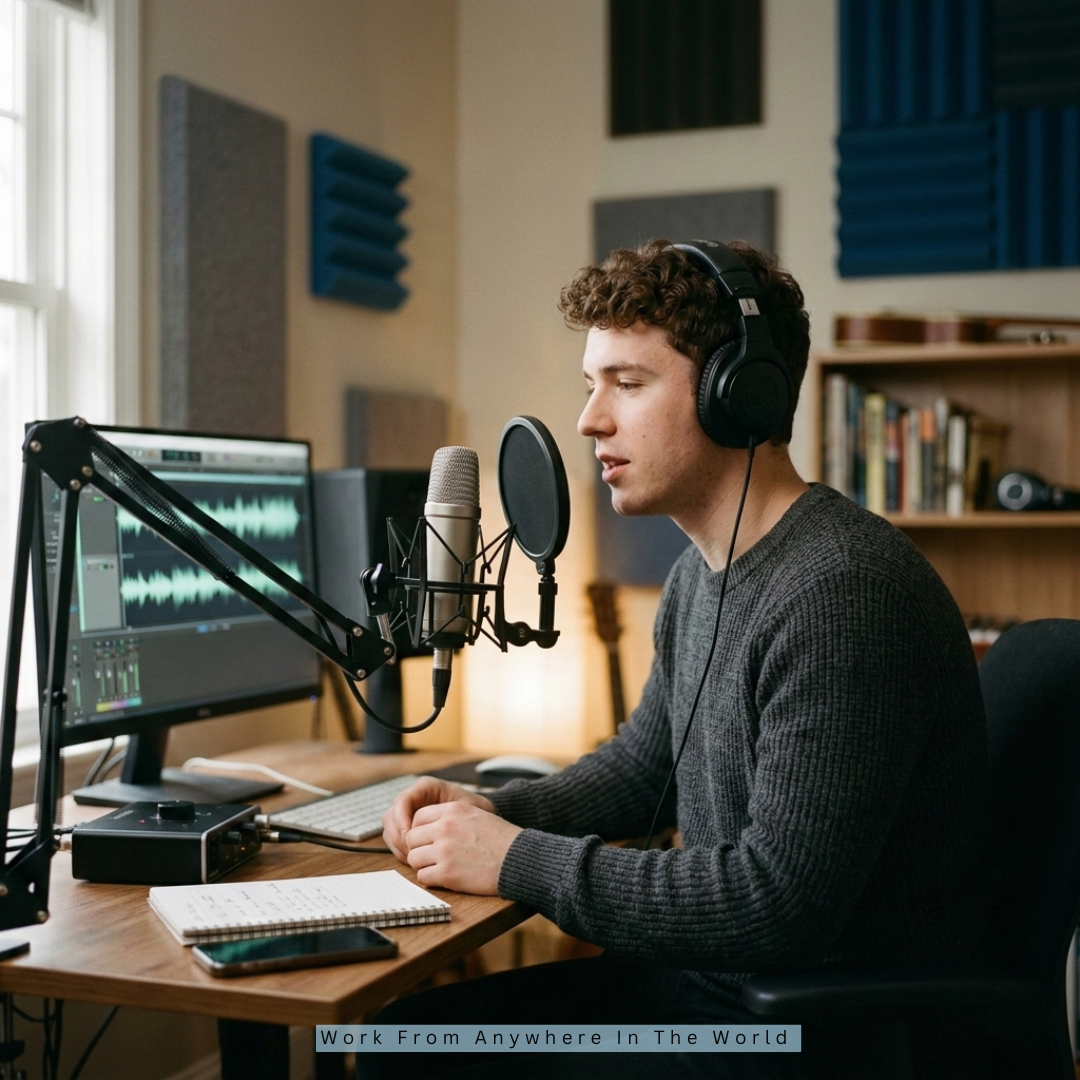
Many beginners invest in expensive cameras but ignore sound. Poor audio drives viewers away faster than average video quality.
Clear and crisp sound makes your content feel professional. Even a basic microphone can significantly improve your production quality. Record in a quiet room and reduce echo as much as possible.
Viewers can tolerate average visuals, but they rarely tolerate unclear audio. Prioritize clarity, volume balance, and background noise control to build a better viewer experience.'
5. Be Consistent With The Upload Schedule
Consistency builds trust and anticipation. Decide whether you will upload once or twice a week, and stick to that schedule.
When viewers know when to expect content, they are more likely to return. Inconsistent posting confuses the algorithm and your audience. Plan your content, c-cord videos and batch-record videos.
Consistency also helps you improve your skills faster by enhancing confidence, presentation style, and editing efficiency through regular practice.
6. Optimize Titles, Thumbnails, And Descriptions
Your video packaging determines whether people click. Create clear, curiosity-driven titles without being misleading. Design thumbnails with bold text, expressive faces, and strong contrast colours.
Write descriptions using relevant keywords naturally. YouTube SEO helps your videos appear in search results. Think of every upload as a mini marketing campaign.
Even great content can fail if the presentation is weak. Spend time improving the click-through rate because strong packaging increases both visibility and growth potential.
7. Engage With Your Community Early
Reply to comments, ask viewers questions, and encourage discussions. Building a loyal community is more powerful than chasing viral views.
Early engagement creates strong connections and boosts interaction signals. You can even use YouTube Community posts to gather feedback or ideas.
When viewers feel heard, they become loyal supporters who share your content. A strong community increases long-term sustainability and brand strength, helping you stand out in a competitive platform.
FAQs
Q1: How Long Does It Take To Become Successful On YouTube?
There is no fixed timeline. Most successful creators see noticeable growth after 6–12 months of consistent uploads. Results depend on niche, content quality, strategy, and how well you understand audience behaviour.
Q2: Is It Possible To Succeed On YouTube Without Showing Your Face?
Yes, many faceless channels succeed using screen recordings, animations, voiceovers, or stock footage. The key factor is value and engagement, not appearance. Strong storytelling and clear audio matter more.
Q3: Do You Need Expensive Equipment To Grow On YouTube?
No. Beginners can start with a smartphone and basic editing software. Clear audio, proper lighting, and valuable content are more important than high-end cameras or professional studios.
Q4: Why Do Most New YouTubers Quit Early?
Most quit due to slow growth, low views, and unrealistic expectations. Success requires patience, data analysis, and continuous improvement. Those who stay consistent longer significantly increase their chances.
Q5: What Is The Biggest Factor In Becoming A Successful YouTuber?
Consistency combined with strategy is the biggest factor. Uploading regularly, improving content quality, understanding analytics, and focusing on audience needs create long-term sustainable growth on YouTube.
Conclusion
So, how hard is it to become a YouTuber? It's challenging, yes—but not impossible. The real difficulty lies in consistency, patience, and continuous improvement. Most people quit too early.
Those who treat YouTube like a long-term business often succeed. If you stay focused, learn from data, and create real value, growth will come. The platform rewards persistence. Start imperfectly. Improve steadily. Keep going.
I trust you enjoyed this article on How Hard Is It To Become A YouTuber. Please stay tuned for more insightful blogs on affiliate marketing, online business, and working from anywhere in the world.
Take care!
— JeannetteZ 🌍✨
💬 Your Opinion Is Important To Me
Do you have thoughts, ideas, or questions? I’d love to hear from you. Please leave your comments below or email me directly at Jeannette@WorkFromAnywhereInTheWorld.com.
📚 More Work From Anywhere Reads
🚀 Ready to Build a Business You Can Run from Home
Or from Anywhere in the World?
Imagine creating income on your terms — from home, a cozy café, or wherever life takes you.
With the right tools, training, and community support, it’s entirely possible.
Start your own online business for free — no credit card needed.
Disclosure
This post may contain affiliate links. As an Amazon Associate and participant in other affiliate programs, I earn from qualifying purchases at no extra cost to you. Please read my full affiliate disclosure.