14 Best Computers To Work From Home
Choosing one of the best computers to work from home starts with considering your daily tasks, workspace, and working style. The right computer doesn’t necessarily need to be the fastest or most expensive.
A good remote-work computer should comfortably handle tasks such as video meetings, spreadsheets, research, writing, design, and multitasking.
Both laptops and desktop computers can work well, depending on whether you need portability, a larger screen, business security, or desktop-level performance.
This guide compares 14 options and explains the most important features to consider before choosing the right computer for your home office.
What To Look For In A Work-From-Home Computer
Choosing the right work-from-home computer starts with understanding how you use it each day. Everyday office tasks require different specifications from video editing, programming, design, or other demanding work.
Consider performance, memory, storage, display quality, connectivity, and compatibility with the software you regularly use. Your workspace also matters when deciding between a laptop and a desktop computer.
The following factors can help you choose a computer that comfortably supports your workload and home-office setup. Reviewing each one before buying can also help you avoid paying for features you don’t need.
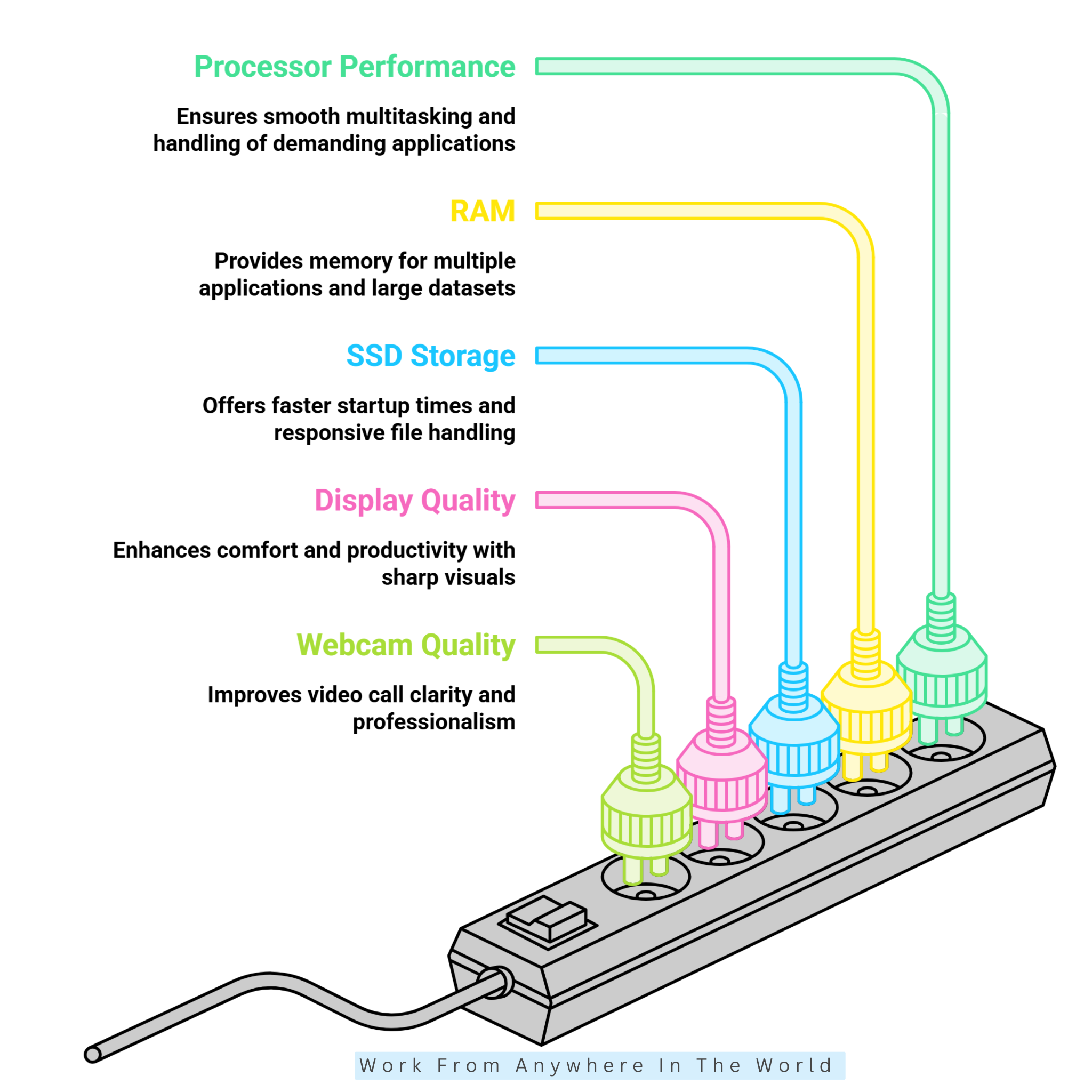
1. Processor Performance
Choose a modern processor that can comfortably handle your everyday workload, including video calls, web browsing, spreadsheets, documents, and multiple applications.
Intel Core Ultra, AMD Ryzen, Apple silicon, and Qualcomm Snapdragon processors can all support professional work. The right choice depends on the programs and tasks you regularly use.
More demanding work, such as video editing, programming, or design, may require a higher-performance processor. Matching the processor to your workload can help you avoid paying for power you do not need.
2. RAM
For most people working from home, 16GB of RAM is a practical starting point. It provides enough memory for browser tabs, video meetings, office applications, and everyday multitasking.
Consider 32GB of RAM for more demanding workloads, such as large datasets, virtual machines, development environments, or professional creative software.
Choosing enough RAM can help applications run smoothly when several programs are open at once. It can also give you more flexibility as your workload changes.
3. SSD Storage
Choose a computer with an SSD (Solid-State Drive) rather than an older mechanical hard drive. SSDs provide faster startup times, quicker application launches, and more responsive file handling.
For many professionals, 512GB of SSD storage is a practical starting point. Consider 1TB or more when you regularly store large videos, photos, datasets, software, or project files locally.
Cloud storage or an external drive can provide additional space when needed. This can help you avoid paying for more built-in storage than your work requires.
4. Display Quality
A comfortable display matters when you spend several hours working at a computer. Look for a sharp screen with good brightness, comfortable viewing angles, and enough space for your applications.
A 14-inch laptop offers greater portability, while 15- or 16-inch models provide more workspace. Desktop users can consider a 24- or 27-inch monitor for a larger viewing area.
Consider how much time you spend reading, writing, designing, or working with multiple windows. The right display can make everyday tasks more comfortable and reduce the need to scroll constantly or switch between applications.
5. Webcam Quality
Video meetings are part of everyday remote work, so webcam quality deserves attention. A 1080p webcam provides a practical starting point for professional video calls.
Look for features such as good image processing and automatic exposure, particularly when your lighting changes throughout the day. A built-in privacy shutter can also provide additional privacy when the camera is not in use.
You can add an external webcam if the built-in camera doesn’t meet your needs. This can be particularly useful for frequent meetings, presentations, or online teaching.
6. Microphone And Speakers
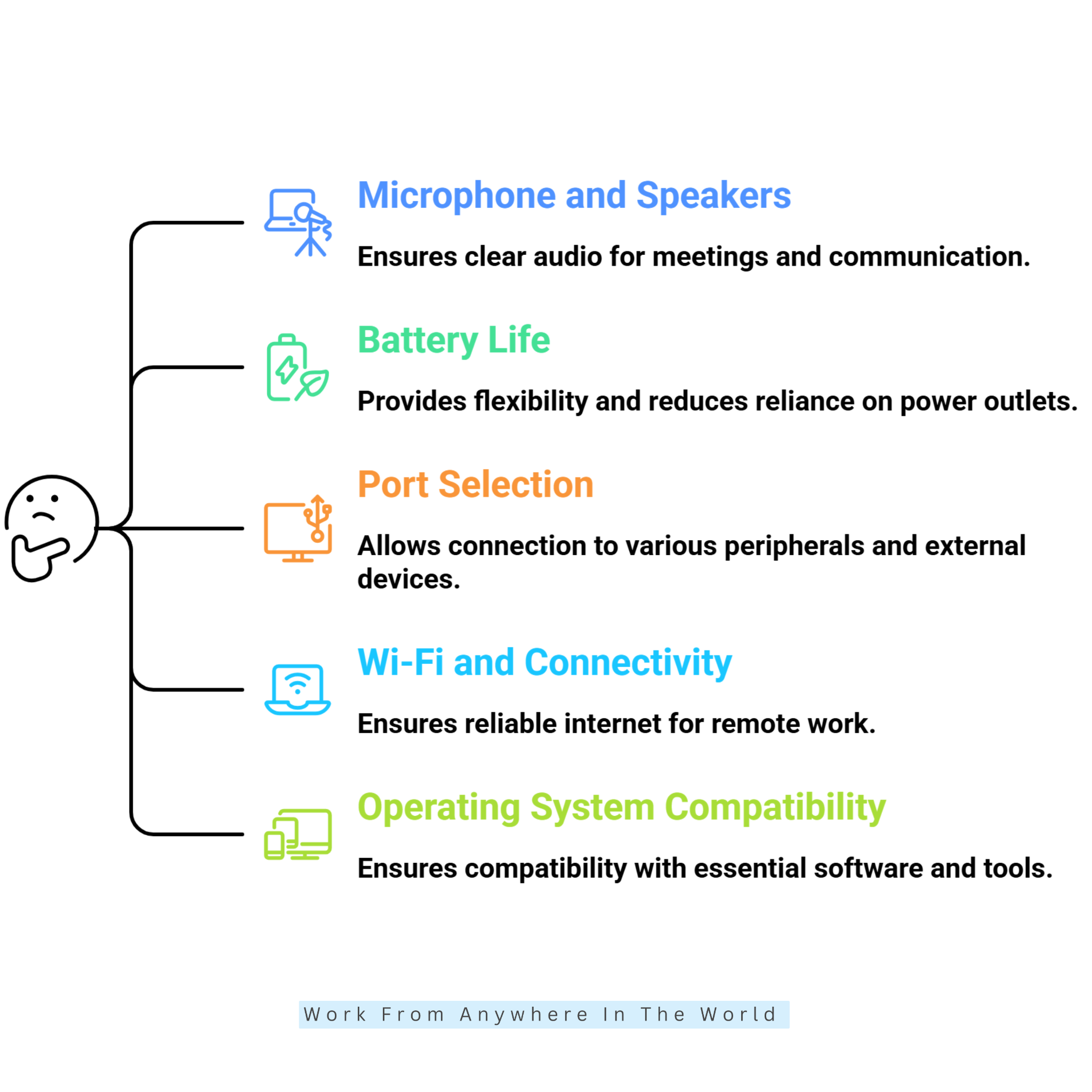
Clear audio can make online meetings and everyday communication much easier. Look for a computer with microphones and speakers that provide clear sound for calls and presentations.
Noise-reduction features can be helpful in busy home environments. They can reduce distracting background sounds and make your voice easier for others to hear.
A dedicated headset or external microphone may provide better audio for frequent meetings, presentations, or online teaching. External speakers can also improve sound quality when your computer remains at a permanent desk.
7. Battery Life
For laptops, battery life affects how freely you can work around your home or away from your usual workspace. Longer battery life can reduce your dependence on nearby power outlets.
Manufacturer estimates do not always reflect everyday use. Screen brightness, video meetings, applications, and wireless connections can all affect battery life.
When available, consider independent battery testing and think about how you normally work. Reliable battery life can provide useful flexibility during meetings, travel, or short power interruptions.
8. Port Selection
Check the available ports before buying a computer. Your home-office setup may need connections for a monitor, keyboard, mouse, webcam, printer, storage drive, or other accessories.
USB-C is useful, but its capabilities vary between computers. Some ports support charging, video output, or high-speed data transfer, while others provide fewer functions.
Check for HDMI, USB-A, Thunderbolt, USB4, Ethernet, or other connections your equipment requires. Choosing the right ports can reduce the need for extra adapters or docking stations.
9. Wi-Fi And Connectivity
Reliable internet connectivity is essential for remote work, particularly for video meetings, cloud-based applications, and transferring files online.
Look for modern Wi-Fi standards such as Wi-Fi 6E or Wi-Fi 7 when your home network supports them. Newer standards can provide improved performance with compatible routers and devices.
Ethernet can also be useful for a permanent home-office setup. A wired connection may provide more consistent connectivity when reliability is critical.
10. Operating System Compatibility
Choose Windows, macOS, or ChromeOS based on the applications and tools you regularly use. The operating system should support the software you need for everyday work.
Before buying, check compatibility with business software, company platforms, peripherals, and specialized applications. This matters most when your work depends on specific programs or equipment.
Compatibility deserves extra attention with ARM-based Windows computers. Some older applications, drivers, or specialized software may not provide the same level of support, so check your essential programs before choosing a computer.
Best Computers To Work From Home
The best computers to work from home include both laptops and desktops, giving you different options depending on how and where you prefer to work. Laptops provide portability, while desktops can offer a comfortable permanent setup with larger displays and external accessories.
Your daily workload should guide your choice more than impressive specifications alone. Office tasks, creative work, programming, and other demanding applications can require very different levels of performance.
The following 14 computers include options for different workloads, workspaces, and professional needs. Compare their features with the tasks you do regularly to find the best fit for your home office.
1. Apple MacBook Air M5
The Apple MacBook Air M5 is a lightweight computer that combines portability with strong everyday performance. Its fanless design also keeps it quiet during meetings and focused work.
It comes standard with 16GB of unified memory and 512GB of SSD storage. Wi-Fi 7 and a 12MP Center Stage camera also support connectivity and video meetings.
The MacBook Air can comfortably handle web browsing, documents, spreadsheets, presentations, cloud apps, and everyday multitasking. It can suit writers, consultants, marketers, researchers, freelancers, and other remote professionals.
The 13.6-inch model prioritizes portability, while the 15.3-inch model offers more screen space. Both feature Apple’s Liquid Retina display and the M5 chip.
Consider the screen size, memory, storage, ports, and software compatibility before choosing a configuration. This can help you match the MacBook Air to your particular workload.
2. Apple MacBook Pro
The Apple MacBook Pro is designed for professionals whose workloads go beyond everyday office applications. Current models are available with M5, M5 Pro, and M5 Max chips.
Its additional performance can support video editing, software development, photography, music production, engineering, and other demanding applications. Higher-end configurations also offer considerably more memory and storage.
The Liquid Retina XDR display provides detailed visuals for creative and professional work. The 14- and 16-inch models offer different balances of portability and screen space.
For email, spreadsheets, browsing, and video meetings, the MacBook Air may provide sufficient performance. The MacBook Pro is better suited to workloads that can make use of its additional capabilities.
Before choosing a configuration, consider your software requirements, processor, memory, storage, display size, and connectivity. This can help you avoid paying for professional-level performance your work doesn’t require.
3. ASUS Vivobook 16
The ASUS Vivobook 16 is designed for people who prefer a larger built-in display for everyday work. Its 16-inch screen provides plenty of room for documents, spreadsheets, research, and multitasking.
Depending on the model, configurations include Intel or AMD processors, SSD storage, and different memory options. Some versions also offer upgraded display and webcam features.
The larger screen can suit writers, administrators, online teachers, freelancers, and small-business users. It can also reduce the need for an external monitor when you need more workspace.
Connectivity varies by model but can include USB-C, USB-A, HDMI, and other useful ports. These connections make it easier to add monitors and other home-office accessories.
Before choosing a configuration, check the processor, memory, storage, display, webcam, and ports. This helps ensure the particular Vivobook 16 matches your everyday workload.
Wealthy Affiliate – Mini Review
If you’ve ever thought about turning your blog, passion, or niche into an online business,
Wealthy Affiliate (WA) is one of the most beginner-friendly platforms I’ve used.
It combines step-by-step training, website hosting, AI-powered tools,
keyword research, and an active community all in one place.
What I like most is that you can start for free (no credit card needed), explore the platform,
test the tools, and connect with other entrepreneurs before upgrading.
WA isn’t a “get rich quick” scheme — success comes from consistent effort
and applying what you learn over time.
4. ASUS Zenbook 14
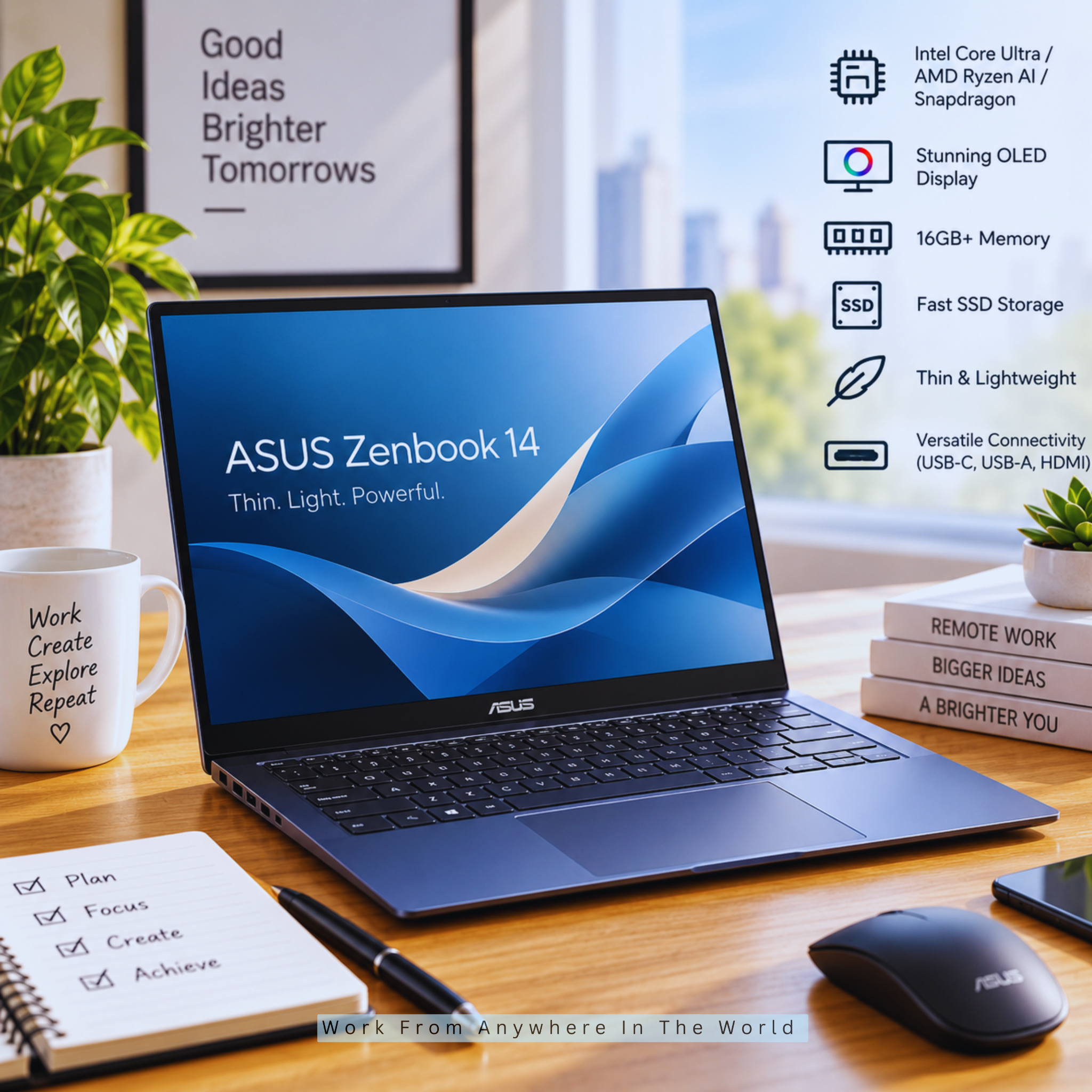
The ASUS Zenbook 14 is a thin, lightweight laptop designed for people who value portability and display quality. Its 14-inch format provides useful workspace without making the computer unnecessarily bulky.
Depending on the model, configurations are available with Intel, AMD, or Snapdragon processors. Memory, SSD storage, and display specs also vary by version.
OLED displays are available across the range, providing sharp visuals for documents, creative work, and everyday productivity. Some configurations offer higher-resolution displays and additional memory.
The compact design can suit writers, marketers, consultants, developers, and other professionals who regularly move between workspaces. Its range of ports also supports common home-office accessories.
Before choosing a model, check the processor, memory, storage, display, ports, and software compatibility. This matters because specifications vary considerably between Zenbook 14 configurations.
5. Apple Mac mini
The Apple Mac mini is a compact desktop computer designed for people who work primarily at a desk. Its small size leaves plenty of room for a monitor, keyboard, mouse, webcam, and other accessories.
Current models are available with M4 or M4 Pro chips, providing options for everyday productivity and more demanding professional workloads. You can also configure memory and SSD storage to suit different needs.
The Mac mini can support up to three displays, making it useful for people who need additional screen space. HDMI, Thunderbolt, USB-C, and Ethernet connections support a variety of home-office accessories.
It can suit writers, programmers, analysts, designers, accountants, and other professionals who prefer a permanent desk setup. Choosing your own monitor and peripherals also gives you more control over your workspace.
Unlike a laptop, the Mac mini does not include a display, keyboard, or mouse. Consider the complete setup you will need before deciding whether it is the right computer for your home office.
6. Acer Swift Go 14
The Acer Swift Go 14 is a lightweight laptop designed for people who want portability and everyday performance. Its compact design makes it convenient for working around the home or away from a permanent desk.
Depending on the model, configurations include Intel, AMD, or Snapdragon processors. Memory, SSD storage, display technology, and other specifications also vary between versions.
The display offers plenty of space for documents, web applications, video meetings, and general office work. OLED and touchscreen options are also available on selected models.
The Swift Go 14 can suit freelancers, writers, marketers, remote employees, and small-business users. Its lightweight design is particularly useful for people who regularly move between workspaces.
Before choosing a model, check the processor, memory, storage, display, ports, and software compatibility. This helps ensure the particular configuration supports your everyday workload.
7. Acer Aspire 16 AI
The Acer Aspire 16 AI is designed for people who prefer a larger screen for everyday work. Its 16-inch display provides plenty of room for spreadsheets, documents, research, and side-by-side applications.
Depending on the model, configurations are available with Intel, AMD, or Snapdragon processors. Memory, SSD storage, display technology, and other specifications also vary between versions.
The larger display can suit administrators, educators, freelancers, writers, and home-business users. It can also provide additional workspace without requiring an external monitor.
Selected models offer features such as OLED displays, Wi-Fi 7, USB4, and higher memory and storage capacities. These options allow you to choose a configuration that better matches your workload.
Before choosing a model, check the processor, display, memory, storage, connectivity, and software compatibility. Specifications vary by configuration, so compare the exact model.
Wealthy Affiliate – Mini Review
If you’ve ever thought about turning your blog, passion, or niche into an online business,
Wealthy Affiliate (WA) is one of the most beginner-friendly platforms I’ve used.
It combines step-by-step training, website hosting, AI-powered tools,
keyword research, and an active community all in one place.
What I like most is that you can start for free (no credit card needed), explore the platform,
test the tools, and connect with other entrepreneurs before upgrading.
WA isn’t a “get rich quick” scheme — success comes from consistent effort
and applying what you learn over time.
8. Dell XPS 14
The Dell XPS 14 is a premium Windows laptop designed for people who want portability and strong performance. Its thin 14-inch design makes it convenient for working at home or moving between locations.
Current configurations use Intel Core Ultra processors with different memory and SSD storage options. This flexibility supports everyday productivity and more demanding professional workloads.
Display options include a 2K non-touch screen and a higher-resolution OLED touchscreen. The improved display quality can help with design, photography, research, and detailed documents.
The XPS 14 can suit consultants, developers, designers, marketers, and other professionals who want a premium Windows computer. Its compact design also works well for people without a permanent desk.
Before choosing a configuration, check the processor, memory, storage, display, ports, and software requirements. This helps ensure you pay for features that support your workload.
9. Dell Pro 14 Plus
The Dell Pro 14 Plus is a business-focused Windows laptop designed for professional work. Its 14-inch format provides a practical balance between screen space and portability.
Depending on the configuration, it is available with Intel Core Ultra or AMD Ryzen processors. Memory, SSD storage, graphics, and other specs vary by model.
The Dell Pro 14 Plus can comfortably handle documents, spreadsheets, Microsoft 365, video meetings, research, and browser-based applications. It can suit accountants, administrators, consultants, managers, and other business users.
Connectivity options support monitors and other common home-office accessories. Selected configurations also offer additional business features and different camera options.
Before choosing a configuration, check the processor, memory, storage, display, ports, and connectivity. This helps ensure the particular model suits your workload and home-office setup.

10. HP EliteBook 840
The HP EliteBook 840 is a business-focused laptop designed for professional productivity. Its 14-inch format provides a comfortable balance between workspace and portability.
Depending on the configuration, it can include modern Intel processors, SSD storage, Windows 11 Pro, and different memory and display options.
The EliteBook 840 can handle documents, spreadsheets, business applications, research, video meetings, and everyday multitasking. Its business-oriented features also make it suitable for professional home offices.
Selected configurations include higher-resolution cameras and security features designed for business use. These can be particularly useful for professionals who regularly attend online meetings or work with sensitive information.
The EliteBook 840 can suit consultants, accountants, managers, analysts, educators, and administrators. Check the processor, memory, storage, display, webcam, and ports before choosing a particular configuration.
11. HP ProBook 440 G11
The HP ProBook 440 G11 is a business-focused laptop designed for everyday professional work. Its 14-inch display provides a practical balance between workspace and portability.
Available configurations include Intel Core Ultra processors, SSD storage, and different memory options. Windows 11 Pro and business security features also support professional use.
The ProBook 440 G11 can handle documents, spreadsheets, presentations, browser-based applications, and video meetings. It can suit freelancers, administrators, accountants, educators, and small-business users.
Selected configurations offer a 5MP camera with a privacy shutter for video meetings. The laptop also provides connectivity for monitors and other common home-office accessories.
Before choosing a configuration, check the processor, memory, storage, display, webcam, and ports. This helps ensure the particular model provides the features your everyday work requires.
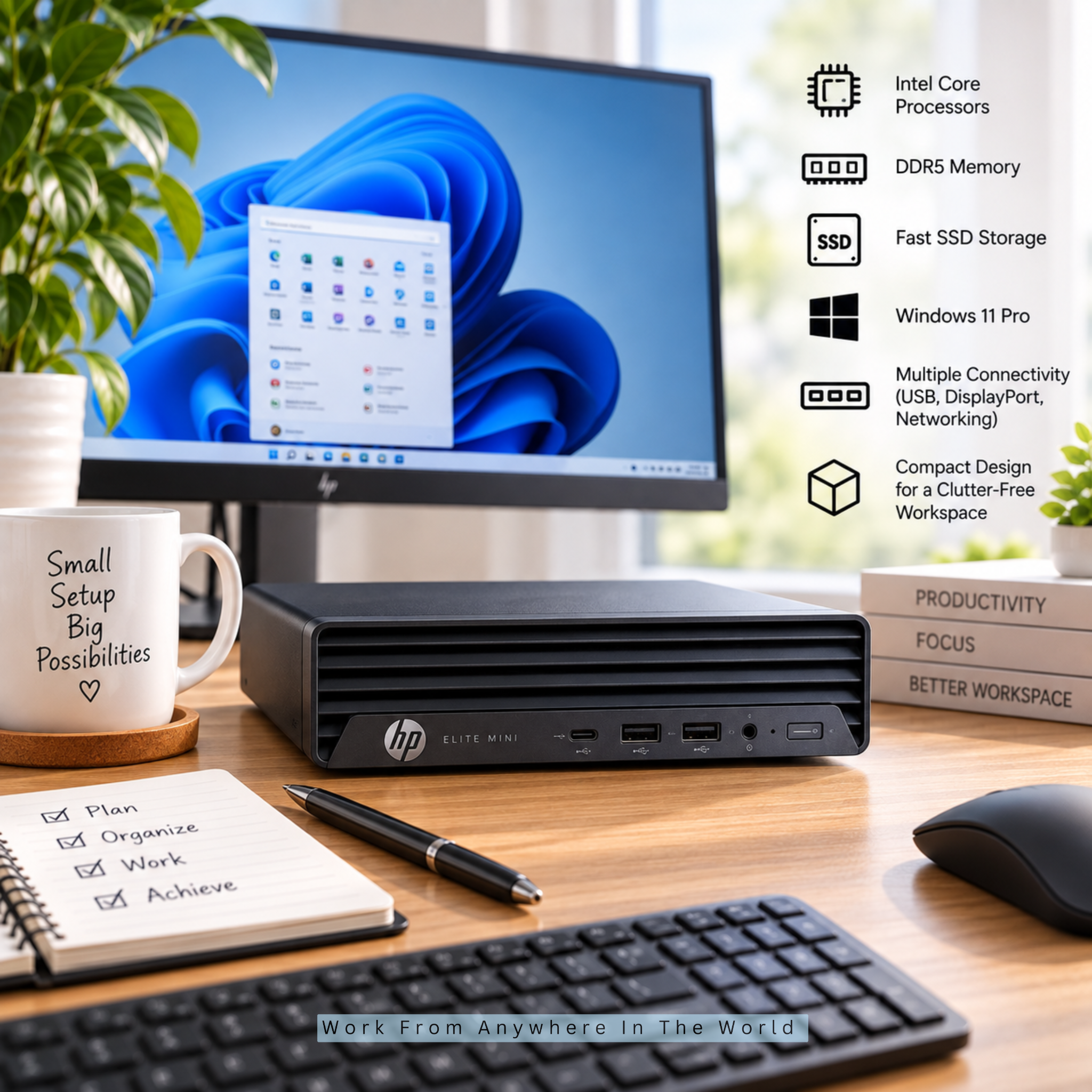
12. HP Elite Mini 600 G9
The HP Elite Mini 600 G9 is a compact Windows desktop designed for professional work. Its small footprint makes it useful for home offices with limited desk space.
Depending on the configuration, it can include Intel Core processors, DDR5 memory, and SSD storage. Different memory and storage capacities accommodate a range of workloads.
The Elite Mini 600 G9 can handle spreadsheets, business applications, web research, accounting, video meetings, and other everyday office tasks.
Multiple USB, DisplayPort, HDMI, and Ethernet connections support monitors and other home-office accessories. Selected configurations also offer additional connectivity options.
It can suit accountants, administrators, analysts, managers, developers, and small-business users who prefer a permanent desktop setup. Remember that you will also need a monitor, keyboard, mouse, and webcam when required.
13. Lenovo ThinkPad X1 Carbon Gen 14
The Lenovo ThinkPad X1 Carbon Gen 14 is a premium business laptop designed for portability and professional productivity. Its lightweight 14-inch design makes it convenient for working at home, in an office, or while travelling.
Current configurations use Intel Core Ultra Series 3 processors with different memory, SSD storage, and display options. These specifications can support everyday business applications and more demanding multitasking..
The ThinkPad keyboard is designed for comfortable typing, making the laptop suitable for people who spend much of their workday writing. Thunderbolt connectivity also supports monitors and other home-office accessories..
Business-focused security features include Lenovo’s ThinkShield technologies. These features can be useful for professionals who regularly work with business information or sensitive files.
The X1 Carbon can suit consultants, analysts, developers, writers, accountants, managers, and other professionals. Check the processor, memory, storage, display, and connectivity before choosing a configuration.
14. Lenovo ThinkPad T14 Gen 7
The Lenovo ThinkPad T14 Gen 7 is a business-focused laptop designed for professional productivity. Its 14-inch format provides useful workspace while remaining portable.
Current models are available with Intel or AMD processors, along with different memory, SSD storage, and display options. This provides flexibility for a range of professional workloads.
The T14 can comfortably handle documents, spreadsheets, research, business applications, video meetings, and everyday multitasking. It can suit accountants, developers, analysts, consultants, managers, and other professionals.
Business-focused security features help protect professional information, while a wide selection of ports supports monitors and other home-office accessories. Lenovo has also designed the current generation with repairability in mind.
Before choosing a configuration, check the processor, memory, storage, display, ports, and operating system. This helps ensure the particular T14 matches your workload and home-office setup.
Frequently Asked Questions
Q1: How Much RAM Do I Need For Working From Home?
For most people working from home, 16GB of RAM is a practical starting point. It can comfortably support video meetings, browsing, office applications, email, and everyday multitasking.
Consider 32GB of RAM for demanding workloads such as video editing, software development, large datasets, or virtual machines. Additional memory can also help if you regularly keep several demanding applications open at once.
Q2: What Processor Is Best For Working From Home?
Modern Intel, AMD, Apple silicon, and compatible ARM processors can all work well for remote work. The best choice depends on the programs you use and how much processing power they require.
Everyday office work generally requires less processing power than video editing, programming, design, or other demanding applications. Check the requirements of your essential software before choosing a processor.
Q3: Do I Need A Powerful Computer For Remote Work?
Not necessarily. Most remote-work tasks, including browsing, documents, spreadsheets, video meetings, and cloud applications, do not require workstation-level performance.
More powerful hardware becomes useful when your work involves demanding creative, technical, or data-intensive applications. Matching the computer to your actual workload can also prevent you from paying for performance you rarely use.
Q4: Is Windows Or Mac Better For Working From Home?
Neither is better for everyone. Windows offers broad hardware and software compatibility, while macOS can work particularly well for people who use other Apple devices and compatible professional applications.
Consider the programs, accessories, and services you rely on before choosing an operating system. Familiarity also matters because working with a system you already know can make everyday tasks easier.
Q5: Do I Need A Dedicated Graphics Card For Working From Home?
Usually not. Integrated graphics are sufficient for office applications, browsing, writing, video meetings, presentations, and many other everyday professional tasks.
A dedicated graphics card may help with video editing, 3D design, rendering, engineering applications, and other graphics-intensive workloads. Check your professional software requirements before deciding whether you need one.
Q6: Is A Laptop Or Desktop Better For Working From Home?
Both can work well for a home office. A laptop provides portability, while a desktop offers a permanent workspace that can be paired with a larger monitor and full-size accessories.
Consider how often you move between locations and whether you prefer a fixed or portable setup. Available desk space, the accessories you use, and the type of work you do can also influence your choice.
Conclusion
A dependable home-office computer should make your working day easier, not add unnecessary complications. Performance matters, but so do comfort, connectivity, compatibility, and the way the computer fits into your workspace.
The 14 best computers to work from home in this guide offer options for different professional needs. Some offer lightweight portability, while others suit a permanent desk setup or more demanding workloads.
Before you choose, compare the features you will actually use rather than focusing on the highest specifications available. A computer that matches your work can provide better value and remain useful for years.
Ultimately, the right choice supports your work comfortably and reliably each day. Whether that means a portable laptop or compact desktop depends on how and where you prefer to work.
I trust you enjoyed this article on the 14 Best Computers To Work From Home. Please stay tuned for more insightful blogs on affiliate marketing, online business, and working from anywhere in the world.
Take care!
— JeannetteZ 🌍✨
💬 Your Opinion Is Important To Me
Do you have thoughts, ideas, or questions? I’d love to hear from you. Please leave your comments below or email me directly at Jeannette@WorkFromAnywhereInTheWorld.com.
📚 More Work From Anywhere Reads
🚀 Ready to Build a Business You Can Run from Home
Or from Anywhere in the World?
Imagine creating income on your terms — from home, a cozy café, or wherever life takes you.
With the right tools, training, and community support, it’s entirely possible.
Start your own online business for free — no credit card needed.
Disclosure
This post may contain affiliate links. As an Amazon Associate and participant in other affiliate programs, I earn from qualifying purchases at no extra cost to you. Please read my full affiliate disclosure.