

How To Create A Profitable Business: 20 Essential Strategies
Learning how to create a profitable business starts with finding a worthwhile idea that solves a real problem for the right customers. Profitability comes from turning that idea into a business people are willing to support.
A strong idea alone is not enough. Market research, financial planning, and understanding your target audience can help you determine whether your business has genuine earning potential.
Building profitability also means making thoughtful decisions about pricing, expenses, marketing, customer relationships, and future growth. Each decision can influence how successfully your business generates and keeps revenue.
This guide will explore the essential steps for creating a profitable business, from validating your idea and understanding your market to attracting customers, controlling costs, and building sustainable growth.
10 Key Components Of A Profitable Business
A profitable business needs more than a good idea. Several important elements must work together to attract customers, generate revenue, manage expenses, and support long-term business growth.
These components provide the foundation for making informed decisions as your business develops. They can also help you identify weaknesses before they become expensive problems.
Understanding your market, customers, finances, and business model makes it easier to focus your resources where they can have the greatest impact.
The following six components can help you build a stronger foundation for a profitable, sustainable business as it grows. Together, they provide a practical framework for turning a promising idea into a viable business.
1. Start With A Profitable Business Idea
A profitable business begins with an idea that solves a genuine problem or meets a clear customer need. Instead of choosing an idea simply because it sounds appealing, consider whether people are willing to pay for the solution you want to offer.
Start by looking at everyday problems, underserved markets, and opportunities to improve existing products or services. Learning how to identify a business idea can help you uncover opportunities that align with your skills, interests, and available resources.
Before investing heavily in an idea, consider who would buy from you and why they would choose your business over another option. A promising idea should offer something useful while giving you a realistic opportunity to earn a profit.
Testing your idea on a small scale can help you gather feedback and identify potential problems early. This gives you an opportunity to refine your offer before committing significant time, money, or resources.
2. Understand Your Target Customers
Knowing who you want to serve is essential when building a profitable business. Your target audience influences everything from the products or services you offer to your pricing, marketing, and customer experience.
Look beyond basic details such as age or location. Consider your customers’ needs, challenges, buying habits, priorities, and the problems they are actively trying to solve.
Market research can help you learn what potential customers want and how they currently meet those needs. Surveys, customer reviews, online communities, and competitor research can reveal valuable patterns and opportunities.
The better you understand your customers, the easier it becomes to create relevant offers and communicate their benefits clearly. This can help you attract the right people, build stronger relationships, and encourage repeat business.
3. Make Sure There Is Market Demand
A great business idea will struggle to become profitable if there are not enough people willing to buy what you offer. Before investing heavily, look for evidence that genuine demand already exists.
Research what potential customers are searching for, discussing, and purchasing. Google Trends, keyword research, online reviews, industry reports, and customer discussions can help you identify interests and changing needs.
Competitor activity can also provide useful clues. Businesses already serving the market may indicate existing demand, while customer complaints and unanswered questions can reveal gaps in the market that your business could address.
Demand should also be strong enough to support your business over the long term. Testing your offer with a smaller audience can help you measure interest before committing more money and resources to the idea.
4. Choose How Your Business Will Make Money
Every profitable business needs a clear way to generate revenue. Consider what customers will pay for, how much they are willing to spend, and whether your income can consistently cover your business expenses.
Depending on your business, you might earn money through product sales, services, subscriptions, memberships, commissions, or several income streams. Choosing the right online business model can help you create revenue in a way that fits your goals and available resources.
Think carefully about how to price your products or services as well. Your prices need to remain competitive while covering your costs and leaving enough room for a reasonable profit.
Review your revenue and expenses regularly as your business develops. Understanding which products, services, or customers generate the most profit can help you decide where to focus your time and resources.
5. Create A Marketing Strategy That Attracts Customers
Even a strong business idea needs effective marketing to reach the right people. A clear marketing strategy helps you decide where to promote your business and how to communicate the value you offer.
Choose marketing channels based on where your target customers spend their time. Depending on your business, this may include content marketing, email marketing, social media, search engine optimization, paid advertising, or local marketing.
Focus on providing useful information and showing customers how your product or service can solve a problem. Consistent messaging can build brand awareness and help potential customers become familiar with your business.
Track which marketing activities bring visitors, leads, and paying customers to your business. Focusing on the channels that produce meaningful results can help you use your marketing budget more effectively.

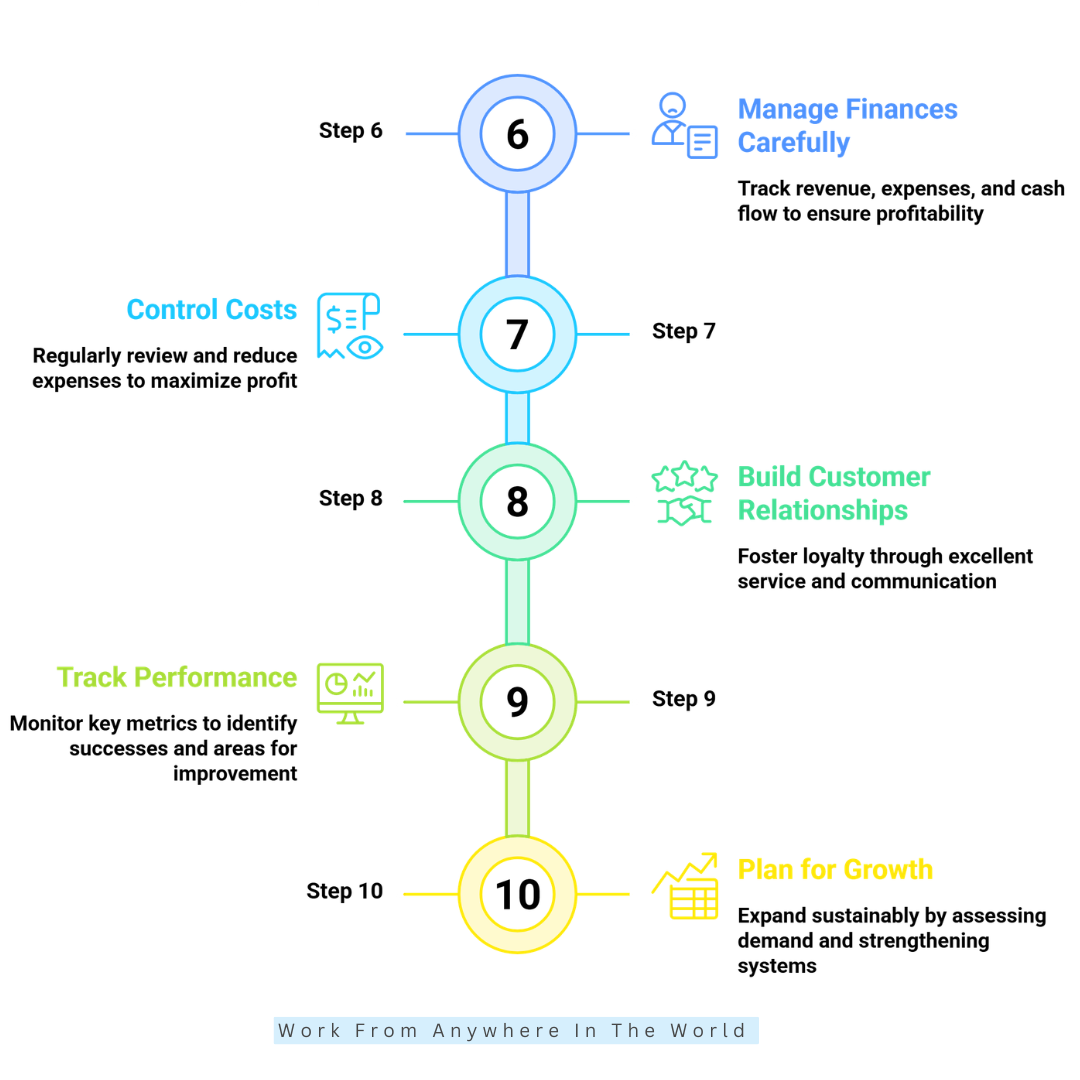
6. Manage Your Business Finances Carefully
Managing your finances carefully is essential for keeping a business profitable. Knowing how much money is coming in and going out helps you make better decisions and avoid spending more than the business can support.
Keep accurate records of your revenue, expenses, taxes, and other financial obligations. A realistic business budget can can help you plan your spending and determine how much money is available for marketing, equipment, inventory, or future growth.
Pay attention to cash flow as well as overall profit. A business can appear profitable on paper but still experience problems if there is not enough cash available to cover expenses when payments are due.
Review your financial results regularly and look for unnecessary expenses or areas where profitability could improve. Understanding your numbers makes it easier to adjust your plans and make informed decisions as the business grows.
7. Keep Your Business Costs Under Control
Controlling expenses can make a significant difference to your profitability. Review your costs regularly and determine which ones are essential, which can be reduced, and which no longer contribute enough value to your business.
Look at recurring expenses such as software, subscriptions, advertising, supplies, shipping, and outside services. Small expenses can add up quickly, so tracking them helps you spot opportunities to save without sacrificing quality.
Avoid cutting costs simply for the sake of spending less. Investments in reliable tools, effective marketing, and good customer service may cost money but can contribute directly to revenue and business growth.
As your business expands, continue comparing expenses with the results they produce. Keeping costs under control gives you more flexibility to reinvest profits and prepare for unexpected expenses.
8. Build Strong Customer Relationships
Attracting new customers is important, but building relationships with existing customers can support long-term profitability. Positive experiences can encourage repeat purchases, recommendations, and greater trust in your business.
Provide reliable service, communicate clearly, and make it easy for customers to ask questions or resolve problems. Listening to customer feedback can also reveal ways to improve your products, services, and overall customer experience.
Stay connected through useful emails, helpful content, social media, or other channels that suit your audience. The goal is to provide ongoing value rather than contacting customers only when you want to make a sale.
Strong customer relationships can also lead to customer loyalty and word-of-mouth referrals. Customers who trust your business are more likely to return and recommend it to others.
9. Track Your Business Performance
Tracking your results helps you understand whether your business is moving toward its goals. Instead of relying on assumptions, use measurable information to see what is working and where improvements may be needed.
Monitor key business performance metrics, including revenue, profit, expenses, sales, website conversions, customer retention, and marketing results. The most useful measurements will depend on the type of business you operate.
Compare your results over different periods to identify patterns and changes. For example, declining sales, rising expenses, or lower customer retention may signal a problem that needs attention.
Use what you learn to guide future decisions. Regularly reviewing your performance can help you invest in successful strategies, adjust weaker areas, and make decisions based on evidence rather than guesswork.
10. Plan For Sustainable Business Growth
Growth can create new opportunities, but expanding too quickly can put unnecessary pressure on your finances, time, and resources. A profitable business should grow at a pace it can realistically support.
Before expanding, consider whether there is enough customer demand and whether your current systems can handle additional sales. You may need better processes, additional help, new technology, or more efficient business systems before taking the next step.
Reinvesting some profits can help fund expansion without creating unnecessary financial pressure. Focus on improvements that strengthen the business, such as better tools, marketing, customer service, or new products and services.
Sustainable growth is about building a stronger business rather than simply making it bigger. Careful planning can help you pursue new opportunities while protecting the profitability you have already created.
Wealthy Affiliate – Mini Review
If you’ve ever thought about turning your blog, passion, or niche into an online business,
Wealthy Affiliate (WA) is one of the most beginner-friendly platforms I’ve used.
It combines step-by-step training, website hosting, AI-powered tools,
keyword research, and an active community all in one place.
What I like most is that you can start free (no credit card needed), explore the platform,
test the tools, and connect with other entrepreneurs before upgrading.
WA isn’t a “get rich quick” scheme — success comes from consistent effort
and applying what you learn over time.
How To Market Your Business Effectively
Effective marketing helps potential customers discover your business and understand why your products or services are worth considering. The right approach can increase visibility, build trust, and turn interested visitors into paying customers.
You do not need to use every available marketing channel. Focus on methods that align with your target audience, business goals, and resources, and give them enough time to produce meaningful results.
A combination of digital marketing strategies can help you reach customers at different stages of their buying journey. Your website, search engines, email, social media, and useful content can all play different roles in attracting and retaining customers.
Tracking your results helps you understand which methods contribute to leads, sales, and long-term customer relationships. The following strategies can help you market your business effectively while maintaining profitability.
1. Create A Professional Business Website
A professional website gives your business a central place where potential customers can learn about your products, services, and brand. It also allows people to find your business at any time, regardless of your availability.
Make your website easy to navigate and clearly explain what your business offers. Important information, such as your products or services, contact details, and About Us page, should be easy for visitors to find.
Your website should also work well on smartphones and tablets. A mobile-friendly website can provide a better experience for visitors and make it easier for them to browse, contact you, or make a purchase.
Focus on building trust as well as promoting what you sell. Helpful content, clear policies, customer reviews, secure browsing, and accurate business information can make visitors feel more confident about choosing your business.
2. Use SEO To Attract Website Visitors
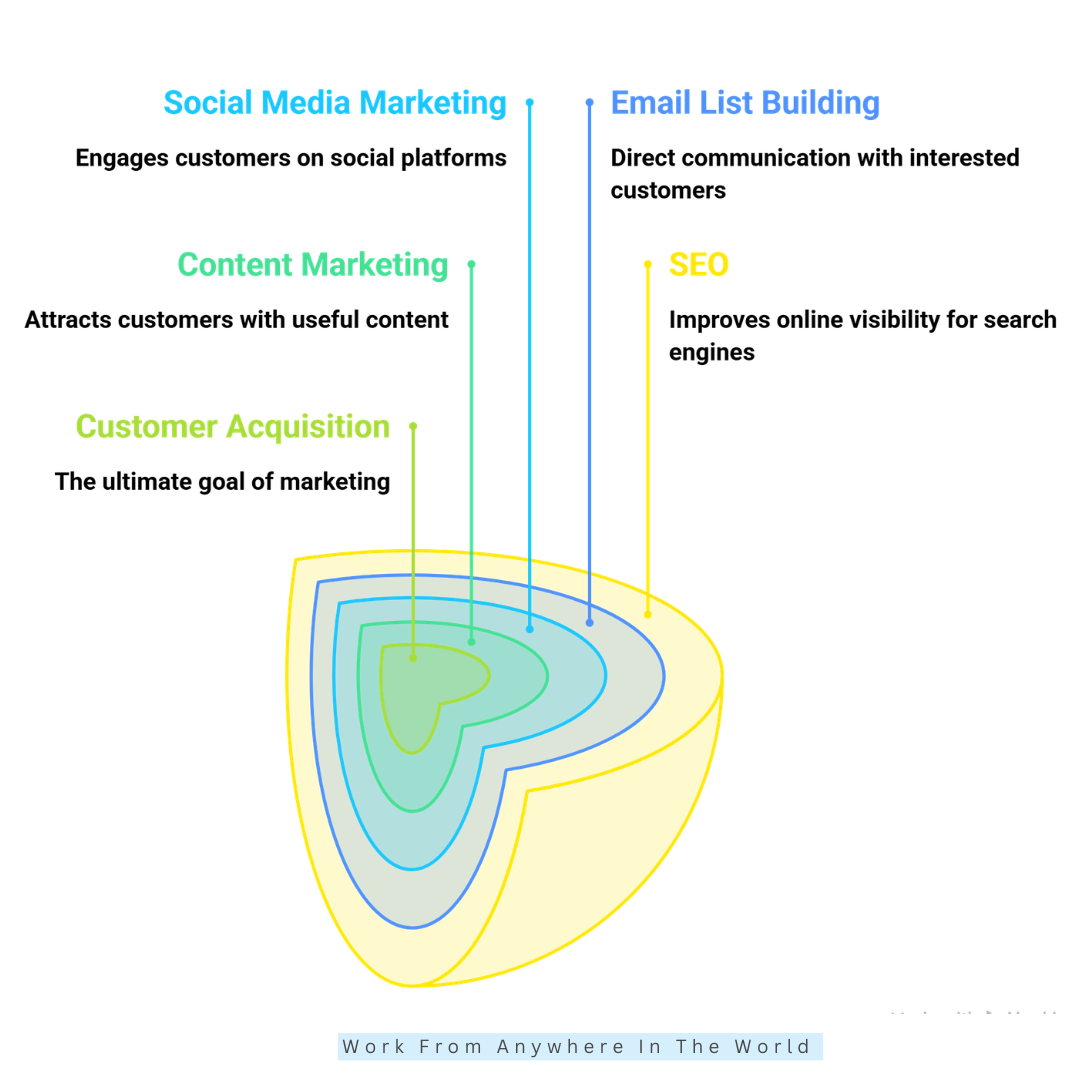
Search engine optimization can help potential customers discover your business when they search online for information, products, or services. Improving your website for search engines can bring organic traffic without relying entirely on paid advertising.
Start by researching the words and phrases your potential customers use when searching online. Keyword research can help you choose relevant topics and create content that answers the questions your audience is already asking.
Optimize important elements such as page titles, headings, URLs, images, and meta descriptions. Creating useful, well-organized content and adding internal links can also help search engines understand your website and make it easier for visitors to explore related information.
SEO is an ongoing process rather than a one-time task. Regularly updating useful content, checking website performance, and monitoring search results can help your business maintain and improve its online visibility.
3. Build An Email List
An email list gives your business a direct way to communicate with people who have already shown an interest in what you offer. Unlike social media audiences, your subscriber list is an asset you can manage and grow yourself.
Encourage visitors to subscribe by offering something useful in exchange for their email address. This might include a checklist, a guide, a discount, a resource, or access to helpful updates that match their interests.
Using the best ways to build an email list can help you attract subscribers who genuinely want to hear from your business. Focus on providing value rather than simply collecting as many email addresses as possible.
Once people subscribe, send useful and relevant emails consistently. Educational content, business updates, helpful tips, and occasional promotions can strengthen relationships and encourage subscribers to become customers.
4. Use Social Media To Promote Your Business
Social media can help your business reach potential customers, build brand awareness, and stay connected with your existing audience. The key is choosing platforms where the people you want to reach are already active.
You do not need to maintain a presence on every social network. Focus on one or two platforms that suit your audience and create content that supports your social media marketing strategy.
For online stores, developing an effective social media strategy for eCommerce can help you choose suitable platforms, content, and promotional methods for reaching potential customers.
Share a mixture of helpful information, educational content, business updates, and relevant promotions. Encourage conversations by responding to comments and questions rather than using social media only to advertise your products or services.
Track which posts generate meaningful engagement, website visits, leads, or sales. Understanding what resonates with your audience can help you improve your content and spend your time on the platforms that contribute most to your business.
5. Use Content Marketing To Attract Customers
Content marketing can help potential customers discover your business while giving them useful information before they are ready to buy. Helpful content can also demonstrate your knowledge and build trust in your brand.
Create content around the questions, problems, and interests of your target audience. Blog posts, guides, videos, tutorials, checklists, and other resources can all help people learn more about topics related to your business.
Learning how to get started with content marketing can help you choose suitable topics, formats, and channels for your audience. Focus on creating genuinely useful content rather than publishing simply to promote your products or services.
Over time, useful content can support SEO, bring visitors to your website, and introduce potential customers to your business. Track which topics attract traffic and engagement so you can concentrate on the content your audience finds most valuable.
6. Encourage Customer Reviews And Referrals
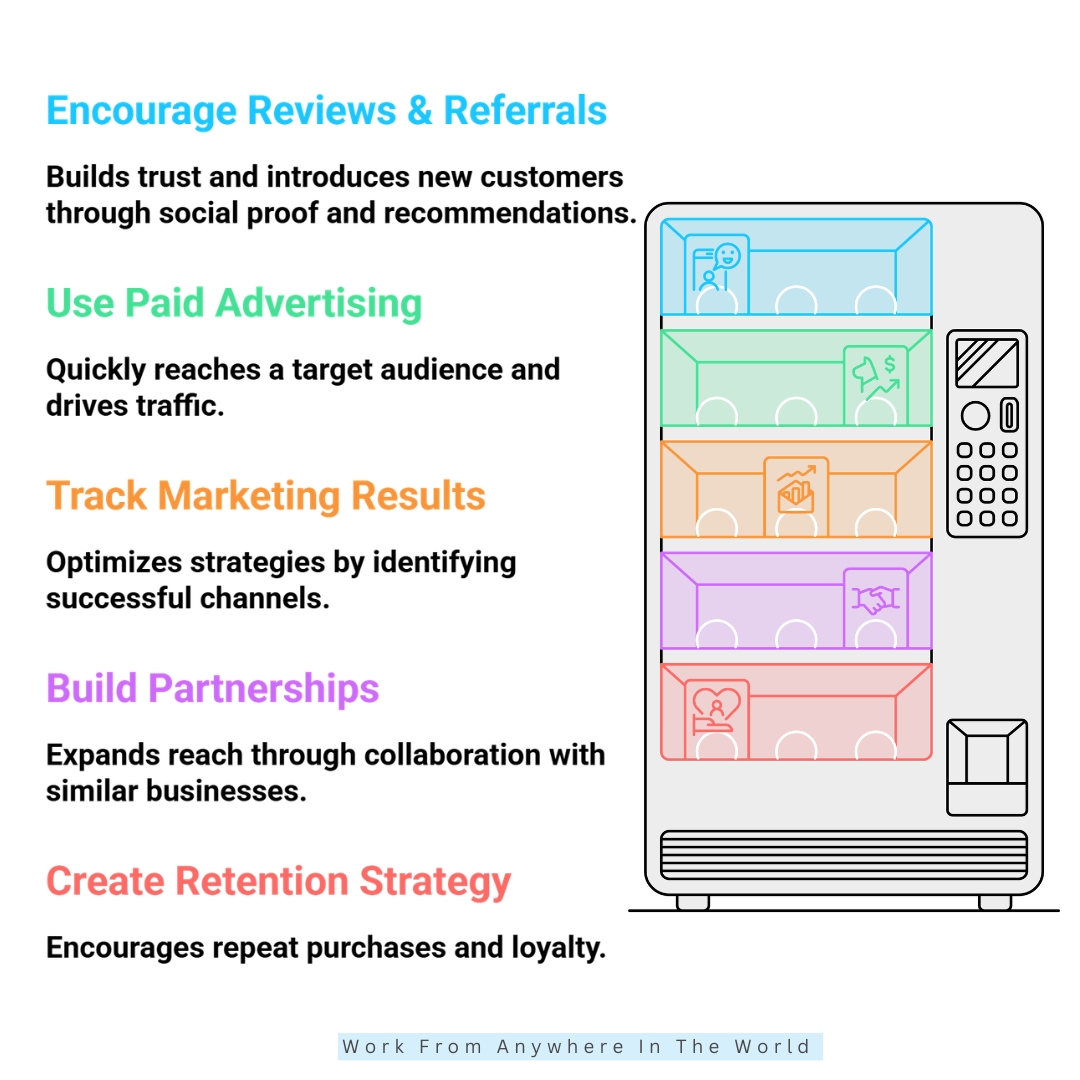
Positive reviews can help potential customers feel more confident about choosing your business. They provide social proof from people who have already purchased your products or used your services.
Make it easy for satisfied customers to leave honest reviews on the platforms that matter to your business. A polite follow-up email or message after a purchase can remind customers to share their experience without pressuring them.
Referrals can be equally valuable because recommendations from people customers already trust can introduce your business to a new audience. Providing excellent service and a positive customer experience gives people a genuine reason to recommend your business.
Thank customers who leave reviews or refer others, and respond professionally to feedback whenever appropriate. Consistently delivering a good experience can help generate recommendations naturally while strengthening your business reputation.
7. Use Paid Advertising To Reach More Customers
Paid advertising can put your business in front of potential customers quickly. It can also help you reach people who are actively interested in what you offer.
Choose advertising platforms based on your target audience and business goals. Options may include Google Ads, social media advertising, display ads, or sponsored content.
Start with a manageable budget and test different messages, audiences, and offers. Avoid spending heavily until you know which campaigns are generating worthwhile results.
Track clicks, leads, conversions, and sales rather than focusing only on views. Comparing advertising costs with the revenue generated can help you decide which campaigns are worth continuing.
8. Track Your Marketing Results
Tracking your marketing results helps you understand which strategies are bringing customers to your business. It also shows where your time and marketing budget are producing the strongest results.
Monitor useful marketing metrics such as website traffic, leads, conversions, email engagement, and sales. Choose measurements that connect directly to the goals of each marketing campaign.
Compare results across different marketing channels to see which ones perform best. This can help you invest more in successful strategies and reduce spending on methods that produce little return.
Review your results regularly and adjust your marketing when needed. Using real data can help you make better decisions and improve the profitability of your marketing efforts.
9. Build Strategic Partnerships
Strategic partnerships can help your business reach new customers without relying entirely on advertising. The right partnership can introduce your brand to an audience that already trusts another business.
Look for businesses that serve a similar audience without directly competing with you. You might collaborate on content, promotions, events, referrals, or bundled offers.
A successful business partnership should provide value to both businesses and their customers. Be clear about expectations, responsibilities, and goals before starting a collaboration.
Start with smaller collaborations and evaluate the results. Strong partnerships can develop into valuable long-term relationships that support awareness, referrals, and business growth.
10. Create A Customer Retention Strategy
Marketing should not stop after someone becomes a customer. Keeping existing customers engaged can encourage repeat purchases and build stronger relationships with your business.
Provide reliable service and communicate with customers after a purchase. Helpful emails, useful resources, special offers, and loyalty programs can give people reasons to return.
A strong customer retention strategy focuses on understanding what keeps customers satisfied. Pay attention to feedback and look for ways to improve their experience with your business.
Returning customers can provide steady revenue and recommend your business to others. Building loyalty can therefore support both profitability and sustainable business growth.
Frequently Asked Questions
Q1: How Long Does It Take For A New Business To Become Profitable?
There is no set timeline for profitability. It depends on your startup costs, pricing, expenses, customer demand, and how quickly you begin generating consistent sales.
Some businesses become profitable relatively early, while others need more time to recover their initial investment. Tracking your income and expenses helps you measure progress.
Q2: Can You Start A Profitable Business With Little Money?
Yes. Many service-based and online businesses can be started with relatively low upfront costs. The key is choosing a business model that matches your available resources.
Starting small can also reduce financial risk. You can reinvest some of your earnings as the business grows and new opportunities become available.
Q3: What Makes A Business More Profitable?
Profitability improves when a business generates enough revenue while keeping its costs under control. Strong pricing, repeat customers, efficient systems, and valuable products or services can all contribute.
Regularly reviewing business expenses and profit margins can reveal where improvements are possible. Small changes can sometimes make a meaningful difference.
Q4: How Do You Know If A Business Idea Will Be Profitable?
Start by researching whether enough people need or want what you plan to offer. Look at customer problems, existing competitors, market demand, and what people are already willing to buy.
You can then test your idea on a small scale before making a large investment. Early feedback and sales can help determine whether the idea has real business potential.
Q5: Should You Reinvest Profits Back Into Your Business?
Reinvesting some profits can support future growth. The money might be used for marketing, technology, equipment, product development, or other areas that strengthen the business.
However, reinvestment should have a clear purpose. Consider your cash flow, expenses, financial needs, and expected return before deciding where to put the money.
Q6: Can A Small Business Be Profitable Without Employees?
Yes. Many freelancers, consultants, creators, and online business owners operate profitable businesses without hiring employees.
Technology, automation, and outsourcing can help a single person manage more tasks more efficiently. The right approach depends on the business model and the amount of work required to serve customers well.
Conclusion
A profitable business is built through a series of thoughtful decisions rather than one perfect strategy. Each choice you make about your customers, finances, marketing, and growth contributes to the bigger picture.
Profitability rarely comes from a single strategy. It develops through controlled costs, effective marketing, strong customer relationships, and regular performance tracking.
As your business grows, continue reviewing what works and where improvements are needed. Small adjustments can help you use your time, money, and resources more effectively.
Most importantly, build a business that can grow at a sustainable pace. With a clear direction and consistent effort, you can create something that supports your financial goals and long-term vision.
I trust you enjoyed this article on How To Create A Profitable Business: 20 Essential Strategies. Please stay tuned for more insightful blogs on affiliate marketing, online business, and working from anywhere in the world.
Take care!
— JeannetteZ 🌍✨
💬 Your Opinion Is Important To Me
Do you have thoughts, ideas, or questions? I’d love to hear from you. Please leave your comments below or email me directly at Jeannette@WorkFromAnywhereInTheWorld.com.
📚 More Work From Anywhere Reads
🚀 Ready to Build a Business You Can Run from Home
Or from Anywhere in the World?
Imagine creating income on your terms — from home, a cozy café, or wherever life takes you.
With the right tools, training, and community support, it’s entirely possible.
Start your own online business for free — no credit card needed.
Disclosure
This post may contain affiliate links. As an Amazon Associate and participant in other affiliate programs, I earn from qualifying purchases at no extra cost to you. Please read my full affiliate disclosure.