

How To Find Clients Online: 15 Proven Strategies That Work
Learning how to find clients online is essential for freelancers, consultants, entrepreneurs, and small business owners who want to grow their businesses.
The internet offers countless opportunities to connect with potential clients. However, finding the right people requires more than simply advertising your services.
Building a professional online presence, choosing the right platforms, and developing meaningful connections can help you attract clients who value your expertise.
Whether you’re starting from scratch or expanding an established business, a thoughtful approach makes client acquisition more manageable and sustainable.
This guide explores 15 practical strategies to help you find clients online, strengthen professional relationships, and build a business that grows over time.
15 Effective Ways To Find Clients Online And Grow Your Business
Learning how to find clients online involves more than promoting your services or sending proposals. Successful client acquisition starts with understanding who needs your expertise, where they spend their time, and how you can solve their problems.
Some strategies focus on attracting clients through search engines, websites, and social media. Others involve building professional relationships, participating in online communities, or contacting potential customers directly.
You don’t need to master every approach at once. A freelancer offering writing services may benefit from LinkedIn and freelance marketplaces, while a consultant might attract more clients through educational content and professional referrals.
Start with two or three strategies that match your skills, audience, and available time. As you gain experience, you can refine your approach and expand into additional channels.
The following 15 strategies explain how to increase your visibility, connect with potential clients, and turn those connections into lasting business opportunities.
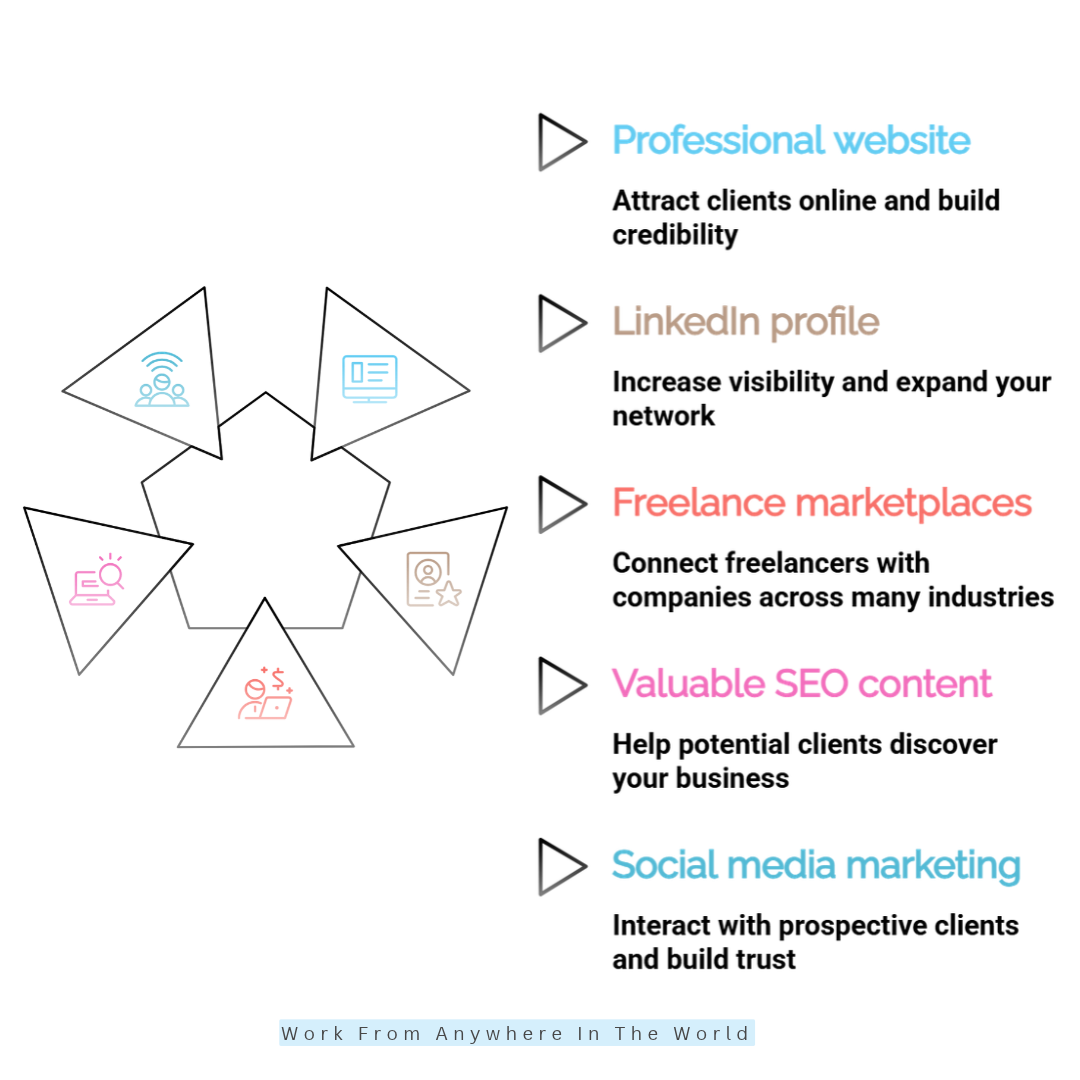
1. Build A Professional Website
A professional website gives potential clients a central place to learn about your services, experience, and previous work. Unlike social media profiles, your website allows you to control how your business is presented.
Learning how to create a business website is a practical starting point. Choose a platform such as WordPress, Wix, Squarespace, or Webflow that suits your technical skills and business requirements.
Your homepage should explain what you offer, who you help, and why someone should choose your services. Visitors should immediately understand what your business does and how it can help them.
Create dedicated pages for your services, portfolio, testimonials, and contact information. If you offer several services, explain each one clearly so potential clients can identify the right solution.
For example, a freelance writer could showcase blog articles, website copy, and email campaigns. A virtual assistant might highlight administrative support, scheduling, and customer service experience.
Publishing helpful articles demonstrates your expertise and attracts people searching for relevant information. Explore the best blogging tools to improve your writing workflow, organize content, and maintain a professional blog.
Include clear calls to action throughout your website, encouraging visitors to request a quote or schedule a consultation. Make your contact form easy to find and simple to complete.
Once your website is established, explore free ways to drive traffic to your website to help potential clients discover your services. A well-organized website can become a valuable business asset that supports your marketing efforts over time.
2. Optimize Your LinkedIn Profile
LinkedIn is particularly useful for freelancers, consultants, and service providers targeting businesses. It lets you connect with decision-makers, showcase your experience, and build relationships within your industry.
Learning how to make your LinkedIn profile stand out helps you create a stronger first impression. Start with a professional photo, a clear headline, and an About section that explains the services you provide.
Instead of listing only your job title, describe the problems you help clients solve. For example, a social media manager could highlight their experience helping small businesses improve their online presence.
Add relevant skills, portfolio samples, certifications, and previous projects to demonstrate your abilities. Whenever possible, explain the results of your work rather than simply listing responsibilities.
Recommendations from satisfied clients can strengthen your credibility and help potential customers feel more confident. Ask previous clients to describe their experience working with you and the value your services provided.
Develop a practical LinkedIn content strategy by sharing helpful advice, industry insights, and examples of your expertise. A few thoughtful posts each week, combined with genuine conversations, can help you become more recognizable.
Explore LinkedIn for lead generation to learn how to identify potential clients and approach them professionally. Personalize your connection requests and focus on building relationships rather than sending sales pitches right away.
Over time, meaningful professional connections can lead to inquiries, referrals, collaborations, and repeat business. Consistent engagement helps keep your services visible when someone needs your expertise.
3. Use Freelance Marketplaces
Freelance marketplaces help independent professionals connect with businesses actively searching for services. These platforms offer opportunities for both individual projects and longer-term assignments.
Learning how to find online freelance jobs can help you identify opportunities that match your experience, interests, and preferred working arrangements.
Popular platforms include Upwork, Fiverr, Freelancer, PeoplePerHour, and Toptal. Each marketplace operates differently, so understanding its features helps you choose suitable opportunities.
Some platforms allow clients to post projects and receive proposals, while others let freelancers advertise specific services. Compare their requirements and working arrangements before deciding where to focus your efforts.
Create a detailed profile explaining your skills, experience, and services. Include relevant portfolio samples and describe the projects you are best equipped to complete.
If you’re new to freelancing, consider creating sample projects that demonstrate your abilities. A graphic designer, for example, could develop sample branding materials for a fictional business.
When applying for projects, read the client’s requirements carefully and personalize your proposal. Explain how you would approach the assignment and why your experience matches their needs.
Avoid sending identical proposals to dozens of clients, as generic messages rarely demonstrate genuine interest. A thoughtful response addressing a specific problem can make a stronger impression.
Choosing the right marketplace is equally important. Our comparison of Freelancer.com vs PeoplePerHour explores their differences and can help you evaluate which platform suits your needs.
Before accepting a project, clarify the scope of work, deadlines, payment arrangements, and expected deliverables. Clear expectations reduce misunderstandings and help establish professional relationships.
Deliver quality work, communicate regularly, and honour your commitments to build a positive reputation. Satisfied clients may leave favourable reviews, recommend your services, or return with additional projects.
As your experience grows, explore the best freelance job websites to discover additional opportunities. Building relationships with clients through multiple channels can also help you develop a more sustainable business.
4. Create Valuable SEO Content
Creating valuable SEO content helps potential clients discover your business when they search online for answers. Helpful blog posts, tutorials, guides, and case studies demonstrate your expertise while attracting people interested in your services.
Begin by understanding the problems your ideal clients want to solve. Explore the best free keyword research tools to identify relevant search terms and discover questions your audience frequently asks.
For example, a freelance graphic designer could publish articles about creating a memorable business logo or choosing brand colours. These topics attract business owners who may eventually need professional design services.
Content marketing also works for niche businesses and creative professionals. For example, gardening influencers can use educational articles, gardening tutorials, and practical advice to attract people interested in their expertise.
Focus on providing clear explanations, practical examples, and useful recommendations. Learning how to get started with content marketing helps you develop a publishing strategy that supports your business goals.
Include relevant keywords naturally in your headings, introductions, and body text. Use descriptive headings, helpful internal links, and straightforward language to make your content easier for readers and search engines to understand.
You can also extend the value of existing articles by transforming them into videos, infographics, newsletters, or social media posts. These content repurposing strategies help you reach different audiences without constantly creating new material.
Review older articles regularly to replace outdated information, improve explanations, and add relevant examples. These SEO strategies for organic traffic can help strengthen your website’s search visibility over time.
Every article should also guide interested readers toward a useful next step. Include a natural call to action inviting them to explore your services, request a consultation, or contact you about their projects.
5. Leverage Social Media Marketing
Social media marketing helps you connect with potential clients, demonstrate your expertise, and build relationships with people interested in your services. Regularly sharing helpful information encourages audiences to become familiar with your business.
Learning how to use social media for business can help you choose the right platforms and develop a marketing approach that supports your goals.
Choose platforms based on your ideal clients rather than trying to maintain an active presence everywhere. LinkedIn may suit business consultants, while Instagram or Pinterest could be useful for designers, photographers, and other creative professionals.
Niche content creators can also use social media to connect with audiences who share their interests. For example, vegan bloggers can share plant-based recipes, helpful tips, and educational content while building relationships with readers and potential collaborators.
Share practical tips, industry updates, behind-the-scenes content, and examples of completed projects. Exploring different social media content ideas can help you maintain variety without relying entirely on promotional messages.
For example, a virtual assistant might share time-management tips, organizational techniques, or examples of common administrative challenges. These posts demonstrate relevant skills while providing genuine value to potential clients.
Engagement is just as important as publishing content. Respond thoughtfully to comments, answer questions, and participate in conversations where your knowledge can help others.
Repurpose useful information into short videos, graphics, and educational posts to reach people with different content preferences. Understanding how to increase your social media shares can also help your content reach audiences beyond your existing followers.
Pay attention to which posts generate meaningful conversations, website visits, and inquiries. Use these insights to improve your strategy while maintaining a consistent and approachable online presence.
6. Join Online Communities
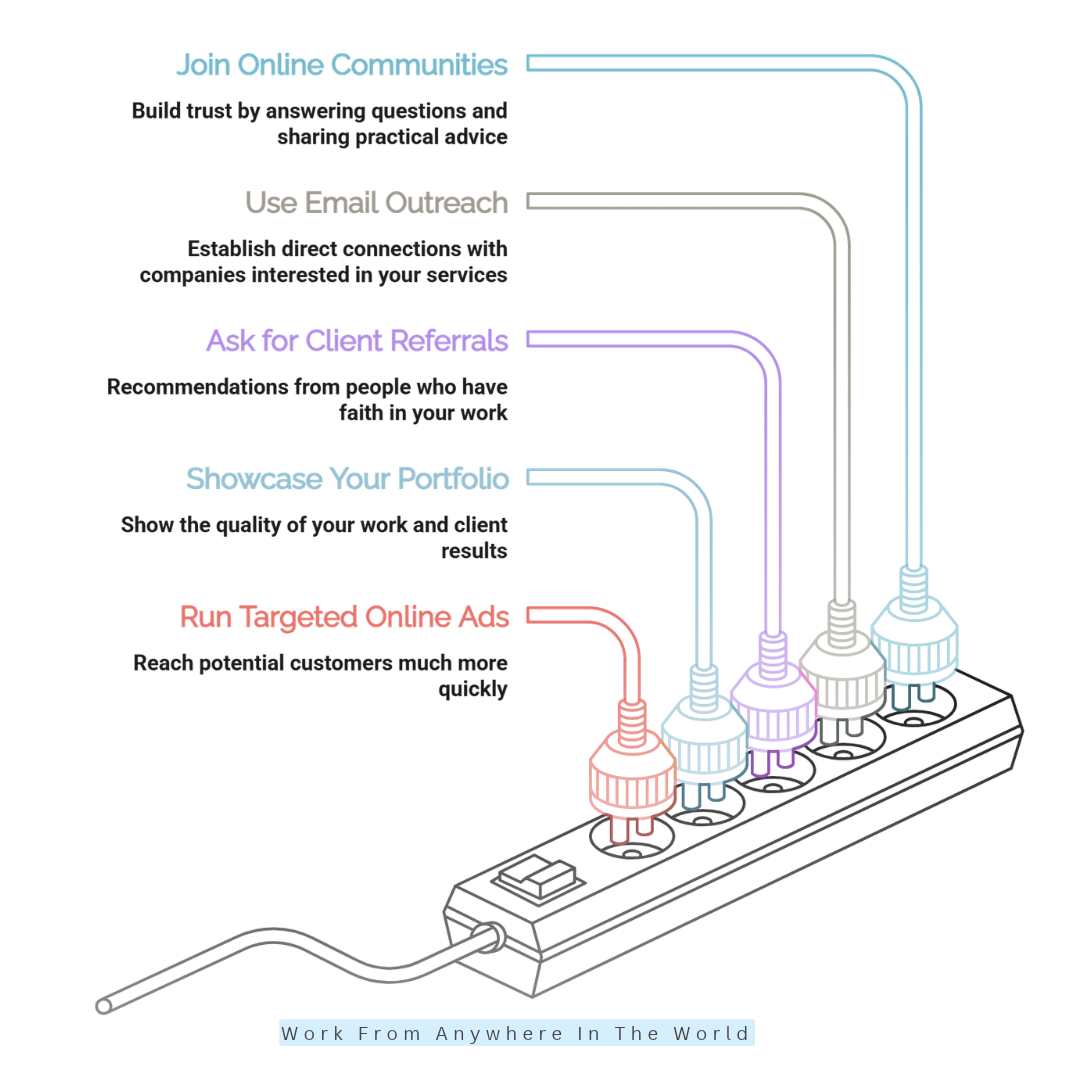
Online communities offer opportunities to meet people who share professional interests, ask questions, and seek recommendations. Participating in these discussions helps you build trust before someone considers hiring you.
Explore Facebook Groups, Reddit communities, Discord servers, Slack groups, and industry-specific forums. Focus on communities where members regularly discuss challenges related to your services.
For example, a freelance web designer might join groups for small business owners who need help improving their websites. A bookkeeper could participate in communities where entrepreneurs discuss financial organization and business administration.
Before contributing, read the community guidelines and observe how members interact. Understanding the group’s expectations helps you participate respectfully and avoid coming across as overly promotional.
Offer thoughtful answers, share useful resources, and explain solutions in straightforward language. Learning how to build an online community can also help you understand what encourages meaningful participation and lasting professional relationships.
Avoid responding to every discussion with a sales pitch or a link to your services. Instead, focus on being helpful and allow interested members to learn more about your business through your profile or website.
As your professional network expands, explore these online community management strategies to maintain productive conversations and positive relationships.
Consistent participation can gradually establish you as a knowledgeable and approachable professional. Members who appreciate your contributions may eventually recommend your services, visit your website, or contact you about future projects.
7. Use Email Outreach
Email outreach allows you to contact potential clients directly and introduce services that may benefit their businesses. When approached thoughtfully, it can open conversations with people who might not otherwise discover your work.
Start by identifying businesses that match your ideal client profile. Research their websites, services, and recent activities to understand where your expertise could provide genuine value.
For example, a freelance writer might contact a company with an outdated blog and suggest relevant content improvements. A virtual assistant could approach a growing business that may need help managing administrative tasks.
Personalize each message by mentioning something specific about the recipient’s business. Explain briefly what you offer, how you could help, and why your experience is relevant to their needs.
Keep your emails concise, professional, and easy to understand. Learning how to get your emails opened can help you write clearer subject lines and create messages that encourage recipients to read further.
Include a relevant portfolio sample, a short success story, or a link to your professional website. Rather than overwhelming potential clients with information, invite them to discuss a specific challenge or opportunity.
Tools such as Hunter, Apollo, Mailshake, and GMass can support prospect research, outreach organization, and follow-up activities.
However, email outreach must respect applicable privacy and anti-spam regulations. In Canada, commercial electronic messages generally require consent, appropriate sender identification, and an unsubscribe mechanism under CASL, subject to specific exceptions.
When someone expresses interest and agrees to receive further communications, you can develop a more structured approach. Our email marketing guide for beginners explains how to build relationships through useful, relevant messages.
Follow up respectfully when appropriate, but avoid repeated unwanted emails. A thoughtful message sent to a well-researched prospect is more valuable than sending hundreds of generic sales pitches.
8. Ask For Client Referrals
Client referrals are a valuable way to find new business because they come through existing relationships. A recommendation from someone who has experienced your work can help potential clients feel more confident about contacting you.
Start by delivering excellent service and maintaining positive communication throughout each project. Clients who feel understood and appreciate your work are often more willing to recommend your services.
After completing a successful assignment, let satisfied clients know that you welcome referrals. You might mention that you’re available for similar projects or would appreciate an introduction to someone who could benefit from your expertise.
For example, a freelance web designer could ask a happy customer whether they know another business owner planning a website update. Keep the request friendly and avoid making clients feel obligated to recommend you.
Building strong professional relationships also expands your referral opportunities. Our guide to networking for beginners explores practical ways to develop connections that may lead to collaborations and introductions.
Make it easy for clients to recommend you by clearly explaining the services you offer. A concise description of your expertise or a link to your portfolio gives them something useful to share.
Stay connected with previous clients through occasional updates, helpful resources, or friendly check-ins. These conversations can remind people of your services without making every interaction feel promotional.
You can organize client information using a spreadsheet or a customer relationship management system such as HubSpot or Zoho CRM. Keep appropriate records of previous projects, follow-up dates, and communication preferences.
Referrals can also come from professionals offering complementary services. A graphic designer and a website developer, for example, might recommend one another when their clients need additional expertise.
Always thank people who introduce you to potential clients, regardless of whether a project develops. Showing appreciation helps maintain goodwill and encourages genuine, long-term professional relationships.
9. Showcase Your Portfolio
A professional portfolio helps potential clients evaluate your skills before deciding whether to hire you. It provides concrete examples of your work and demonstrates the quality, creativity, and experience you bring to different projects.
Choose samples that reflect the services you want to offer rather than including every project you’ve completed. A focused selection makes it easier for potential clients to recognize your strengths.
For example, someone interested in freelance writing could showcase blog articles, website content, and email campaigns. A graphic designer might feature branding projects, illustrations, and promotional materials.
Explain the purpose of each project, the challenges involved, and the approach you used. Whenever possible, include measurable results or describe how your work helped the client achieve their goals.
A portfolio becomes more persuasive when visitors understand the value behind the finished product. Instead of displaying only a website screenshot, explain how its design improved navigation or supported the client’s business objectives.
You can organize your work on a personal website or use platforms such as Behance, Dribbble, GitHub, or Notion, depending on your profession.
Your portfolio should also reflect your professional identity. Exploring these examples of personal branding can help you present your skills, experience, and unique strengths more consistently.
Include testimonials from satisfied clients when you have permission to share them. Genuine feedback adds credibility and gives prospective customers another perspective on what it’s like to work with you.
If you’re just starting, create realistic sample projects that demonstrate your abilities. Clearly identify these as personal or demonstration projects rather than presenting them as paid client assignments.
Update your portfolio regularly with recent work, improved skills, and relevant achievements. Remove outdated examples that no longer represent the services you want to provide.
Finally, make it easy to contact you by including a clear invitation to discuss potential projects. A strong portfolio should not only impress visitors but also encourage them to take the next step.
10. Run Targeted Online Ads
Targeted online advertising can help you reach potential clients more quickly than relying entirely on organic marketing. Paid campaigns allow you to promote your services to people who may already be searching for professional assistance.
Platforms such as Google Ads, Meta Ads, LinkedIn Ads, and Microsoft Advertising offer different targeting options. Your ideal platform depends on your services, audience, and marketing goals.
For example, a freelance web designer might use search advertising to reach business owners looking for website development services. A business consultant could use LinkedIn advertising to connect with professionals in specific industries.
Before launching a campaign, identify the type of client you want to attract and the problem your services solve. Our guide to paid ways to drive traffic to your website explores additional methods for reaching potential customers.
Start with a manageable advertising budget and test different headlines, images, and messages. Focus on one clear offer rather than promoting several unrelated services within the same advertisement.
Direct interested visitors to a dedicated landing page that explains your offer and encourages them to take action. You can explore easy ways to build a landing page for free to create a focused destination for your campaigns.
Include a compelling headline, a concise explanation of your services, and a simple contact form. Testimonials, relevant portfolio samples, and clear calls to action can help visitors evaluate your offer.
Track important results such as clicks, inquiries, conversions, and the cost of acquiring a client. An advertisement that generates plenty of visitors isn’t necessarily successful if those visitors never contact you.
Review campaign performance regularly and adjust your targeting, messaging, and landing pages. Consistent testing helps you identify which advertising approaches produce worthwhile business opportunities.
11. Host Webinars And Online Workshops
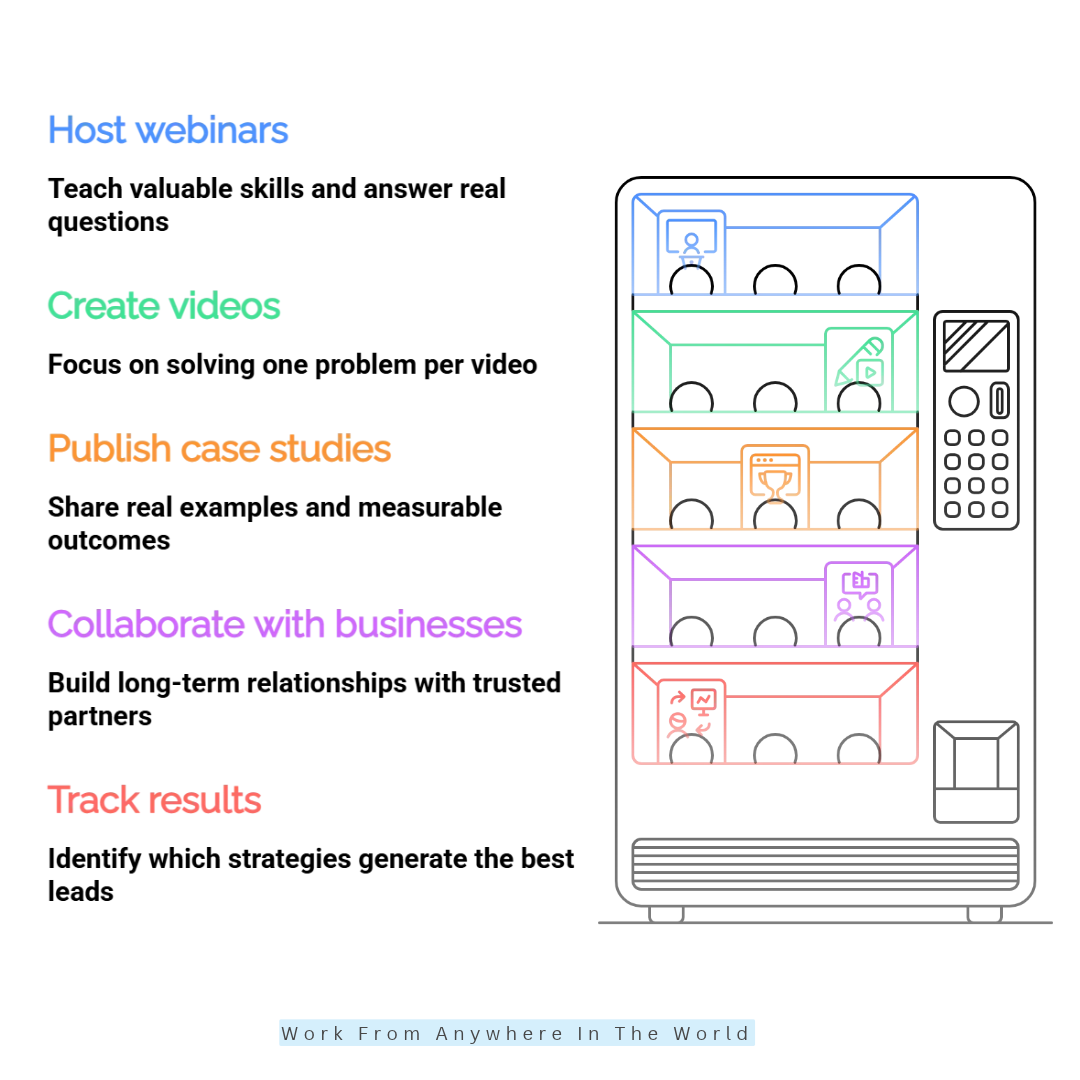
Hosting webinars and online workshops allows you to demonstrate your expertise while helping potential clients solve real problems. Teaching valuable skills can build trust more effectively than simply describing your qualifications.
Choose a topic that addresses a common challenge faced by your ideal audience. For example, a digital marketing consultant could host a workshop about improving website visibility, while a virtual assistant might teach practical time-management techniques.
Focus on a specific learning outcome rather than covering too many subjects. Participants should leave with useful information they can apply, even if they never purchase your services.
Plan your presentation around a clear introduction, practical demonstrations, and opportunities for questions. If you’re considering a more structured educational offering, our guide on how to create an online course that sells offers related insights into organizing educational content.
Platforms such as Zoom, Google Meet, Microsoft Teams, and WebinarJam provide options for hosting online events. Compare their features based on your audience size and presentation requirements.
Promote your workshop through your website, professional network, and social media channels. Explain what participants will learn and why attending could benefit their businesses.
Encourage engagement by inviting questions, sharing examples, and offering practical exercises. Interactive sessions help attendees connect with your teaching style and understand your expertise.
After the event, send participants a thank-you message and any resources you promised, using an appropriate communication method. Our guide to email marketing content strategies offers ideas for creating helpful follow-up messages.
You can also invite interested attendees to explore your services or book a consultation. Keep the invitation relevant and optional so the workshop remains an educational experience rather than an extended sales presentation.
With permission, consider recording the session and sharing selected highlights afterward. This allows you to reuse valuable educational material while reaching people who couldn’t attend the live event.
12. Create Short Educational Videos
Short educational videos help potential clients understand your expertise through clear explanations and practical demonstrations. They can introduce your services to people who prefer watching content rather than reading lengthy articles.
Platforms such as YouTube Shorts, Instagram Reels, TikTok, Facebook, and LinkedIn provide opportunities to share short-form videos. Choose platforms where your ideal audience is most likely to engage with professional content.
Start by identifying questions your potential clients frequently ask. A freelance accountant might explain a common bookkeeping mistake, while a website designer could demonstrate a simple improvement to website navigation.
Focus on one topic per video and explain it using straightforward language. Start with an engaging introduction, offer a useful solution, and end with a natural invitation to learn more.
Understanding the role of video content in social media can help you develop videos that support your marketing strategy and encourage meaningful audience engagement.
You don’t need expensive equipment to get started. A smartphone, suitable lighting, clear audio, and basic editing software can be enough to produce useful educational videos.
If you already publish articles, consider turning their main ideas into short tutorials or explanations. Our guide on turning blog posts into YouTube videos offers practical ideas for adapting written content into visual formats.
Use captions when possible to make your videos easier to follow without sound. Clear titles and relevant descriptions also help viewers understand what they can expect to learn.
Pay attention to audience questions, comments, and engagement patterns. These responses can reveal additional topics worth exploring and help you understand what potential clients want to know.
Keep an eye on emerging video marketing trends, but prioritize useful information over constantly changing formats. Consistently answering relevant questions can strengthen your professional reputation and encourage interested viewers to contact you.
13. Publish Case Studies And Testimonials
Case studies and client testimonials help potential customers understand the value of your services. Rather than simply claiming that you deliver excellent results, they provide real examples of how your work has helped others.
A strong case study explains the client’s original challenge, the solution you provided, and the outcome of your work. This approach allows prospective clients to imagine how your expertise could benefit their own businesses.
For example, a freelance website designer might describe how a redesigned website improved navigation and increased customer inquiries. A social media manager could explain how a content strategy improved engagement over several months.
Whenever possible, include measurable results such as increased website traffic, improved response times, or reduced administrative workloads. Only share figures you can substantiate and obtain permission before revealing confidential client information.
Client testimonials offer another way to demonstrate your reliability and professionalism. Learning how to build trust in business relationships can help you understand why honest communication and consistent service matter when developing credibility.
Ask satisfied clients whether they would be comfortable providing a short testimonial about their experience. Encourage specific feedback that explains what they appreciated and how your services helped them.
Display testimonials and case studies on your website, portfolio, landing pages, and relevant social media profiles. Including them in proposals can also help potential customers evaluate your experience before deciding.
You can adapt successful projects into informative articles that demonstrate your problem-solving process. Following guest posting best practices may also help you share useful professional insights with relevant audiences.
Keep your success stories accurate, current, and easy to understand. Genuine examples of your work can strengthen your reputation and encourage interested prospects to contact you.
Wealthy Affiliate – Mini Review
If you’ve ever thought about turning your blog, passion, or niche into an online business,
Wealthy Affiliate (WA) is one of the most beginner-friendly platforms I’ve used.
It combines step-by-step training, website hosting, AI-powered tools,
keyword research, and an active community all in one place.
What I like most is that you can start for free (no credit card needed), explore the platform,
test the tools, and connect with other entrepreneurs before upgrading.
WA isn’t a “get rich quick” scheme — success comes from consistent effort
and applying what you learn over time.
14. Collaborate With Other Businesses
Collaborating with complementary businesses can help you reach new audiences and develop professional relationships. Partnerships work particularly well when each business offers services that benefit the other’s clients.
For example, a graphic designer might collaborate with a website developer to offer coordinated branding and website services. A freelance writer could partner with an SEO specialist to create content that supports a client’s search visibility.
This approach can also benefit specialized service providers. Professionals learning how to market a pet Reiki business, for example, might explore appropriate collaborations with pet-care educators, groomers, or other complementary businesses.
Start by identifying professionals whose skills complement your own without directly competing for the same projects. Look for people who share your commitment to quality work, professional communication, and reliable service.
These relationships often begin with meaningful conversations and shared professional interests. Learning how to do guest posting can introduce another way to collaborate with businesses and reach relevant audiences.
Partnerships may involve referrals, joint projects, educational webinars, guest articles, or shared marketing campaigns. Choose activities that provide genuine value to both businesses and their potential customers.
Before beginning a joint project, discuss responsibilities, deadlines, communication expectations, and payment arrangements. Clear agreements help prevent misunderstandings and protect the professional relationship.
Remote collaboration tools such as Slack, Zoom, Google Workspace, and Microsoft Teams can help partners communicate and share information.
For more complex assignments, explore freelancer project management software to organize tasks, coordinate responsibilities, and monitor progress across different projects.
Maintain regular contact with trusted partners, even when you’re not actively working together. Strong collaborations develop through mutual respect, consistent communication, and a willingness to support each other’s success.
Over time, these relationships can lead to referrals, larger projects, and opportunities that would be difficult to pursue independently.
15. Stay Consistent And Track Results
Finding clients online usually requires consistent effort rather than relying on a single successful marketing campaign. Regularly evaluating your activities helps you understand which strategies attract suitable prospects and generate worthwhile business opportunities.
Start by tracking where potential clients discover your services. Record whether inquiries come from search engines, social media, freelance marketplaces, professional referrals, or direct outreach.
You don’t need a complicated system to begin. A simple spreadsheet can help you monitor the number of inquiries, proposals submitted, consultations booked, and clients acquired through each channel.
Website analytics provide additional information about how visitors discover and interact with your content. Understanding Google Analytics website metrics can help you identify useful traffic patterns and evaluate your website’s performance.
If you use WordPress, our guide on how to set up Google Analytics in WordPress offers practical information for getting started with website measurement.
Social media performance also deserves attention, particularly when you invest time creating regular content. Explore the best social media analytics tools to evaluate engagement, audience activity, and other useful marketing indicators.
Focus on meaningful results rather than vanity metrics alone. A post receiving hundreds of likes may be less valuable than one that generates a few serious inquiries from potential clients.
Review your results monthly to identify which activities deserve more attention. If LinkedIn consistently produces qualified inquiries while another platform generates little interest, consider adjusting how you allocate your time.
Set realistic goals based on your available resources and current experience. For example, you might aim to improve proposal quality, publish helpful content regularly, or increase the number of consultations booked.
Continue testing different approaches and refining your strategy as you learn more about your audience. Small improvements, supported by consistent effort, can help you build a more reliable system for attracting clients online.
Tips To Build Long-Term Client Relationships
Finding new clients is an important part of growing an online business, but maintaining strong relationships is equally valuable. Satisfied clients may return for additional projects, recommend your services, and become trusted long-term partners.
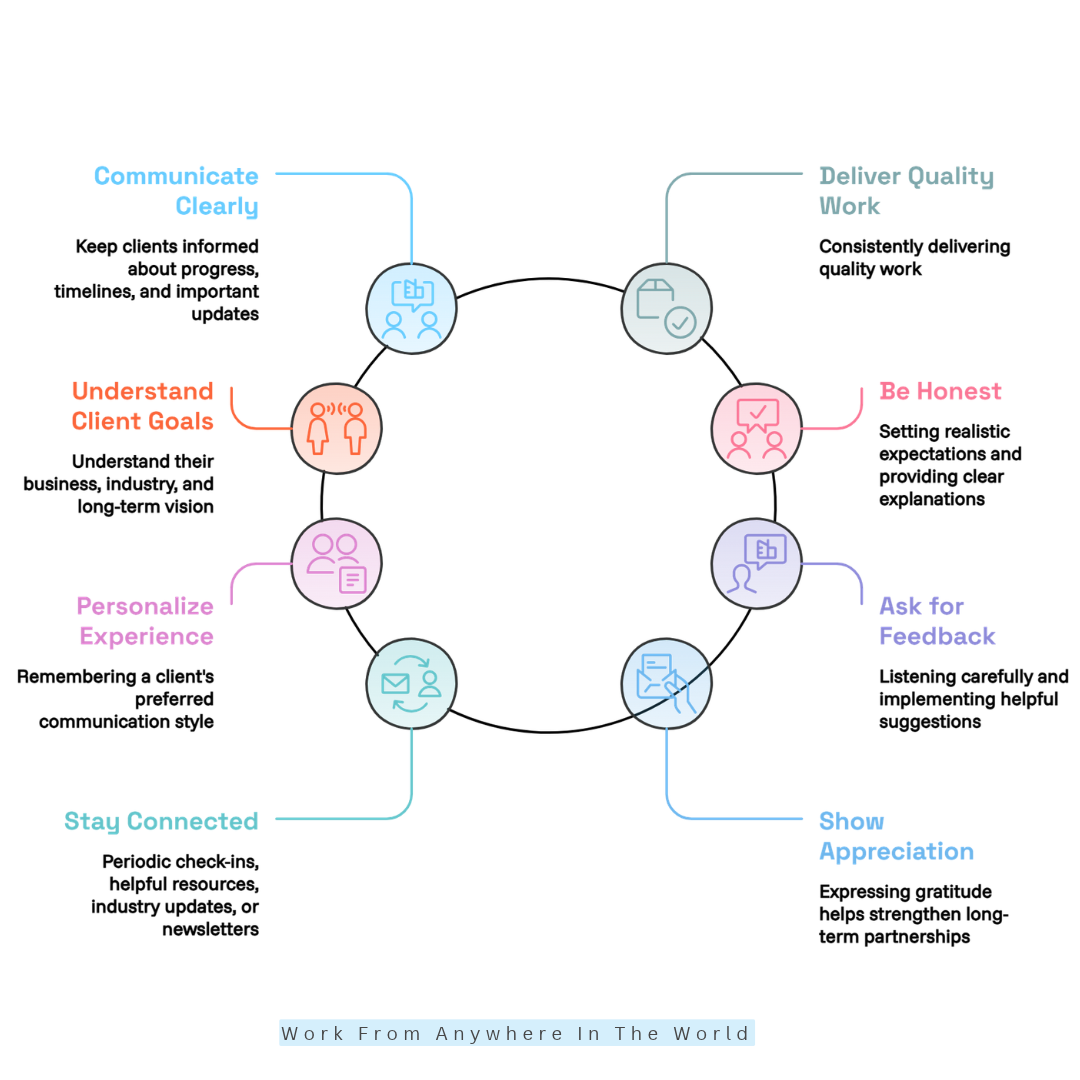
Building these relationships requires clear communication, dependable work, and a genuine understanding of each client’s needs. The following eight tips can help you create positive experiences that encourage lasting professional connections.
1. Communicate Clearly And Consistently
Clear communication helps clients feel confident about working with you from the beginning of a project. Discuss expectations, deadlines, responsibilities, and preferred communication methods before starting any work.
Provide regular updates so clients understand how their projects are progressing. Even a brief message explaining what you’ve completed and what comes next can prevent uncertainty and unnecessary follow-up questions.
Developing effective communication skills can help you explain ideas clearly, listen to concerns, and handle challenging conversations professionally.
Respond to questions within an agreed timeframe and let clients know when you need additional information. If you cannot provide an immediate answer, acknowledge their message and explain when they can expect a response.
Choose communication tools that suit the client’s preferences, whether that’s email, video meetings, or a shared project workspace. Keeping important decisions documented also reduces confusion as projects develop.
Consistent communication doesn’t mean being available around the clock. Establishing reasonable boundaries helps you remain responsive while protecting the time needed to deliver excellent work.
2. Deliver High-Quality Work Every Time
Delivering dependable results is one of the most effective ways to encourage clients to work with you again. When people know they can rely on your services, they have fewer reasons to search for another professional.
Begin each project by confirming the requirements, expected outcomes, and delivery standards. Understanding these details helps you avoid unnecessary revisions and focus on what matters most to the client.
Pay attention to accuracy, presentation, and completeness before submitting your work. For example, freelance writers can benefit from learning how to write high-quality blog posts that meet readers’ needs and maintain professional standards.
Create a simple quality-control checklist for your services. A website designer might check mobile responsiveness and navigation, while a virtual assistant could review documents for accuracy and formatting.
If unexpected challenges arise, discuss them promptly rather than rushing through the assignment. Clients often appreciate a thoughtful explanation and a realistic solution more than work delivered quickly with avoidable mistakes.
Look for opportunities to improve your processes after each completed project. Consistently meeting agreed expectations helps build the confidence that supports repeat business and positive referrals.
3. Understand Your Client’s Goals
Every client has different priorities, challenges, and expectations. Taking time to understand their business helps you recommend solutions that address their actual needs rather than offering the same approach to everyone.
During initial conversations, ask what the client hopes to achieve and why the project matters to their business. Their answers may reveal priorities that aren’t immediately obvious from the original assignment.
Understanding how to set realistic online business goals can also help you recognize the importance of measurable objectives and achievable expectations.
For example, a client requesting social media content might be more interested in attracting qualified inquiries than increasing follower numbers. Recognizing this distinction allows you to tailor your recommendations accordingly.
Listen carefully when clients explain their concerns and ask follow-up questions when something is unclear. Summarizing their priorities in your own words can help confirm that you understand what they want to accomplish.
As the relationship develops, revisit these goals periodically. Business priorities can change, and staying informed allows you to adapt your services and suggest relevant improvements.
Clients are more likely to value a professional who understands their bigger picture. Showing genuine interest in their success can transform an individual assignment into an ongoing working relationship.
4. Be Honest And Transparent
Honesty and transparency are essential for building lasting professional relationships. Clients need to feel confident that you will communicate openly, keep your commitments, and provide accurate information about your services.
Set realistic expectations before beginning a project. Explain what your services include, how long the work may take, and whether additional expenses or resources might be necessary.
If unexpected challenges arise, inform your client as early as possible. Discussing delays, technical difficulties, or changing requirements allows everyone to explore solutions before small problems become serious concerns.
Managing deadlines becomes easier when you establish clear priorities. Using SMART goals for time management can help you organize your responsibilities and set achievable project milestones.
Be straightforward about your experience and capabilities. If a request falls outside your expertise, explain the situation and consider recommending another qualified professional rather than promising results you cannot confidently deliver.
Transparency also matters when discussing pricing, revisions, and additional work. Providing written agreements helps clients understand what to expect and reduces the likelihood of misunderstandings.
Clients may not expect every project to proceed perfectly, but they appreciate professionals who take responsibility and communicate respectfully. Consistent honesty helps establish the trust needed for long-term collaboration.
5. Personalize The Client Experience
Personalizing your services helps clients feel valued as individuals rather than simply another project on your schedule. Small, thoughtful gestures can make professional relationships more comfortable and memorable.
Begin by learning about each client’s communication preferences, business priorities, and working style. Some clients appreciate detailed progress reports, while others prefer concise updates at agreed intervals.
Keep organized notes about important project details, previous discussions, and client preferences. This information can help you provide a consistent experience without repeatedly asking the same questions.
For businesses managing several clients, understanding the differences between ERP and CRM systems can help you choose tools to organize customer information and maintain professional relationships.
For example, a freelance designer might remember a client’s preferred brand colours and visual style. A virtual assistant could organize recurring tasks according to the client’s established routines and priorities.
Recognize meaningful business milestones when appropriate. A short congratulatory message about a product launch, business anniversary, or completed project can demonstrate genuine interest in a client’s success.
Personalization should remain professional and respectful of boundaries. Focus on details clients have willingly shared rather than collecting unnecessary personal information.
When clients feel understood and appreciated, working together becomes easier. These positive experiences can encourage repeat projects and strengthen long-term professional connections.
6. Ask For Feedback And Act On It
Client feedback provides valuable information about what you’re doing well and where your services could improve. Inviting honest opinions demonstrates that you care about delivering a positive professional experience.
After completing a project, ask clients whether the results met their expectations. You can also invite suggestions about communication, deadlines, project organization, and the overall working relationship.
Keep your questions straightforward and easy to answer. A short feedback form or friendly email is often more convenient than requesting a lengthy evaluation.
For example, you might ask which part of the service was most helpful or whether anything could have made the project run more smoothly. Specific questions often produce more useful responses than simply asking whether a client was satisfied.
Listen carefully to constructive criticism without becoming defensive. If several clients mention similar concerns, consider whether your processes need adjustment.
Use feedback to make practical improvements, such as clarifying project instructions, simplifying communication, or improving your quality-control procedures. Small changes can make future collaborations more efficient and enjoyable.
Client feedback can also inform your wider business strategy. Understanding key marketing principles for business growth can help you connect customer needs with improvements to your services and marketing approach.
When appropriate, let clients know how their suggestions have influenced your services. This demonstrates that their opinions matter and that you are committed to continuous improvement.
A willingness to listen, learn, and adapt can strengthen existing relationships while helping you provide better experiences for future clients.
7. Stay Connected After The Project Ends
A successful project doesn’t have to mark the end of your relationship with a client. Staying connected helps maintain professional relationships and reminds previous clients that you’re available when they need additional support.
Begin by sending a thoughtful follow-up message after completing the assignment. Ask whether everything is working as expected and offer assistance if they have questions about the finished project.
Periodic check-ins can also help you stay informed about changes in a client’s business. For example, a freelance website designer might contact a previous client several months after launching their website to ask whether they need updates.
Sharing useful information is another effective way to stay in touch. You might send relevant industry insights, practical resources, or occasional newsletters that address challenges your clients commonly face.
If you manage a growing client list, email marketing automations can help you organize follow-up messages and maintain appropriate communication schedules.
Personalize your messages whenever possible and respect each client’s communication preferences. Avoid contacting people so frequently that your updates become unwelcome or feel like repeated sales pitches.
Keep track of previous projects and potential future needs. A client who hired you for one assignment may eventually require related services as their business develops.
Maintaining these connections helps you remain a familiar, trusted professional. When new projects arise, previous clients may remember the positive experience of working with you and reach out again.
8. Show Appreciation For Client Loyalty
Showing appreciation helps clients feel valued and reinforces the positive experiences they’ve had with your business. A thoughtful thank-you can make a lasting impression without requiring expensive gifts or elaborate rewards.
Begin with a personalized message after completing a successful project. Mention something specific you appreciated about the collaboration, such as the client’s clear communication or willingness to share helpful feedback.
Recognize clients who return for additional projects or recommend your services to others. A handwritten note, a complimentary resource, or a small gesture of appreciation can acknowledge their continued support.
For long-term clients, consider offering priority scheduling or another appropriate benefit that fits your business model. Make sure any special arrangements remain sustainable and don’t compromise the quality of your services.
Appreciation can also involve recognizing important professional milestones. Congratulating clients on a successful launch, business anniversary, or significant achievement shows that you value their progress.
Developing effective B2B customer retention strategies can provide additional ideas for strengthening professional relationships and encouraging repeat business.
Avoid treating every interaction as an opportunity to sell another service. Genuine gratitude is most meaningful when clients can see that you appreciate the relationship itself.
When clients consistently feel respected, supported, and appreciated, they have more reasons to continue working with you. These lasting connections can become an important foundation for sustainable business growth.
Frequently Asked Questions
Q1: Which Platform Is Best For Finding Online Clients?
The best platform depends on your services and target audience. LinkedIn works well for B2B professionals, while Upwork and Fiverr help freelancers connect with potential clients.
Facebook, Instagram, and Google Search can also help businesses reach interested customers. Choose platforms where your ideal clients are most active.
Q2: Do I Need A Website To Get Clients Online?
You can find clients through social media, referrals, and freelance marketplaces without owning a website. However, a professional website can strengthen your credibility.
It gives potential clients a convenient place to explore your services, portfolio, testimonials, and contact information before deciding to work with you.
Q3: How Often Should I Post Content To Attract Clients?
Consistency matters more than posting every day. Start with a manageable schedule of helpful blog posts, videos, or social media updates.
Focus on answering your audience’s questions and sharing useful information. Regularly published quality content can help build trust and attract potential clients over time.
Q4: Is LinkedIn Good For Finding Clients?
Yes, LinkedIn can be particularly useful for freelancers, consultants, agencies, and B2B service providers. It helps professionals connect with potential clients and decision-makers.
An optimized profile, meaningful networking, and valuable content can strengthen your visibility. Building genuine relationships is often more effective than sending unsolicited sales messages.
Q5: How Can SEO Help Me Find Clients Online?
SEO helps potential clients find your website when they search for relevant services. Optimizing your pages and publishing helpful content can improve your visibility in search results.
Targeting relevant keywords also helps attract visitors interested in your expertise. Over time, consistent SEO efforts may generate qualified inquiries without relying entirely on paid advertising.
Q6: Should I Use Paid Advertising To Find Clients?
Paid advertising can help you reach potential clients more quickly, especially when promoting a specific service. However, successful campaigns require careful planning and monitoring.
Begin with a manageable budget, a clear offer, and a relevant landing page. Evaluate your results before increasing spending to avoid unnecessary advertising costs.
More Ways To Grow Your Online Business
Finding clients online is only one part of building a successful business. Developing your skills, improving your marketing approach, and choosing helpful tools can support long-term growth.
Explore these additional resources to discover practical ways to strengthen your online presence, attract new opportunities, and build a more sustainable business.
Start Your Own Freelance Business
Ready to turn your skills into an independent career? Discover how to start your own freelance business and explore the essential steps involved in building a professional service-based business.
Strengthen Your B2B Content Marketing
Creating helpful content can introduce your services to potential business clients. Explore an effective B2B content marketing strategy to learn how targeted content can support visibility, engagement, and business growth.
Discover Helpful Online Business Tools
The right tools can simplify everyday tasks and help you manage your business more efficiently. Explore these online business tools to find resources for productivity, communication, marketing, and business management.
Explore New Online Business Opportunities
Expanding your services or exploring additional income opportunities can support future growth. Discover these online business ideas for inspiration as you consider your next professional steps.
Conclusion
Learning how to find clients online takes patience, consistency, and a willingness to adapt. Building a professional website, creating helpful content, and connecting with potential clients can open doors to valuable business opportunities.
Focus on strategies that match your skills, services, and target audience. You don’t need to use every platform at once to make meaningful progress.
Remember that attracting clients is only the beginning. Delivering quality work, communicating clearly, and building lasting relationships can turn individual projects into repeat business and referrals.
Track your results, learn from your experiences, and continue improving your approach. With steady effort and realistic expectations, you can develop a reliable client base and build a sustainable online business.
I trust you enjoyed this article on How to Find Clients Online: 15 Proven Strategies That Work. Please stay tuned for more helpful guides on affiliate marketing, online business, and working from anywhere in the world.
Take care!
— JeannetteZ 🌍✨
💬 Your Opinion Is Important To Me
Do you have thoughts, ideas, or questions? I’d love to hear from you. Please leave your comments below or email me directly at Jeannette@WorkFromAnywhereInTheWorld.com.
📚 More Work From Anywhere Reads
🚀 Ready to Build a Business You Can Run from Home
Or from Anywhere in the World?
Imagine earning income on your terms — from home, a cozy café, or wherever life takes you.
With the right tools, training, and community support, it’s entirely possible.
Start your own online business for free — no credit card needed.
Disclosure
This post may contain affiliate links. As an Amazon Associate and participant in other affiliate programs, I earn from qualifying purchases at no extra cost to you. Please read my full affiliate disclosure.